Perkara yang perlu dilakukan
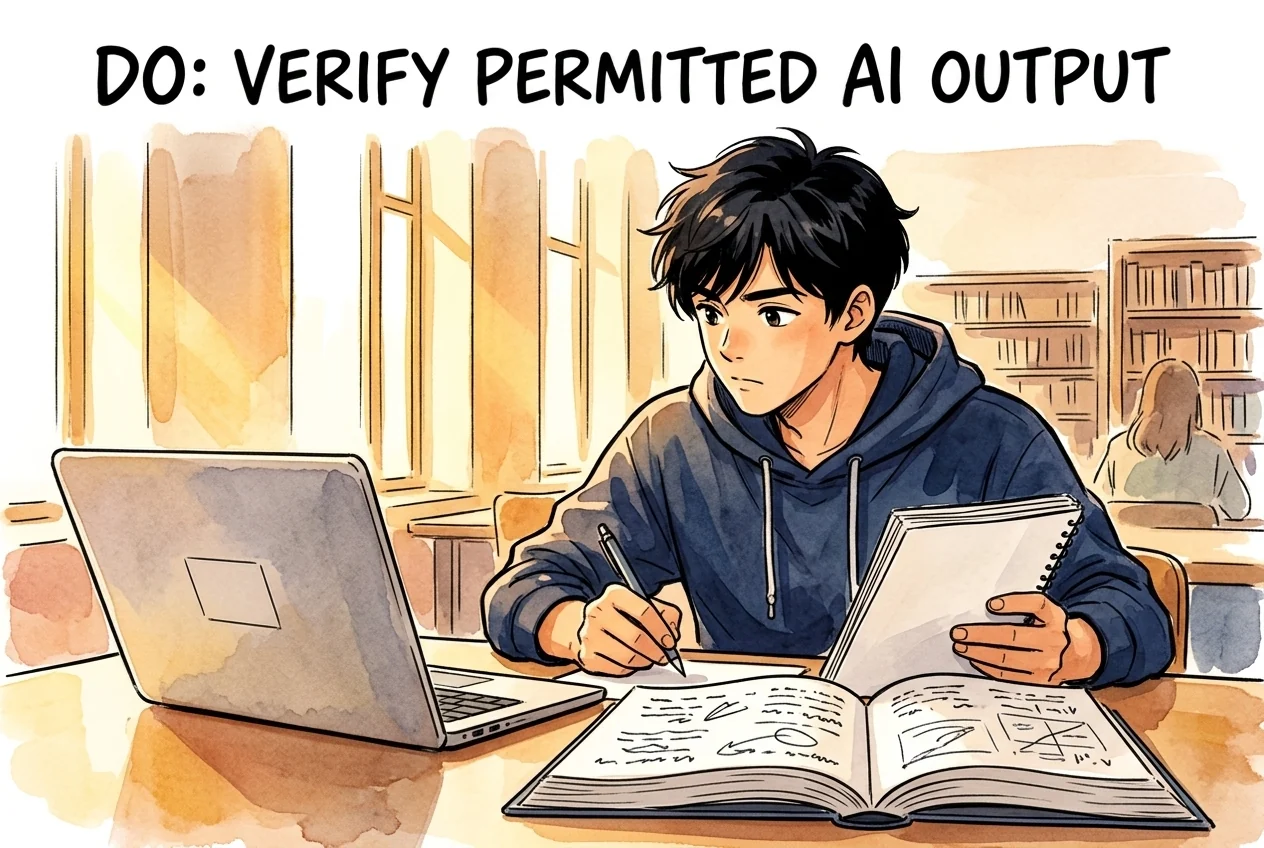
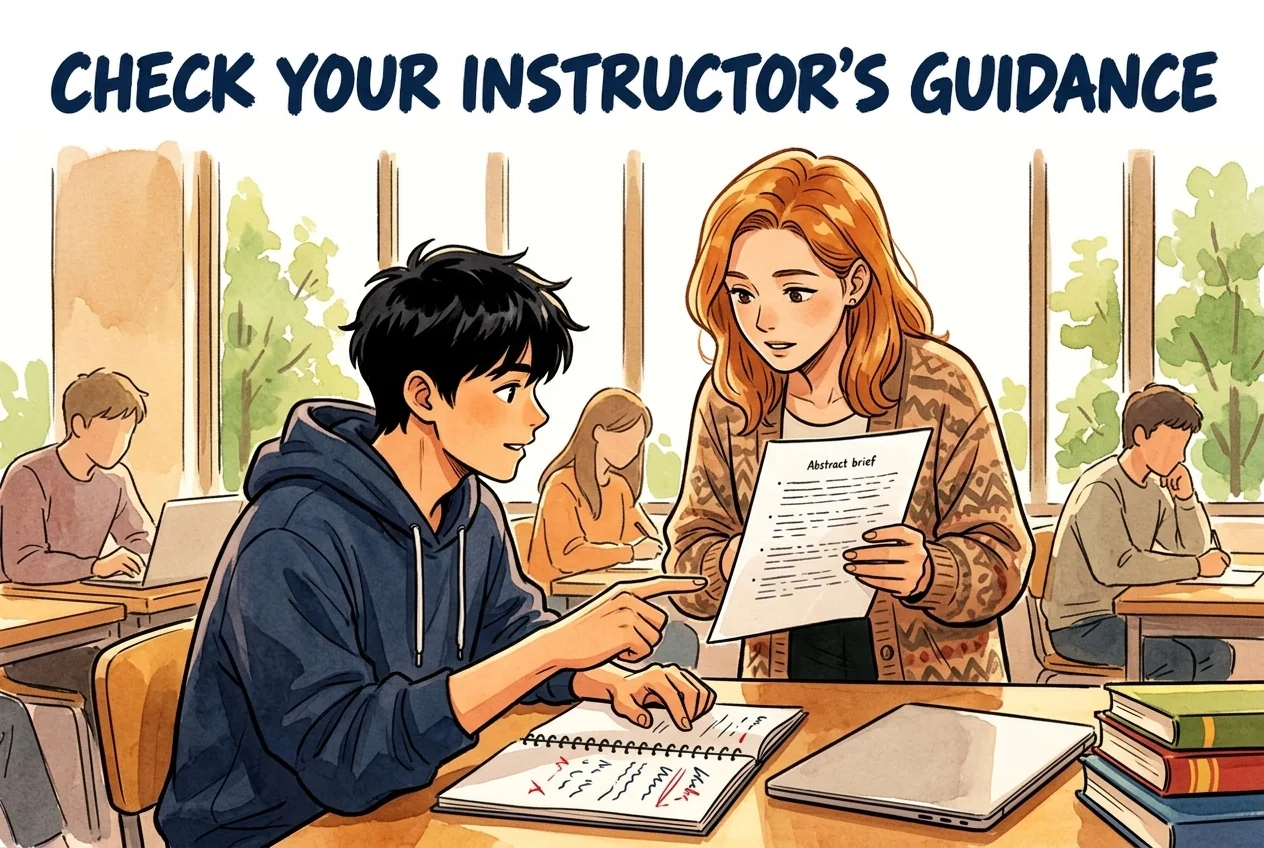
- Confirm the instructor’s course/project AI permission.
- Verify critical outputs and follow the institutional service’s data conditions.
- Check whether your notice follows the NTC undergraduate or graduate Code.
New Orleans, United States
Student guide · Task rules and procedure
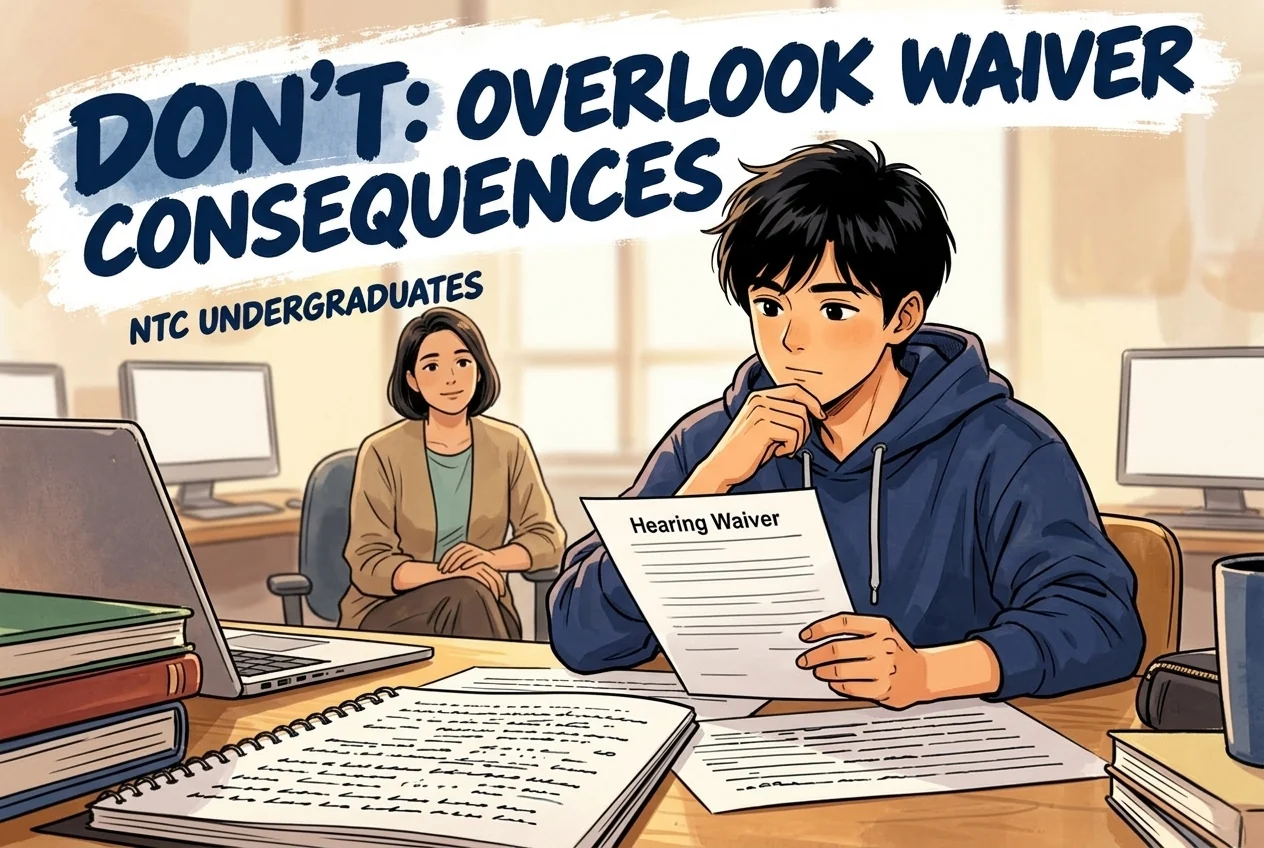
Course/project AI guidance and Copilot access are separate. NTC undergraduate hearings, advisers and waiver consequences differ from the graduate Unified Code. The graduate seven-working-day appeal clock cannot be transferred to undergraduates or every professional school.
Panduan dasar di bawah adalah dalam bahasa Inggeris; bukti rasmi dikekalkan dalam bahasa asal.
Ringkasan lengkap peraturan pelajar belum tersedia; rujuk pernyataan dan sumber yang dikumpulkan.
Course/project AI guidance and Copilot access are separate. NTC undergraduate hearings, advisers and waiver consequences differ from the graduate Unified Code. The graduate seven-working-day appeal clock cannot be transferred to undergraduates or every professional school.
Tambahan dikumpulkan: 2026-10-08 · Pemakaian semasa belum disahkan secara bebas
Ringkasan kini tersedia dalam bahasa Inggeris
Tafsiran laman
Tulane’s AI guidance says academic integrity policies already cover student AI questions and instructors may set clear course/project guidelines. When AI is permitted, students should be encouraged to describe its use. Do not read the general invitation to explore AI as permission for every task.
Skop: students · Scope is limited to the cited official source and stated conditions; this is a local candidate, not a complete university rule set.
Skop: students · university
It is important to note that the major questions about the use of AI by our students are already covered in our academic integrity policies.
Transparency and Accountability
Using AI, especially externally sourced models, can raise concerns about accuracy, potential biases, and privacy. Prior to employing such tools, students, faculty and staff should consult with the necessary bodies to ensure safe and appropriate usage.
Protect Confidential Data
All members of Tulane University have a responsibility to protect university data from unauthorized access or disclosure. Consistent with Tulane’s data governance, data management, and data classification policies, data classified as Level 2- Internal, Level 3-Confidential Data, or Level 4- Restricted should not be entered into publicly available generative AI tools. Information shared with generative AI tools using default settings is not private and could result in unauthorized access or disclosure of university proprietary, confidential or restricted data.
Review of AI Tools
Appropriate privacy and security considerations must be applied to all technology solutions used by Tulane University. Any procured generative AI tools or systems utilizing generative AI tools require a security and risk review by the Tulane Information Security Office.
Questions Around AI
If you have questions about AI technology, assessing appropriate data classification levels, or the review process, please contact ciso@tulane.edu.
Please refer to university Data Policies for additional information:
Data Classification
Data Governance
Exploring AI's Educational Potential: An Approach for Faculty and Instructors
Promote Exploration: Rather than restricting AI, faculty are encouraged to explore its potential. Experimenting with AI can help identify which projects can be effectively handled and which cannot. Strategies include requiring students to incorporate personal experiences, cite sources accurately, or compare diverse ideas.
Engage the Community: Everyone – from students and faculty to staff – should actively engage as we integrate AI into our educational and administrative processes.
Foster Transparency: Each instructor has the option of putting in place guidelines that make the most sense for their specific course or project, but instructions must be clear and precise. Should the use of AI be permitted, students should be encouraged to describe how AI tools were used.Lihat sumber rasmi ↗Dikumpulkan: 2026-10-08 · 50–65
SHA-256: c571f442de1332b91dabe456aac1c779d780e275471e86449c1a2115f9c566ea
Tafsiran laman
In the NTC undergraduate process, students are contacted after initial review yields charges and have an informational pre-hearing meeting. Students represent themselves; parents/attorneys cannot contact the Board on their behalf. The Honor Board determines responsibility and recommends appropriate sanctions.
Skop: Newcomb-Tulane College undergraduate Honor Board · Scope is limited to the cited official source and stated conditions; this is a local candidate, not a complete university rule set.
Skop: NTC undergraduates · programme
Anyone can report academic misconduct or alleged violations of the Code of Academic Conduct. We prefer that the person who witnessed or experienced the issue submit the report whenever possible, and we will communicate with the instructor of record once the report is received. Reports may be submitted anonymously; however, there is no investigation of an anonymous report without evidence. Named reporters may ask for confidentiality but are needed for initial follow-up.
Instructors of record should submit reports in a timely manner — at the time of grading or shortly after witnessing an issue. Giving the student repeated warnings about academic misconduct is not in the spirit of the Code of Academic Conduct. Waiting until the end of the term is not recommended. However, if the incident occurs within 14 days of grades being due, you should issue an “I” or incomplete final grade for the student(s) involved.
Accused of Academic Misconduct
Students are contacted once a report is received and the initial review yields charges for possible violations of the Code of Academic Conduct. If someone accuses you of academic misconduct, you have the right to have the NTC Honor Board decide your case. If an instructor refuses to submit a report and issues a grade impact, you may have grounds for a grade appeal.
All students will have a processing or pre-hearing meeting to discuss the next steps and what to expect in a hearing. These meetings are informational and not adversarial in any way; no resolutions are made in meetings.
Students must represent themselves in this process and may not have parents, attorneys or others contact the Honor Board on their behalf.
NTC Honor Board
Reports of alleged violations of the Code of Academic Conduct are reviewed by the Newcomb-Tulane College Honor Board. The board is composed of a select group of students and faculty who consider evidence, determine responsibility and recommend sanctions for violations as appropriate. The Dean of Newcomb-Tulane College is the authority of the Code and has designated the senior associate dean of academic affairs with general oversight of the Honor Board process. Hearings are chaired by trained student leaders, and panels also include faculty members who receive annual training to evaluate academic misconduct. The faculty chair of the Honor Board serves as the chair of the Committee on Academic Integrity within NTC, in addition to the selection and training of Honor Board members.Lihat sumber rasmi ↗Dikumpulkan: 2026-10-08 · 94–101
SHA-256: dd8b4d4219b33e7f20cfc10bf702c2d3cf43290c34a83b54b7ae7e00950e8ff3
Tafsiran laman
NTC warns that waiving a hearing also waives appeal. A hearing panel’s decision can be appealed under the Code, and sanctions depend on the case; repeat/egregious offences have suspension/expulsion risks. This undergraduate FAQ must not be substituted for the graduate Code’s appeal route.
Skop: Newcomb-Tulane College undergraduate Honor Board · Scope is limited to the cited official source and stated conditions; this is a local candidate, not a complete university rule set.
Skop: NTC undergraduates · programme
What is a hearing waiver? Students who have no prior violations may be offered the opportunity to accept responsibility and waive a hearing. Information on sanctions for first violations is listed in the letter you receive. Students may not barter sanctions if they wish to waive a hearing.
Can a person dismiss my case? There is not a single adjudicator or person who will hear your case. After the initial review and issuing of charges, students must either have a hearing or submit a hearing waiver accepting responsibility (first violations only).
How can I get an advisor for my case? A list of NTC Honor Board Advisors can also be provided to you if you wish to consult a faculty member outside of the Honor Board for advice. While advisors are permitted, they may not speak for you or participate in meetings with our office. You may also consult a staff or faculty member of your choice; however, that person will not have training in the Honor Board process.
Will I be suspended or expelled? While a full list of sanctions is available in the Code of Academic Conduct, you should ask about the specific consequences in your case during the process or pre-hearing meeting. Students who have a prior violation are typically suspended for further violations. Students with egregious cheating, fabrication and false information are at risk of expulsion.
Can I call witnesses for my hearing? Yes. If you know that another person has firsthand knowledge of the issue or incident, you may call them to share information and answer questions in a hearing. The reporter may be called as well, and any other students involved may be called to participate in a hearing or provide information to the Honor Board. No character witnesses or letters of support may be provided.
Can I submit evidence for my case? If you have an upcoming hearing, you will be provided with an online form to add evidence for your case. You will be provided the evidence attached to letters from our office and will know what information is available to the Honor Board in advance of your hearing.
How can you prove I did something wrong? The Honor Board uses the preponderance standard to weigh information and will determine if it is more likely than not that you violated the Code of Academic Conduct. No one needs to prove something beyond a reasonable doubt.
Will this go on my permanent record? This case will be a part of your academic record at Tulane and may be shared with others as you release your records (such as in a Dean’s Certification). As outlined in the Code of Academic Conduct on page 12, records of a responsible finding in academic misconduct cases are maintained internally for seven years from the incident date. Suspension, expulsion and degree revocation are noted on the transcript indefinitely.
How do I appeal? The reasons for the appeal and how it will be reviewed are outlined in the Code of Academic Conduct. Students may appeal the decision of a hearing panel; however, if you waive a hearing, you are also waiving the right to appeal.Lihat sumber rasmi ↗Dikumpulkan: 2026-10-08 · 105–113
SHA-256: dd8b4d4219b33e7f20cfc10bf702c2d3cf43290c34a83b54b7ae7e00950e8ff3
Tafsiran laman
For the graduate Unified Code’s Honor Board appeal, grounds include material procedural error, substantially relevant unavailable new evidence or grossly disproportionate sanctions. Notify the Dean’s Designee in writing within seven working days after notification of the Designee’s decision; extra time may be granted on request for new evidence. This is not the undergraduate waiver rule.
Pelajar · Diperlukan bagi prosedur ini
Dalam tempoh yang dinyatakan. Semak titik mula, skop dan pengecualian dalam ringkasan serta teks asal.
Skop: graduate students governed by this Unified Code · Graduate Code linked as 2025 Final; its approval record is February 2024, and school-specific exclusions/other codes must be checked.
Skop: graduate students governed by this Unified Code · university
a. Dissatisfaction with the results of a hearing is not itself a valid basis for
appeal. Appeals are also not an occasion to engage in contempt of the
process, administrators, or students who participated in Code process. A
respondent may appeal the decision on the grounds of:
1. Procedural error is defined as material deviation from procedures that
substantially impacted determinations of responsibility or sanctions
applied.
2. New evidence is defined as new and substantial evidence that has
appeared that could have not reasonably been discovered before the
- 14 -
Approved by: Graduate Council (February 14, 2024), Graduate and Professional Student
Association (February 21, 2024)
determination of responsibility was made, and that could have substantially
impacted determinations of responsibility.
3. Disproportionate Sanctions are where sanctions are grossly
disproportionate to the findings of responsibility.
b. A Respondent who wishes to request an appeal of a decision of the Honor
Board Hearing Panel may do so by notifying in writing the Dean’s Designee
within seven (7) working days after being notified of the Dean's Designee’s
decision, except when the appeal is on the basis of new evidence, in which
case more time may be granted upon request by the Dean’s Designee.
Students requesting an appeal on the basis of new evidence may, with the
permission of the Dean’s Designee, listen to a copy of the recording of the
original hearing in the presence of an officer of the Honor Board. Access to
the recording will not be provided to any other individual.
c. The appeal document must be in writing and must provide evidence of
procedural error, excessive sanction, and/or new evidence.Lihat sumber rasmi ↗Dikumpulkan: 2026-10-08 · 680–711
SHA-256: a58599e9ebc28170d881b63761e606e556ce549ce46214c46c03fcd3565bd968
Tafsiran laman
Tulane says Copilot is available to faculty, staff and students through Office365 and its linked opt-in service uses the Enterprise Data Agreement. Verify critical outputs and handle sensitive information appropriately. These service claims are attributed; account access and security were not independently tested, and the licence does not grant task permission.
Skop: students · Scope is limited to the cited official source and stated conditions; this is a local candidate, not a complete university rule set.
Skop: students · university
Launch Copilot Faculty/Staff Documentation Student Documentation AI Guide
Copilot is now available to all faculty, staff, and students at Tulane University as part of our Office365 license. This powerful AI tool is designed to enhance productivity, streamline tasks, and provide valuable support across various activities. The version of Copilot linked above is protected by our Enterprise Data Agreement. Queries run against this version of Copilot will not be centrally stored by Microsoft or trained against for future versions of the model.
This pilot is "opt-in". While everyone has access to Copilot, the tool will not automatically engage with your processes, data or documents unless you specifically follow the link to Copilot and prompt the tool.
Features
Intelligent Assistance: Copilot can help draft emails, create documents, and generate reports, saving you time and effort.
Data Analysis: Easily analyze data, create charts, and generate insights from complex datasets.
Task Automation: Automate repetitive tasks, set reminders, and manage your schedule efficiently.
Research Support: Get assistance with research by summarizing articles, finding relevant sources, and organizing information.
Language Translation: Translate documents and communications into multiple languages, facilitating better collaboration.
Limitations:
Accuracy: While Copilot is useful, it may occasionally provide incorrect information. Always verify critical data.
Context Understanding: Copilot may not fully understand complex or highly specific contexts without sufficient background information.
Privacy: Ensure sensitive information is handled appropriately, as Copilot processes data to provide assistance.
How does Copilot compare to other Generative AI platforms? For a more comprehensive list, click here.
We are excited to see how Copilot will enhance your productivity and support your academic and administrative endeavors. To get started, simple click the link: Launch Copilot. For troubleshooting or support, please visit our Tulane IT Service Portal.Lihat sumber rasmi ↗Dikumpulkan: 2026-10-08 · 79–93
SHA-256: ea2f96ebcac48e8b4f35729df79956910b3fe16fcb1740197500f1bb73ad9d31
Tafsiran laman
NTC advisers may give advice but cannot speak for students or attend office meetings. Students can submit evidence and firsthand witnesses, not character testimonials. The Board uses preponderance of evidence. A prior violation or possible egregious suspension requires a hearing; some first cases may have a waiver option.
Skop: Newcomb-Tulane College undergraduate Honor Board · Scope is limited to the cited official source and stated conditions; this is a local candidate, not a complete university rule set.
Skop: NTC undergraduates · programme
Do I have to go to a hearing? Not all cases are resolved with a hearing. However, if you have a prior violation of the Code of Academic Conduct or are facing possible suspension for an egregious violation, you will need to have a hearing with the NTC Honor Board.
What is a hearing waiver? Students who have no prior violations may be offered the opportunity to accept responsibility and waive a hearing. Information on sanctions for first violations is listed in the letter you receive. Students may not barter sanctions if they wish to waive a hearing.
Can a person dismiss my case? There is not a single adjudicator or person who will hear your case. After the initial review and issuing of charges, students must either have a hearing or submit a hearing waiver accepting responsibility (first violations only).
How can I get an advisor for my case? A list of NTC Honor Board Advisors can also be provided to you if you wish to consult a faculty member outside of the Honor Board for advice. While advisors are permitted, they may not speak for you or participate in meetings with our office. You may also consult a staff or faculty member of your choice; however, that person will not have training in the Honor Board process.
Will I be suspended or expelled? While a full list of sanctions is available in the Code of Academic Conduct, you should ask about the specific consequences in your case during the process or pre-hearing meeting. Students who have a prior violation are typically suspended for further violations. Students with egregious cheating, fabrication and false information are at risk of expulsion.
Can I call witnesses for my hearing? Yes. If you know that another person has firsthand knowledge of the issue or incident, you may call them to share information and answer questions in a hearing. The reporter may be called as well, and any other students involved may be called to participate in a hearing or provide information to the Honor Board. No character witnesses or letters of support may be provided.
Can I submit evidence for my case? If you have an upcoming hearing, you will be provided with an online form to add evidence for your case. You will be provided the evidence attached to letters from our office and will know what information is available to the Honor Board in advance of your hearing.
How can you prove I did something wrong? The Honor Board uses the preponderance standard to weigh information and will determine if it is more likely than not that you violated the Code of Academic Conduct. No one needs to prove something beyond a reasonable doubt.Lihat sumber rasmi ↗Dikumpulkan: 2026-10-08 · 104–111
SHA-256: dd8b4d4219b33e7f20cfc10bf702c2d3cf43290c34a83b54b7ae7e00950e8ff3
Tambahan berasaskan sumber yang diterbitkan. Ringkasan Inggeris dan petikan asal dipisahkan daripada rekod yang disemak. Proses dan hasil bukan hukuman automatik bagi penggunaan AI. Pemakaian semasa belum disahkan secara bebas; semak skop dan versi sumber.
Disemak dengan teks tersimpan; bukan terjemahan rasmi
Hash membolehkan perbandingan teks tersimpan; ia tidak mengesahkan kesahan semasa atau ketidakbolehubahan. Tema ini bukan urutan wajib.
Akses alat bukan kebenaran menggunakannya dalam penilaian. Semak peraturan tugasan, pengguna yang layak dan sekatan data.
Rekod arkib; semak sumber rasmi untuk akses semasa. Butiran akses dan petikan dikekalkan dalam bahasa asal.
Tulane makes Microsoft Copilot available to faculty, staff, and students through its Office 365 enterprise licence.
Use the Tulane Microsoft Copilot service through the Office 365 licence.
Included in the institutional Office 365 licence.
Petikan asal
Tulane identifies Copilot as an enterprise-licensed tool available to all faculty, staff, and students through Office 365.Reviewed record
Pernyataan yang disemak: 5
Pengajaran
Nilai ternormalisasi: instructor_specific_ai_guidelines_with_student_disclosure_when_permitted
Bukti asal
Bukti 1Each instructor has the option of putting in place guidelines that make the most sense for their specific course or project, but instructions must be clear and precise. Should the use of AI be permitted, students should be encouraged to describe how AI tools were used.
Bukti asal
Bukti 2Your professor may have included in the course syllabus a statement that addresses the use of AI tools. If not, ask them. What is their level of tolerance with AI tools? Are they permitted at all? If so, to what extent? What qualifications do they place on the limitations of these tools? How should you cite your use of generative AI content?
Privasi
Nilai ternormalisasi: restricted_confidential_internal_and_medium_high_risk_data_not_for_unlicensed_public_genai
Bukti asal
Bukti 1All members of Tulane University have a responsibility to protect university data from unauthorized access or disclosure. Consistent with Tulane's data governance, data management, and data classification policies, data classified as Level 2- Internal, Level 3-Confidential Data, or Level 4- Restricted should not be entered into publicly available generative AI tools.
Bukti asal
Bukti 2Avoid entering Medium or High Risk Tulane information into publicly available generative AI tools that are not covered by a university licensing agreement. This includes non-public research data, unpublished papers, confidential information from research partners, financial and human resources information, student records, medical data, and any information subject to legal or regulatory safeguarding.
Security Review
Nilai ternormalisasi: security_risk_review_for_procured_genai_and_consultation_for_high_risk_use
Bukti asal
Bukti 1Appropriate privacy and security considerations must be applied to all technology solutions used by Tulane University. Any procured generative AI tools or systems utilizing generative AI tools require a security and risk review by the Tulane Information Security Office.
Bukti asal
Bukti 2Do not use generative AI tools for high-risk activities (e.g., hiring, student assessments, or legal matters) without first consulting with the Tulane IT and Information Security.
Ai Tool Treatment
Nilai ternormalisasi: {"tool":"microsoft_copilot","rawToolName":"Copilot (Microsoft)","description":"Tulane makes Microsoft Copilot available to faculty, staff, and students through its Office 365 enterprise licence.","howToObtain":"Use the Tulane Microsoft Copilot service through the Office 365 licence.","costToUser":"Included in the institutional Office 365 licence.","availability":"allowed","endorsementType":"institutionally_licensed_or_procured"}
Bukti asal
Bukti 1Tulane identifies Copilot as an enterprise-licensed tool available to all faculty, staff, and students through Office 365.
Paparan setempat only
Tulane identifies Copilot as an enterprise-licensed tool available to all faculty, staff, and students through Office 365.
Source Status
Nilai ternormalisasi: central_ai_guidance_page_with_resources
Bukti asal
Bukti 1Tulane University recognizes the potential of Artificial Intelligence (AI) to reshape the educational and research landscape. As AI continues to influence all aspects of our modern world, it is paramount that we reap its benefits while preserving the intellectual integrity and human-centered model of our university.
Source record
Sumber: 4
libguides.tulane.edu
libguides.tulane.edu
ai.tulane.edu
it.tulane.edu
Citation: University AI Policy Tracker. "Tulane University AI Policy Tracker record." Last checked July 19, 2026. https://eduaipolicy.org/universities/tulane-university
Original university source language remains canonical. This tracker is not an official university statement.
Buka log perubahanSaved from University AI Policy Tracker. This record summarizes the cited sources; it is not an official university statement or assessment permission. Source and review dates are listed above. Hashes identify retained content, not authorization.