Perkara yang perlu dilakukan
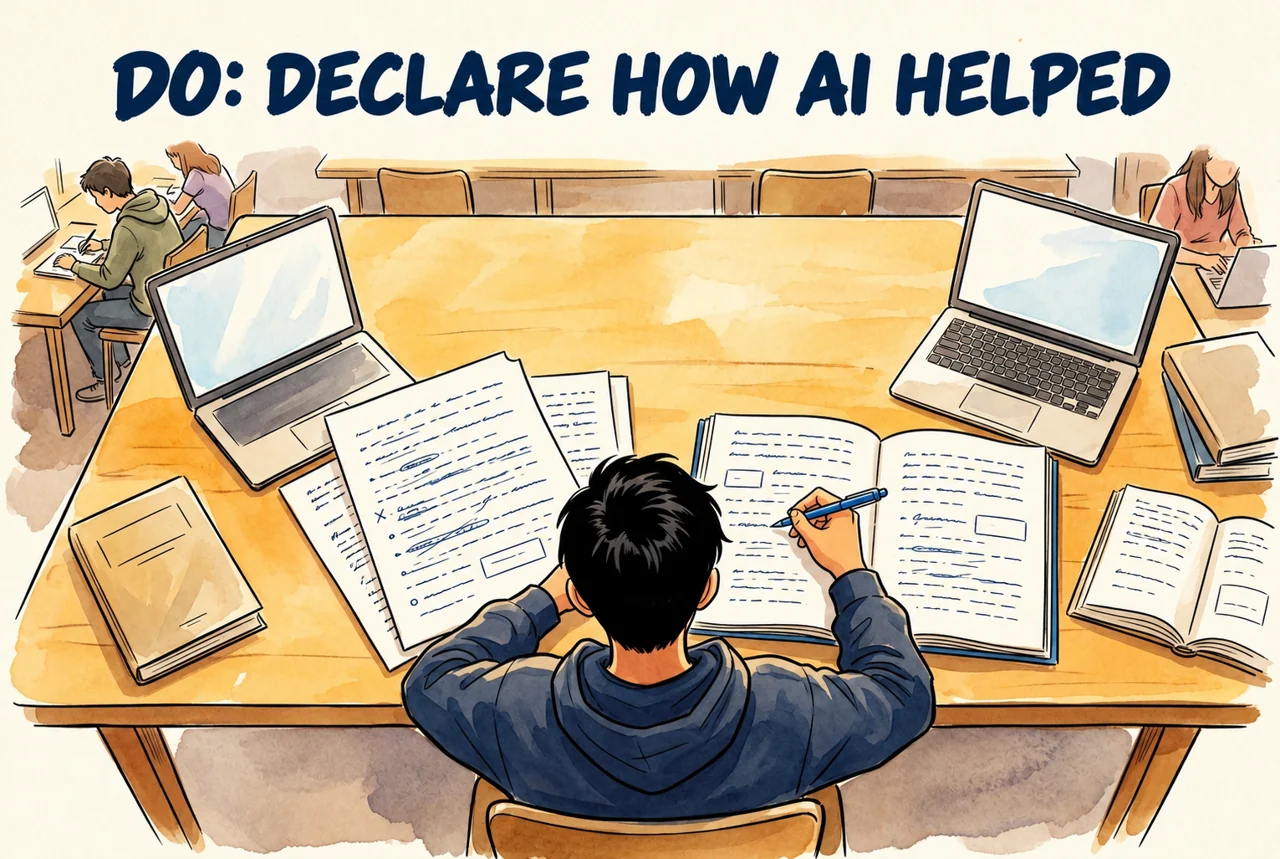
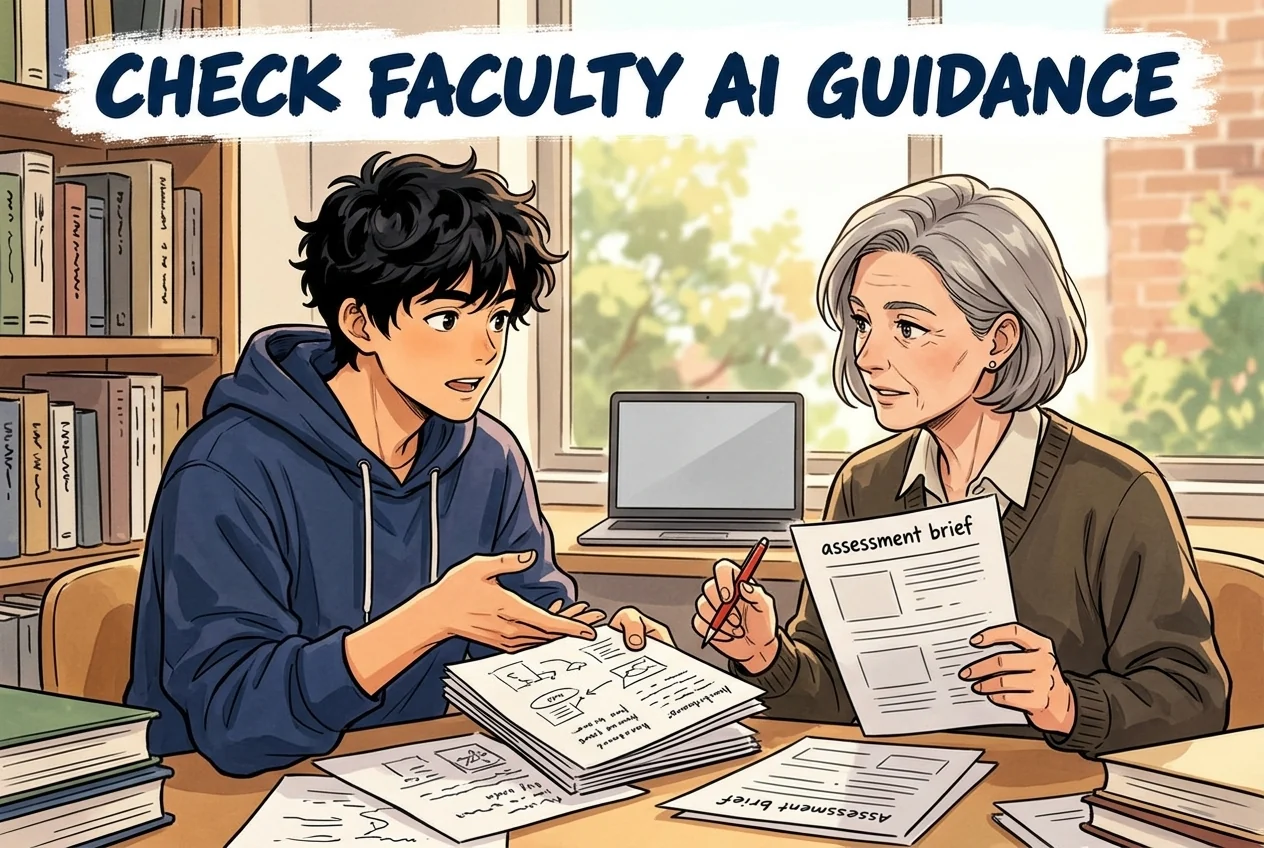
- Check the actual faculty and assessment AI instructions.
- Disclose AI help and keep your own responsibility clear.
- For access barriers where AI is permitted, ask about equitable alternatives.
Johannesburg, South Africa
Student guide · Task rules and procedure
The formal Wits AI Policy took effect on 4 June 2026. Follow faculty/task rules and disclose AI; public-AI privacy and equitable alternatives have stated conditions. Science Copilot guidance is faculty-scoped. The older framework claim and 2022 misconduct procedure retain their dates and separate routes.
Panduan dasar di bawah adalah dalam bahasa Inggeris; bukti rasmi dikekalkan dalam bahasa asal.
Ringkasan lengkap peraturan pelajar belum tersedia; rujuk pernyataan dan sumber yang dikumpulkan.
The formal Wits AI Policy took effect on 4 June 2026. Follow faculty/task rules and disclose AI; public-AI privacy and equitable alternatives have stated conditions. Science Copilot guidance is faculty-scoped. The older framework claim and 2022 misconduct procedure retain their dates and separate routes.
Tambahan dikumpulkan: 2026-10-08 · Pemakaian semasa belum disahkan secara bebas
Ringkasan kini tersedia dalam bahasa Inggeris
Tafsiran laman
Wits asks staff and students to follow faculty ethical-AI guidance and related assessment, plagiarism and integrity rules. An understanding of the principles should be declared in formal assessment submissions using the Appendix template. Check the actual faculty/task conditions; this institutional policy is not blanket assessment permission.
Skop: students · Scope is limited to the cited official source and stated conditions; this is a local candidate, not a complete university rule set.
Skop: students · university
An acknowledgement of an understanding of the above principles as they relate to the productive
and fair use of AI for all academic work should be declared in all formal submissions for assessment at
the University through the comprehensive template provided as in appendix 1 attached hereto.
5. ROLES AND RESPONSIBILITIES
It is the responsibility of all staff and students to:
• Uphold the principles of AI use as per this policy
• Follow the guidelines of ethical AI use in assessments and research as specified by the
Faculties
• Adhere to this policy as well as related Standing Orders on Assessment, Plagiarism Policy,
Academic Integrity Policy and other relevant University policies that guide learning, teaching
and research.Lihat sumber rasmi ↗Dikumpulkan: 2026-10-08 · 351–364
SHA-256: 8e758bdf1bf8e4c733b8026108485147f9faf8703e422174341c52ca7995ebde
Tafsiran laman
Individuals remain responsible for originality, accuracy and integrity, and AI use must be transparently disclosed and acknowledged. Research use should be described in dedicated write-up sections for reproducibility; AI cannot be an author. Tool use does not remove responsibility for misconduct.
Skop: students · Scope is limited to the cited official source and stated conditions; this is a local candidate, not a complete university rule set.
Skop: students · university
4.2. Uphold Unwavering Academic Integrity and Personal Accountability.
The University underscores that the individual scholar (or human team) remains fully responsible
for the originality, accuracy, and integrity of their work. The use of AI must be transparently
6 POLICY: ARTIFICIAL INTELLIGENCE
SECRETARIAT
REGISTRY
disclosed and appropriately acknowledged in line with university policy. The use of a tool does not
absolve the user of responsibility for any academic misconduct, including but not limited to
plagiarism, falsification, fabrication or improper attribution. In line with good research practice,
researchers should commit to describing their use of AI tools transparently to facilitate the
reproducibility of their methods and findings in dedicated sections in the final write up of the study
as a matter of course (University of Oxford, 2025), remembering that AI cannot be an author on any
work.
Just as you would cite a book, article, or dataset, acknowledging AI tools respects intellectual
property and gives credit to the sources that contributed to your work. Further, when AI is used, it's
crucial that the author understands the content and can take responsibility for it. Declaring AI use
helps educators and reviewers assess whether the student or researcher truly grasps the material.Lihat sumber rasmi ↗Dikumpulkan: 2026-10-08 · 207–227
SHA-256: 8e758bdf1bf8e4c733b8026108485147f9faf8703e422174341c52ca7995ebde
Tafsiran laman
Under the published 2022 Student Academic Misconduct Policy, the SAMC confirms whether the student wishes to appear or make representations; its developmental proceedings do not permit legal representation. Records and previous infringements are considered under that policy. This is a general procedure, not an automatic AI verdict.
Skop: students · Published 2022 Student Academic Misconduct Policy; formal 2018 Student Discipline rules remain separate and were not obtained as a current full text.
Skop: students · university
8.3. The SAMC considers reported infringements and scrutinises the publication of conventions within
the School.
8.4. The SAMC is required to:
8.4.1. Confirm whether the student concerned wishes to appear and/or make representations
before the SAMC. Given that the nature of the processes before the SAMC are not
intended to be adversarial and/or legalistic in nature, but instead developmental, no legal
representation will be permitted for the purpose of those processes.
8.4.2. Note the nature and keep a record of minor infringements, as well as the penalties
imposed by academic staff members. The SAMC should identify trends and patterns and
bring these to the attention of the Head of School and individual academic staff members
as this information may have value to the educational development of students.
8.4.3. Ensure and monitor that accurate records are kept as needed.
8.4.4. Consider the student’s record to ascertain whether there have been previous instances
of Academic Misconduct recorded or noted against the student.
8.4.5. Always act within the spirit and principles of this Policy.Lihat sumber rasmi ↗Dikumpulkan: 2026-10-08 · 375–395
SHA-256: 60fbb355f903fd9ab98238c849ea592b06b1b0f5a47a7ec368e7f1348348326f
Tafsiran laman
The general non-plagiarism table distinguishes Level 1 minor first cases (academic staff, appeal to SAMC) from Level 2 significant/repeated cases (SAMC, appeal to Faculty Dean). Conditional sanctions include up to 100% of work marks within the DP limit; Level 2 may include up to 15 hours community service or referral to SDC. SAMC/Dean appeal decisions are final on these routes; no numeric appeal deadline is given here.
Skop: students · 2022 general non-plagiarism table only; plagiarism and SDC have separate provisions. No automatic AI sanction.
Skop: students · university
Level Description Disciplinary Forum Appeal Forum
1 Minor first-time The relevant academic staff SAMC may:
infringements may: - Uphold the decision of the
- Impose a penalty of up to academic staff member;
100% of the mark for that work or
but not more severe than the - Set aside or amend the
loss of Duty Performed (DP). decision of the
Such penalty may be limited to academic staff
a 100% penalty for a specific member to a lesser
question in an assessment; penalty;
The decision of the SAMC is
final.
2 Significant first-time SAMC may: Faculty Dean may:
infringements or repeat - Impose a penalty of up to - Uphold the decision of the
infringements. 100% of the mark for that SAMC;
work but not more severe - Set aside or amend the
than the loss of Duty decision of the SAMC to
Performed (DP); AND / OR a lesser penalty; or
- Community service of up to 15 - Refer the matter to the SDC.
hours, as per the attached
The decision of the Dean is
Guideline.
final.
- In matters where the merits
and the extent of the
conduct so warrant, the
SAMC may refer the matter
to the SDC.Lihat sumber rasmi ↗Dikumpulkan: 2026-10-08 · 266–293
SHA-256: 60fbb355f903fd9ab98238c849ea592b06b1b0f5a47a7ec368e7f1348348326f
Tafsiran laman
The linked Wits AI Policy records Council approval and effect from 4 June 2026. This is newer than the retained May 2026 reviewed claim describing the earlier framework as not a policy document; the old claim remains a dated record, not a description of this new policy.
Skop: students · Scope is limited to the cited official source and stated conditions; this is a local candidate, not a complete university rule set.
Skop: students · university
Policy Title AI (Artificial Intelligence)
Policy Officer Registrar/ Deputy Vice Chancellor Research & Innovation
Date Approved by Council 4 June 2026
Date Effective From 4 June 2026
This Policy is to be read in conjunction with the Wits.POPIA Policy.Lihat sumber rasmi ↗Dikumpulkan: 2026-10-08 · 35–42
SHA-256: 8e758bdf1bf8e4c733b8026108485147f9faf8703e422174341c52ca7995ebde
Tafsiran laman
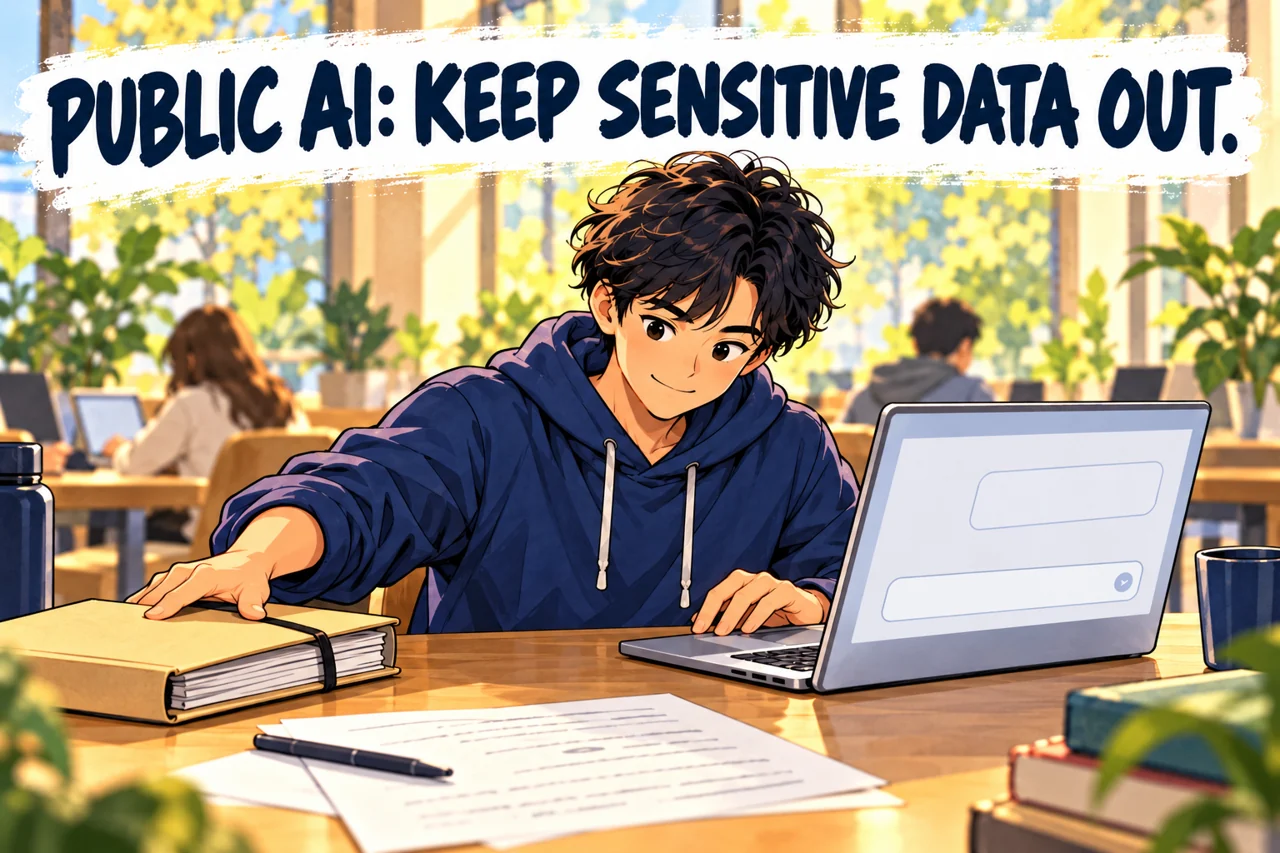
The policy says sensitive/personal data should not be entered into public AI and requires honest records of how and where meaningful AI helped research or major administrative tasks. Where AI is permitted, equitable alternatives and pathways will be available for access barriers. This does not authorize AI in prohibited tasks.
Skop: students · Scope is limited to the cited official source and stated conditions; this is a local candidate, not a complete university rule set.
Skop: students · university
Staff and students engaging with AI must be mindful of the risks relating to data security,
confidentiality, privacy, and intellectual property. Sensitive and / or personal data should not be
entered into public AI systems, as this may compromise research participants, or intellectual
property. Disclosure of confidential data may also destroy novelty or originality, placing intellectual
8 POLICY: ARTIFICIAL INTELLIGENCE
SECRETARIAT
REGISTRY
property in the public domain.
The Protection of Personal Information Act No. 04 of 2013 (POPIA) imposes obligations regarding
the collection and processing of personal information, including informed consent, minimal data
collection, and lawful, specific purposes. Use of AI with identifiable sensitive and
/ or personal data, without anonymisation or pseudonymisation, may result in non-compliance with
POPIA.
Content generated entirely by AI, without meaningful human creative input, will not attract
copyright protection. Where AI is used as an assistive tool, the human contributor must exercise
genuine creative judgment and skill for copyright to vest which would fall under the Copyright Act
No. 98 of 1978 in which protection applies only to original works authored by natural persons.
For any research or major administrative task/s where AI has played a meaningful role, it is required
that staff and students make an honest declaration by recording how and where AI was used. This
“decision provenance” helps ensure transparency and accountability in the process. Examples of
such declarations are available in Faculty documents and can be accessed at AI Policies - Wits
University
4.6. Equitable, Inclusive and Socially Just AI practices
The University is committed to ensuring that the integration of AI into teaching and learning,
research, and administration promotes fairness and inclusivity. The implementation of AI must,
as far as is reasonably possible, avoid reinforcing or worsening existing social, economic, and /
or educational inequalities.
The University recognises that unequal access to digital infrastructure, affordable data, and reliable
devices may disadvantage some members of our university community. To address this, the
University will actively work to mitigate challenges associated with the digital divide, data costs, and
accessibility. Where AI is permitted, equitable alternatives and pathways will be made available to
students and staff who encounter barriers to access.Lihat sumber rasmi ↗Dikumpulkan: 2026-10-08 · 297–337
SHA-256: 8e758bdf1bf8e4c733b8026108485147f9faf8703e422174341c52ca7995ebde
Tafsiran laman
The Faculty of Science student guide recommends institution-approved Microsoft Copilot through the WITS ICT login and attributes privacy/no-training protection to that service. The passage is Science guidance; individual account access, provider behavior and assessment permission were not independently tested.
Skop: Faculty of Science · Scope is limited to the cited official source and stated conditions; this is a local candidate, not a complete university rule set.
Skop: Faculty of Science students · faculty
Use the institution-approved AI tool. Don’t use unapproved or public AI tools where
data privacy or security could be a concern.
Use Microsoft Copilot
(https://copilot.microsoft.com/), accessible
with your WITS ICT login. Your data stays
private and is not used to train the AI, making
the use secure and confidential.Lihat sumber rasmi ↗Dikumpulkan: 2026-10-08 · 190–196
SHA-256: 06b85a74c6ae1a6d09af51e3bb385d1a9bc806e496f07a3dd22b74eded3df3fb
Tambahan berasaskan sumber yang diterbitkan. Ringkasan Inggeris dan petikan asal dipisahkan daripada rekod yang disemak. Proses dan hasil bukan hukuman automatik bagi penggunaan AI. Pemakaian semasa belum disahkan secara bebas; semak skop dan versi sumber.
Disemak dengan teks tersimpan; bukan terjemahan rasmi
Hash membolehkan perbandingan teks tersimpan; ia tidak mengesahkan kesahan semasa atau ketidakbolehubahan. Tema ini bukan urutan wajib.
Akses alat bukan kebenaran menggunakannya dalam penilaian. Semak peraturan tugasan, pengguna yang layak dan sekatan data.
Rekod alat berasaskan sumber belum diwujudkan untuk universiti ini. Ini tidak bermaksud alat tiada atau AI dilarang.
Reviewed record
Pernyataan yang disemak: 4
Academic Integrity
Nilai ternormalisasi: responsibility_disclosure_acknowledgement
Bukti asal
Bukti 1The University underscores that the individual scholar (or human team) remains fully responsible for the originality, accuracy, and integrity of their work. The use of AI must be transparently disclosed and appropriately acknowledged in line with university policy.
Pengajaran
Nilai ternormalisasi: cltd_gai_guidelines_learning_teaching_research_audience
Bukti asal
Bukti 1These guidelines are intended for a broad audience within the higher education community, including: Academic staff; Students; Researchers; Administrators and Policy Makers.
Privasi
Nilai ternormalisasi: sensitive_personal_data_public_ai_caution
Bukti asal
Bukti 1Staff and students engaging with AI must be mindful of the risks relating to data security, confidentiality, privacy, and intellectual property. Sensitive and / or personal data should not be entered into public AI systems.
Source Status
Nilai ternormalisasi: ai_framework_not_policy_document
Bukti asal
Bukti 1The University has established six broad principles that provide a common framework for the ethical use of AI, ensuring that academic integrity and research ethics are upheld. This framework is not a policy document.
Source record
Sumber: 2
wits.ac.za
wits.ac.za
Citation: University AI Policy Tracker. "University of Witwatersrand AI Policy Tracker record." Last checked May 16, 2026. https://eduaipolicy.org/universities/university-of-witwatersrand
Original university source language remains canonical. This tracker is not an official university statement.
Buka log perubahanSaved from University AI Policy Tracker. This record summarizes the cited sources; it is not an official university statement or assessment permission. Source and review dates are listed above. Hashes identify retained content, not authorization.