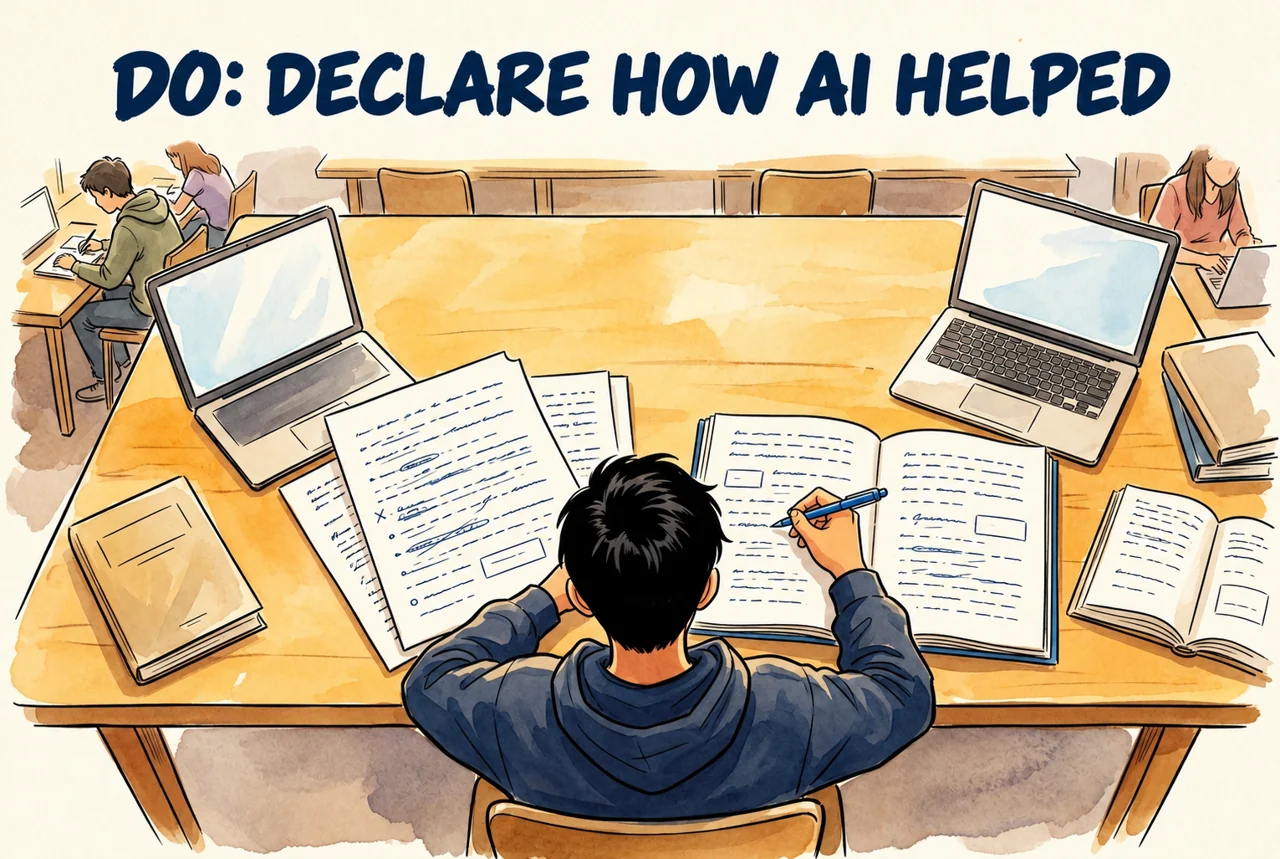
建议做
Johannesburg, South Africa
本站使用指南
Wits 正式 AI Policy 于 2026 年 6 月 4 日生效。须按学院/任务规则并披露;公开 AI 隐私与公平替代途径有规定条件。Science Copilot 指导限学院范围。旧框架记录及 2022 违规程序保留日期与单独路线。
本站解读;官方证据保留原文。
尚无完整的学生政策摘要;可先查看已收录条款及来源。
Wits 正式 AI Policy 于 2026 年 6 月 4 日生效。须按学院/任务规则并披露;公开 AI 隐私与公平替代途径有规定条件。Science Copilot 指导限学院范围。旧框架记录及 2022 违规程序保留日期与单独路线。
补充资料采集: 2026-10-08 · 现行适用性未独立确认
本站解读
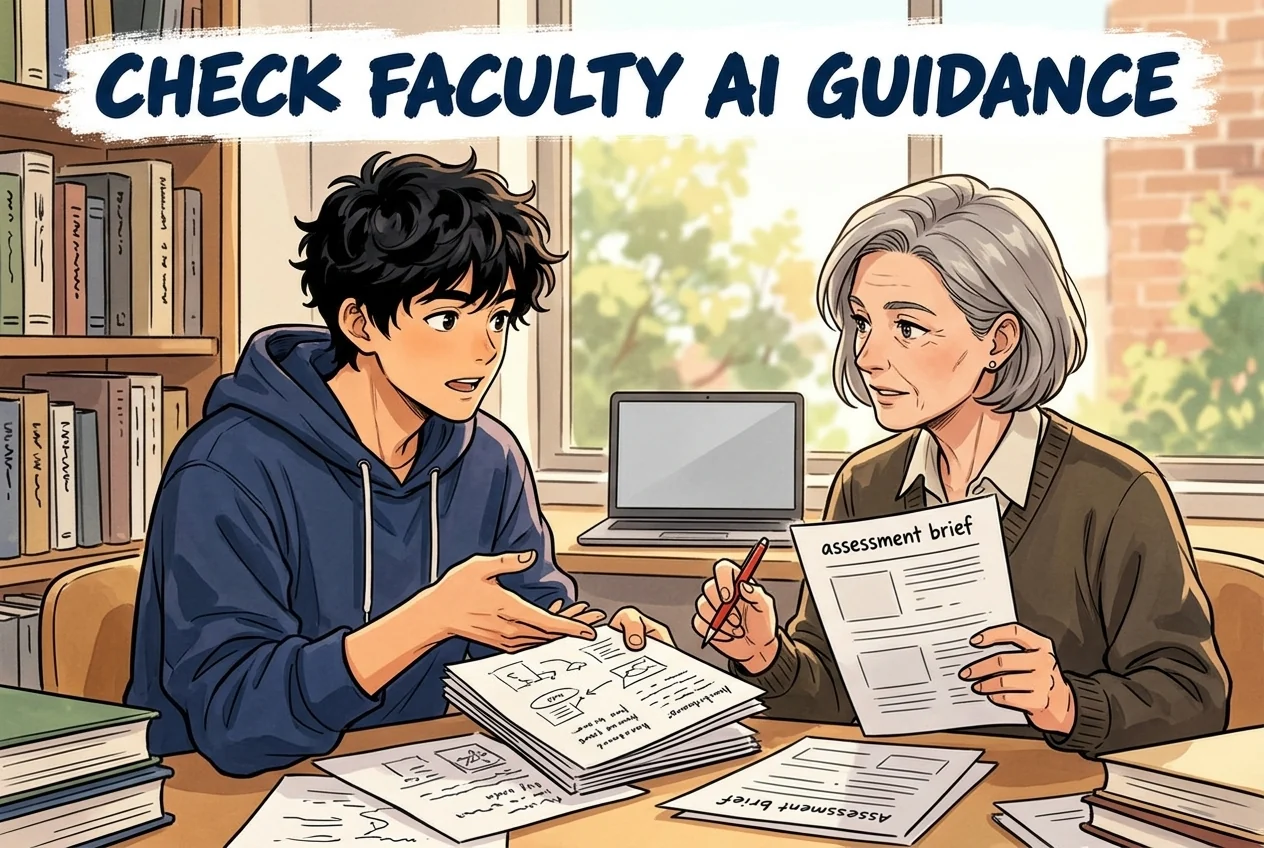
Wits 要求师生遵守学院伦理 AI 指导及相关评估、抄袭、诚信规则,并称正式评估提交应以附录模板声明理解相关原则。须查具体学院/任务条件,校级政策不是评估一概许可。
适用范围: students · Scope is limited to the cited official source and stated conditions; this is a local candidate, not a complete university rule set.
Wits asks staff and students to follow faculty ethical-AI guidance and related assessment, plagiarism and integrity rules. An understanding of the principles should be declared in formal assessment submissions using the Appendix template. Check the actual faculty/task conditions; this institutional policy is not blanket assessment permission.
适用范围: students · university
An acknowledgement of an understanding of the above principles as they relate to the productive
and fair use of AI for all academic work should be declared in all formal submissions for assessment at
the University through the comprehensive template provided as in appendix 1 attached hereto.
5. ROLES AND RESPONSIBILITIES
It is the responsibility of all staff and students to:
• Uphold the principles of AI use as per this policy
• Follow the guidelines of ethical AI use in assessments and research as specified by the
Faculties
• Adhere to this policy as well as related Standing Orders on Assessment, Plagiarism Policy,
Academic Integrity Policy and other relevant University policies that guide learning, teaching
and research.查看官方来源 ↗采集日期: 2026-10-08 · 351–364
SHA-256: 8e758bdf1bf8e4c733b8026108485147f9faf8703e422174341c52ca7995ebde
本站解读
个人仍对原创、准确及诚信负责,AI 使用必须透明披露并致谢。研究用途应在专门章节说明以支持可重复性,AI 不能列为作者。使用工具不免除违规责任。
适用范围: students · Scope is limited to the cited official source and stated conditions; this is a local candidate, not a complete university rule set.
Individuals remain responsible for originality, accuracy and integrity, and AI use must be transparently disclosed and acknowledged. Research use should be described in dedicated write-up sections for reproducibility; AI cannot be an author. Tool use does not remove responsibility for misconduct.
适用范围: students · university
4.2. Uphold Unwavering Academic Integrity and Personal Accountability.
The University underscores that the individual scholar (or human team) remains fully responsible
for the originality, accuracy, and integrity of their work. The use of AI must be transparently
6 POLICY: ARTIFICIAL INTELLIGENCE
SECRETARIAT
REGISTRY
disclosed and appropriately acknowledged in line with university policy. The use of a tool does not
absolve the user of responsibility for any academic misconduct, including but not limited to
plagiarism, falsification, fabrication or improper attribution. In line with good research practice,
researchers should commit to describing their use of AI tools transparently to facilitate the
reproducibility of their methods and findings in dedicated sections in the final write up of the study
as a matter of course (University of Oxford, 2025), remembering that AI cannot be an author on any
work.
Just as you would cite a book, article, or dataset, acknowledging AI tools respects intellectual
property and gives credit to the sources that contributed to your work. Further, when AI is used, it's
crucial that the author understands the content and can take responsibility for it. Declaring AI use
helps educators and reviewers assess whether the student or researcher truly grasps the material.查看官方来源 ↗采集日期: 2026-10-08 · 207–227
SHA-256: 8e758bdf1bf8e4c733b8026108485147f9faf8703e422174341c52ca7995ebde
本站解读
公布的 2022 Student Academic Misconduct Policy 要求 SAMC 确认学生是否希望出席/陈述;其发展教育性质程序不允许法律代表。按该政策保留记录并考虑既往违规。这是一般程序,不是 AI 自动认定。
适用范围: students · Published 2022 Student Academic Misconduct Policy; formal 2018 Student Discipline rules remain separate and were not obtained as a current full text.
Under the published 2022 Student Academic Misconduct Policy, the SAMC confirms whether the student wishes to appear or make representations; its developmental proceedings do not permit legal representation. Records and previous infringements are considered under that policy. This is a general procedure, not an automatic AI verdict.
适用范围: students · university
8.3. The SAMC considers reported infringements and scrutinises the publication of conventions within
the School.
8.4. The SAMC is required to:
8.4.1. Confirm whether the student concerned wishes to appear and/or make representations
before the SAMC. Given that the nature of the processes before the SAMC are not
intended to be adversarial and/or legalistic in nature, but instead developmental, no legal
representation will be permitted for the purpose of those processes.
8.4.2. Note the nature and keep a record of minor infringements, as well as the penalties
imposed by academic staff members. The SAMC should identify trends and patterns and
bring these to the attention of the Head of School and individual academic staff members
as this information may have value to the educational development of students.
8.4.3. Ensure and monitor that accurate records are kept as needed.
8.4.4. Consider the student’s record to ascertain whether there have been previous instances
of Academic Misconduct recorded or noted against the student.
8.4.5. Always act within the spirit and principles of this Policy.查看官方来源 ↗采集日期: 2026-10-08 · 375–395
SHA-256: 60fbb355f903fd9ab98238c849ea592b06b1b0f5a47a7ec368e7f1348348326f
本站解读
一般非 plagiarism 表区分 Level 1 轻微首次案件(教师处理,向 SAMC 申诉)与 Level 2 显著/重复案件(SAMC 处理,向 Faculty Dean 申诉)。附条件处分包括 DP 上限内最多扣除作品 100% 分数;Level 2 可加最多 15 小时社区服务或转 SDC。这些路线 SAMC/Dean 申诉决定为最终,本段没有数值申诉期限。
适用范围: students · 2022 general non-plagiarism table only; plagiarism and SDC have separate provisions. No automatic AI sanction.
The general non-plagiarism table distinguishes Level 1 minor first cases (academic staff, appeal to SAMC) from Level 2 significant/repeated cases (SAMC, appeal to Faculty Dean). Conditional sanctions include up to 100% of work marks within the DP limit; Level 2 may include up to 15 hours community service or referral to SDC. SAMC/Dean appeal decisions are final on these routes; no numeric appeal deadline is given here.
适用范围: students · university
Level Description Disciplinary Forum Appeal Forum
1 Minor first-time The relevant academic staff SAMC may:
infringements may: - Uphold the decision of the
- Impose a penalty of up to academic staff member;
100% of the mark for that work or
but not more severe than the - Set aside or amend the
loss of Duty Performed (DP). decision of the
Such penalty may be limited to academic staff
a 100% penalty for a specific member to a lesser
question in an assessment; penalty;
The decision of the SAMC is
final.
2 Significant first-time SAMC may: Faculty Dean may:
infringements or repeat - Impose a penalty of up to - Uphold the decision of the
infringements. 100% of the mark for that SAMC;
work but not more severe - Set aside or amend the
than the loss of Duty decision of the SAMC to
Performed (DP); AND / OR a lesser penalty; or
- Community service of up to 15 - Refer the matter to the SDC.
hours, as per the attached
The decision of the Dean is
Guideline.
final.
- In matters where the merits
and the extent of the
conduct so warrant, the
SAMC may refer the matter
to the SDC.查看官方来源 ↗采集日期: 2026-10-08 · 266–293
SHA-256: 60fbb355f903fd9ab98238c849ea592b06b1b0f5a47a7ec368e7f1348348326f
本站解读
所链接 Wits AI Policy 记录 2026 年 6 月 4 日 Council 批准并生效。它晚于保留的 2026 年 5 月已审核记录,后者称旧框架并非政策文件;旧记录作为有日期记录保留,不描述这份新政策。
适用范围: students · Scope is limited to the cited official source and stated conditions; this is a local candidate, not a complete university rule set.
The linked Wits AI Policy records Council approval and effect from 4 June 2026. This is newer than the retained May 2026 reviewed claim describing the earlier framework as not a policy document; the old claim remains a dated record, not a description of this new policy.
适用范围: students · university
Policy Title AI (Artificial Intelligence)
Policy Officer Registrar/ Deputy Vice Chancellor Research & Innovation
Date Approved by Council 4 June 2026
Date Effective From 4 June 2026
This Policy is to be read in conjunction with the Wits.POPIA Policy.查看官方来源 ↗采集日期: 2026-10-08 · 35–42
SHA-256: 8e758bdf1bf8e4c733b8026108485147f9faf8703e422174341c52ca7995ebde
本站解读
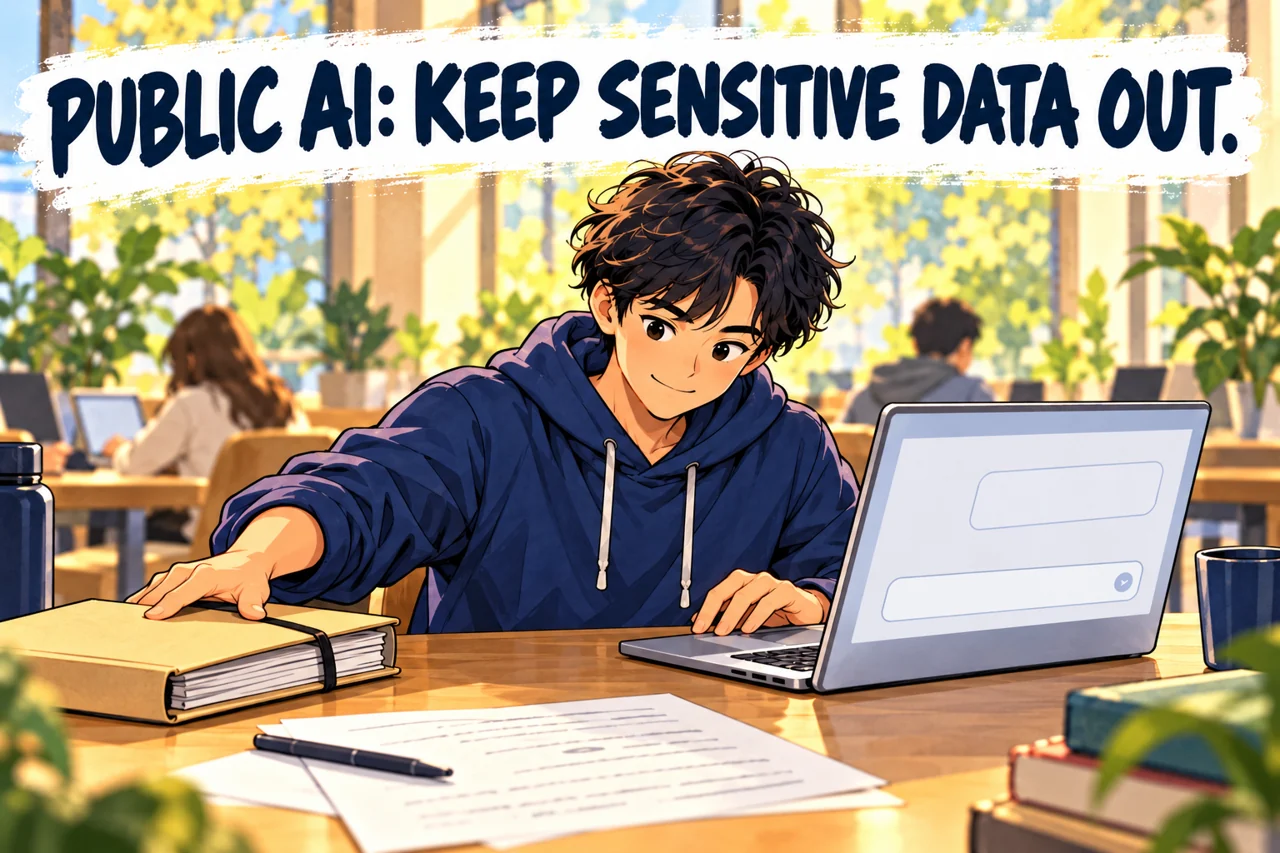
政策称敏感/个人数据不应输入公开 AI;研究或重大行政任务中有实质 AI 贡献时,须诚实记录如何及何处使用。AI 获准时,会为访问障碍提供公平替代途径;不赋予禁用任务的 AI 许可。
适用范围: students · Scope is limited to the cited official source and stated conditions; this is a local candidate, not a complete university rule set.
The policy says sensitive/personal data should not be entered into public AI and requires honest records of how and where meaningful AI helped research or major administrative tasks. Where AI is permitted, equitable alternatives and pathways will be available for access barriers. This does not authorize AI in prohibited tasks.
适用范围: students · university
Staff and students engaging with AI must be mindful of the risks relating to data security,
confidentiality, privacy, and intellectual property. Sensitive and / or personal data should not be
entered into public AI systems, as this may compromise research participants, or intellectual
property. Disclosure of confidential data may also destroy novelty or originality, placing intellectual
8 POLICY: ARTIFICIAL INTELLIGENCE
SECRETARIAT
REGISTRY
property in the public domain.
The Protection of Personal Information Act No. 04 of 2013 (POPIA) imposes obligations regarding
the collection and processing of personal information, including informed consent, minimal data
collection, and lawful, specific purposes. Use of AI with identifiable sensitive and
/ or personal data, without anonymisation or pseudonymisation, may result in non-compliance with
POPIA.
Content generated entirely by AI, without meaningful human creative input, will not attract
copyright protection. Where AI is used as an assistive tool, the human contributor must exercise
genuine creative judgment and skill for copyright to vest which would fall under the Copyright Act
No. 98 of 1978 in which protection applies only to original works authored by natural persons.
For any research or major administrative task/s where AI has played a meaningful role, it is required
that staff and students make an honest declaration by recording how and where AI was used. This
“decision provenance” helps ensure transparency and accountability in the process. Examples of
such declarations are available in Faculty documents and can be accessed at AI Policies - Wits
University
4.6. Equitable, Inclusive and Socially Just AI practices
The University is committed to ensuring that the integration of AI into teaching and learning,
research, and administration promotes fairness and inclusivity. The implementation of AI must,
as far as is reasonably possible, avoid reinforcing or worsening existing social, economic, and /
or educational inequalities.
The University recognises that unequal access to digital infrastructure, affordable data, and reliable
devices may disadvantage some members of our university community. To address this, the
University will actively work to mitigate challenges associated with the digital divide, data costs, and
accessibility. Where AI is permitted, equitable alternatives and pathways will be made available to
students and staff who encounter barriers to access.查看官方来源 ↗采集日期: 2026-10-08 · 297–337
SHA-256: 8e758bdf1bf8e4c733b8026108485147f9faf8703e422174341c52ca7995ebde
本站解读
Science 学院学生指南推荐用 WITS ICT 账号访问校方批准 Microsoft Copilot,并说明该服务隐私/不训练保护。这是 Science 指导;未独立实测个人账号、供应商行为或评估许可。
适用范围: Faculty of Science · Scope is limited to the cited official source and stated conditions; this is a local candidate, not a complete university rule set.
The Faculty of Science student guide recommends institution-approved Microsoft Copilot through the WITS ICT login and attributes privacy/no-training protection to that service. The passage is Science guidance; individual account access, provider behavior and assessment permission were not independently tested.
适用范围: Faculty of Science students · faculty
Use the institution-approved AI tool. Don’t use unapproved or public AI tools where
data privacy or security could be a concern.
Use Microsoft Copilot
(https://copilot.microsoft.com/), accessible
with your WITS ICT login. Your data stays
private and is not used to train the AI, making
the use secure and confidential.查看官方来源 ↗采集日期: 2026-10-08 · 190–196
SHA-256: 06b85a74c6ae1a6d09af51e3bb385d1a9bc806e496f07a3dd22b74eded3df3fb
已发布的来源补充。英文摘要与原语言引文和已审核记录分开展示。这里列出可能的程序与结果,不是使用 AI 的自动处罚;现行适用性尚未独立确认,请核对来源的适用范围和版本。
按所存原文核对;不是官方译文
哈希仅用于核对所存内容,不证明现行有效性或不可篡改。这些主题不表示每个学生都会经历的流程。
能获取工具不等于获准在作业中使用。请同时核对任务规则、适用人员和数据限制。
尚未建立这所大学的可靠工具记录。这不代表工具不存在,也不代表禁止使用 AI。
Reviewed record
4 条已审核条款
Academic Integrity
标准化值: responsibility_disclosure_acknowledgement
原始证据
证据 1The University underscores that the individual scholar (or human team) remains fully responsible for the originality, accuracy, and integrity of their work. The use of AI must be transparently disclosed and appropriately acknowledged in line with university policy.
教学
标准化值: cltd_gai_guidelines_learning_teaching_research_audience
原始证据
证据 1These guidelines are intended for a broad audience within the higher education community, including: Academic staff; Students; Researchers; Administrators and Policy Makers.
隐私
标准化值: sensitive_personal_data_public_ai_caution
原始证据
证据 1Staff and students engaging with AI must be mindful of the risks relating to data security, confidentiality, privacy, and intellectual property. Sensitive and / or personal data should not be entered into public AI systems.
Source Status
标准化值: ai_framework_not_policy_document
原始证据
证据 1The University has established six broad principles that provide a common framework for the ethical use of AI, ensuring that academic integrity and research ethics are upheld. This framework is not a policy document.
Source record
2 个来源
wits.ac.za
wits.ac.za
Citation: University AI Policy Tracker. "University of Witwatersrand AI Policy Tracker record." Last checked May 16, 2026. https://eduaipolicy.org/universities/university-of-witwatersrand
Original university source language remains canonical. This tracker is not an official university statement.
打开变更日志Saved from University AI Policy Tracker. This record summarizes the cited sources; it is not an official university statement or assessment permission. Source and review dates are listed above. Hashes identify retained content, not authorization.