建议做
Turku, Finland
本站使用指南
不端程序涉及虚报能力、听取意见及有范围的处罚;明确考场作弊另有例外。AI 评论不替代未取得教学指导。
本站解读;官方证据保留原文。
尚无完整的学生政策摘要;可先查看已收录条款及来源。
不端程序涉及虚报能力、听取意见及有范围的处罚;明确考场作弊另有例外。AI 评论不替代未取得教学指导。
补充资料采集: 2026-10-09 · 现行适用性未独立确认
本站解读
不端指导禁止违反教师要求或使用禁用辅助;以 AI 虚报本人能力也属禁止,不是全面禁止所有学习 AI 使用。
适用范围: Students in the cited programme/course/stage only · Only the captured source, version, audience and conditions; no exhaustive currency certification.
The misconduct guideline prohibits disregarding teacher instructions or using forbidden aids. AI is forbidden when used to give a false impression of the student’s competence; this is not a blanket prohibition of every AI study use.
适用范围: Students in the cited programme/course/stage only · university
3.2 Misconduct in studies
Misconduct refers to purposeful fraudulent action or disregard, and, as its result, the student gives a false impression of their own or someone else’s competence. It is also considered as misconduct when the student disregards the teacher’s instructions while working on the study attainment or uses forbidden means or tools. Using AI is also forbidden if the student aims to give a false impression of their own competence.查看官方来源 ↗采集日期: 2026-10-09 · 114–115
SHA-256: ee74f8ad76684362238320fe39db194eb263003e83bcbdbfcc3de44d69fdf5fd
本站解读
处分前须听取学生意见,可带支持人员;轻微疏忽可由教师指导纠正而不转介。通常须先按程序确认不端才可不通过,明确的考场作弊另有例外。
适用范围: Students in the cited programme/course/stage only · Only the captured source, version, audience and conditions; no exhaustive currency certification.
Students must be heard before disciplinary decisions and may bring a support person. For minor carelessness the teacher can give corrective instructions instead of referring the case. Ordinarily misconduct must first be confirmed under this procedure before failing the work; an obvious lecture-hall cheating exception exists.
适用范围: Students in the cited programme/course/stage only · university
Obvious lecture-hall cheating may be failed immediately with notification, without a full investigation; evaluation appeal remains.
4.1 Student's legal protection
When investigating a student’s misconduct, practices of good governance must be followed. It is especially important that the matter is handled without undue delay and that the student has a chance to be heard before any disciplinary action is decided. The student must have a chance to bring a support person to the personal hearing, dean’s reprimand or other meeting organised by the University for handling the matter. The handling of the alleged misconduct is not public, but the decision documents are mostly public. Document publicity means that anyone can request to see the document or the information it contains. While the investigation is ongoing, the matter is brought only to the attention of the concerned parties and those persons whose work tasks it involves or persons who can provide additional clarification in the matter. The student must be informed about the progress of the investigation.
4.2 Procedure in handling misconduct
This chapter describes the responsibilities and tasks of each actor in the investigation process.
Teacher
In this context, teacher refers to the teacher in charge of the course/thesis supervisor.
The teacher reports the suspected violation to the administrative officer who investigates the matter (investigator) if the teacher cannot exclude misconduct or disregard for good scientific practice. In unclear cases, the teacher will first notify the student about their suspicion and give them an opportunity to give an oral or written explanation. If according to the teacher’s estimation the case involves a minor carelessness or ignorance on behalf of the student, the teacher gives instructions on correct practices and returns the work to the student for correction. In these cases, the matter is not forwarded to the investigator, but the teacher can consult them if they wish. The teacher cannot fail the study attainment on the basis of misconduct if the violation has not first been confirmed with the procedure described in this guideline (see the possible exceptional procedure for lecture hall exams below).
When the teacher deems it appropriate to report the suspected misconduct to the investigator, the teacher gives their own written account on the matter. The evaluation of the study attainment shall be suspended until the matter is solved. If it is concluded in the investigation that the student has committed misconduct, the teacher must fail the study attainment. The student can appeal the failing grade similar to other evaluation of study attainments.查看官方来源 ↗采集日期: 2026-10-09 · 138–145
SHA-256: ee74f8ad76684362238320fe39db194eb263003e83bcbdbfcc3de44d69fdf5fd
Examination in a lecture hall (incl. electronic exams in lecture halls)
In obvious cheating cases, the supervisor notifies the student about their observation immediately, asks the student to leave the exam, and a failing grade is given to the student for the exam. In these exceptional cases, the matter does not require instigating an investigation, as only a notification and a description of the event to the investigator is sufficient. To ensure the student’s legal protection, the student has the right also in these cases to make an appeal on the evaluation of the exam after the exam results have been published. Instead, if the matter concerns a suspected cheating, the exam supervisor notifies the student after the exam and notifies the responsible teacher of the course. In the notification, they describe the observation, the student’s possible explanation, and the taken action as well as their own written account on the matter.查看官方来源 ↗采集日期: 2026-10-09 · 149–150
SHA-256: ee74f8ad76684362238320fe39db194eb263003e83bcbdbfcc3de44d69fdf5fd
本站解读
确认不端可导致不通过、训诫、书面警告或停学;整门课程不通过保留对患者或外部人员造成不合理不利等例外。严重或警告后重复不端,可由 Board 停学,最多一年。
适用范围: Students in the cited programme/course/stage only · Only the captured source, version, audience and conditions; no exhaustive currency certification.
Confirmed misconduct can result in failure, reprimand, written warning or suspension. Entire-course failure has an unreasonable-disadvantage exception, for example for patients or external parties. Serious or repeated misconduct after a warning may lead to Board suspension for at most one year.
适用范围: Students in the cited programme/course/stage only · university
No automatic maximum sanction; unreasonable disadvantage exception to whole-course failure.
5. Disciplinary action for misconduct
If it is concluded after the investigation that misconduct has taken place, the student receives a failing grade for the study attainment. The failing grade is the only disciplinary action when the student's misconduct is not very serious. Other possible disciplinary actions are dean's reprimand and the disciplinary actions described in Section 45 of the Universities Act, which include Rector’s written warning or a temporary suspension issued by the University Board. The disciplinary action also applies to the students who have assisted in the misconduct.
If the suspected misconduct comes to light after the study attainment has been graded or the decision on the credit transfer/recognition of prior learning has been made, the suspected misconduct can lead to the rectification of the decision and disciplinary action.
Confirmed misconduct is always reported to the student’s home university. This applies to both national and international mobility. Incoming students must be informed of the reporting procedure.
The University’s guideline on good scientific practice and handling alleged misconduct is applied to doctoral dissertations.
5.1 Failing grade for study attainment
If it is concluded after the investigation that misconduct has taken place, the student receives a failing grade for the entire course, unless it causes unreasonable disadvantage, for example, to patients or other external parties.
5.2 Dean’s reprimand
In addition to a failing grade, the student can be summoned to a dean's reprimand as a disciplinary measure following the seriousness of the misconduct. Dean’s reprimand is issued every time the matter is handled on the University level.
5.3 Rector’s written warning
If it is concluded that the student’s misconduct is serious, a Rector’s written warning is issued to the student. The dean proposes taking disciplinary action to the Rector.
5.4 Temporary suspension issued by University Board
In serious cases or in the case of recurring misconduct in spite of a warning, the Board may suspend the student for a fixed period of time, which is at most one year.查看官方来源 ↗采集日期: 2026-10-09 · 173–185
SHA-256: ee74f8ad76684362238320fe39db194eb263003e83bcbdbfcc3de44d69fdf5fd
本站解读
纪律决定可向 Administrative Court 申诉;Board 决定须写明是否在取得法律效力前执行。本段未给数值申诉期;成绩评估申诉另有路线。
适用范围: Students in the cited programme/course/stage only · Only the captured source, version, audience and conditions; no exhaustive currency certification.
A disciplinary decision may be appealed to the Administrative Court; the Board decision must state whether it is implemented before gaining legal validity. The captured section supplies no numerical appeal deadline. Grade-evaluation appeals are a separate route.
适用范围: Students in the cited programme/course/stage only · university
No court-appeal time invented; appeal does not imply automatic stay.
Rector
Disciplinary action/procedure in accordance with TENK’s guideline is handled centrally at the University of Turku. The procedure is initiated when the dean proposes taking action to the University’s Rector. The Rector and the Director of Educational Affairs are responsible for the practical disciplinary action. The Rector and an expert in the Research Affairs are responsible for the disciplinary action in accordance with TENK’s guideline.
The Rector decides whether the procedure according to TENK’s guideline is applied to the matter and the preliminary inquiry initiated.
The Rector decides on issuing a warning in accordance with the Universities Act. If a warning is considered too lenient as a disciplinary action, the Rector proposes a fixed-term suspension to the University Board. The student can make an appeal to the Administrative Court on the decision. However, it has to be stated in the Board’s decision whether the decision is implemented while it has not yet gained legal validity.查看官方来源 ↗采集日期: 2026-10-09 · 165–168
SHA-256: ee74f8ad76684362238320fe39db194eb263003e83bcbdbfcc3de44d69fdf5fd
When the teacher deems it appropriate to report the suspected misconduct to the investigator, the teacher gives their own written account on the matter. The evaluation of the study attainment shall be suspended until the matter is solved. If it is concluded in the investigation that the student has committed misconduct, the teacher must fail the study attainment. The student can appeal the failing grade similar to other evaluation of study attainments.查看官方来源 ↗采集日期: 2026-10-09 · 145–145
SHA-256: ee74f8ad76684362238320fe39db194eb263003e83bcbdbfcc3de44d69fdf5fd
本站解读
副校长 2025 年 10 月观点文章说明学习使用须披露、教师可限制,并介绍当时向员工及博士开放、计划扩大的 AI 服务。这是评论,不是完整教学政策或现行本科生访问证明;FairUTU 教学指导链接返回 404。
适用范围: Students in the cited programme/course/stage only · Only the captured source, version, audience and conditions; no exhaustive currency certification.
The Vice Rector’s October 2025 perspective describes learning with disclosure and teacher restrictions, and an AI service opened to staff and doctoral researchers with wider expansion intended. It is commentary, not the complete teaching policy or proof of current undergraduate access; the FairUTU teaching-guideline link returned 404.
适用范围: Students in the cited programme/course/stage only · university
Commentary and policy distinguished; full linked teaching guidance not acquired.
Prohibited plagiarism becomes a permitted citation when it is properly referenced. The same applies to the use of artificial intelligence. The starting point is clear: the use of AI in learning is allowed and its use must be reported. Especially now when new technology is implemented, it is important to be as open and transparent as possible about how AI has been used in the thesis writing process. However, there are no established practices yet, and we are living in a time of expanding use and early experimentation. The University's common guidelines will be updated as we gain experience and insight.
Study for learning, not for credits
More important than formulating and following the guidelines is that everyone’s understanding and competence for the responsible use of AI is improved at the University. It is essential to remember that the primary objective of learning is to learn, not to pass a course and get credits. The aim of evaluation, on the other hand, is a fair assessment of what has been learned, not an approval or rejection of an attainment. I encourage students to use AI in their studies in responsible ways that they feel will help their own learning.
Universities have freedom of teaching, and the teacher responsible for the course can encourage, instruct or restrict the use of AI in different ways. The aim of this kind of pedagogical guidance is to improve and enhance learning. Using AI on a course can also be prohibited altogether, when it is appropriate for achieving the learning objectives. The prohibition must be duly justified. Mutual trust is key to the interaction between teacher and student. Let our zero tolerance for purposeful misconduct create a basis for the ethicality of our actions and the equal treatment of students in creating a climate that encourages the responsible use of AI.
I encourage students to actively seek their own individual ways of using AI to support their own learning. Different methods can suit different people and different situations. It is also recommended to share good practices, as this improves learning for the whole community. You should also share bad experiences. In the bigger picture, it is not only about the success of the individual, but also of the University and the nation as a whole, and even about the future of Europe. It is worth remembering that AI does not take people's jobs – instead, it seems that people who use AI insightfully take the jobs of people who oppose change.
Responsibility for evaluating learning cannot be outsourced
The AI revolution is shaking up not just students but also teachers. It has been reassuring to notice that, once again as a community, we are in the same boat facing a great change. AI offers a wide range of new tools for teaching, and also for the evaluation of learning outcomes. Some teachers are quick to embrace new technology and are excited to try out new methods, while others shy away from the very idea. I encourage teachers to experiment with AI in their work in a creative and open-minded way, but also to be tolerant of preference for old, tried and tested methods. It is hard to force creativity, and diversity can be a winning strategy for the community in this as well.
Caution is particularly important when assessing academic performance: it has to be remembered that, as an employee of the University, the teacher exercises public authority over the students. The teacher(s) responsible for the course always have the authority and responsibility for the evaluation of the coursework and the related decision-making. This responsibility cannot be outsourced and AI cannot be the decision-maker. Keeping this in mind, I encourage teachers to adopt new ways of incorporating AI into their teaching and, with the reservations mentioned above, also to help them in the evaluation.
The challenges that AI brings to evaluation are not always new. In group work-based learning, assessing individual competence on the basis of the group's output is a challenge familiar to teachers. In fact, the use of AI can often be compared to teamwork: if the thesis is produced in a collaboration between the student and AI, the challenges of assessing the contribution and skills of the parties are similar to those of traditional teamwork. In addition to the final result, it can be helpful to look at the process through version history, a learning diary or discussions with the students.
In fact, the use of AI in the evaluation of theses is not entirely new either: plagiarism detection has been used for years. The idea is that the (AI) software shows the teacher the points in the thesis that should be checked when making the decision on approving the thesis. The program itself does not therefore make the decision on prohibited plagiarism.
Specific AI software has also been developed to identify the use of generative AI. Their use is not forbidden either, and in some situations, they can be helpful in the same way as plagiarism detection: by focusing the teacher's attention on the relevant issues to be taken into account in the decision-making. However, there are problems with the use of AI, precisely from the point of view of responsibility in decision-making: AI must not be allowed to make a decision even on whether AI was used in the thesis. It may be that in many situations, common sense trumps artificial intelligence. The values of the University and the support of the community will carry us through this transition.
To ensure that the use of AI is developed in the best possible way to support all work at our University – teaching and learning, research and administration – we have developed the University's own generative AI service chat.ai.utu.fi. The service was opened to staff and doctoral researchers in the summer, with the intention to expand its use to the whole community in a controlled way in the near future. The service makes it possible to use several commercial AI models as easily, safely and cost-efficiently as possible.
I wish our entire University community inspiring experiments with AI in this darkening autumn, sincerely.
Tapio Salakoski
The author is the Vice Rector of the University, responsible for education and artificial intelligence.查看官方来源 ↗采集日期: 2026-10-09 · 91–105
SHA-256: 74338331e0e46f476fd0e2cd36c4ced138179b1e88ede3511ace3f0042c99a06
已发布的来源补充。英文摘要与原语言引文和已审核记录分开展示。这里列出可能的程序与结果,不是使用 AI 的自动处罚;现行适用性尚未独立确认,请核对来源的适用范围和版本。
按所存原文核对;不是官方译文
哈希仅用于核对所存内容,不证明现行有效性或不可篡改。这些主题不表示每个学生都会经历的流程。
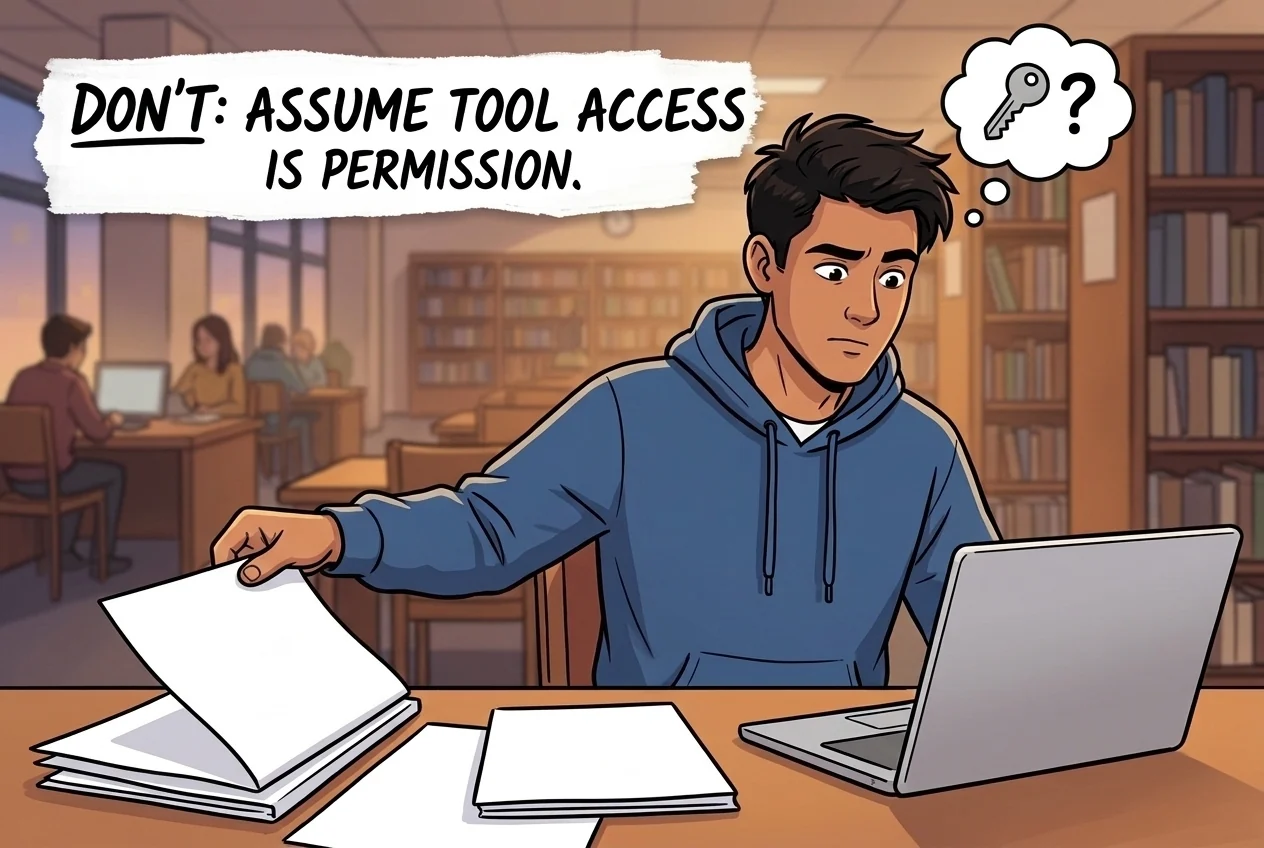
能获取工具不等于获准在作业中使用。请同时核对任务规则、适用人员和数据限制。
存档工具记录;当前获取方式请核对官方来源。 以下获取说明与证据引用保留原文语言。
The University of Turku Library licenses Avidnote AI Assistant for all university members through 16 December 2026.
Open Avidnote, choose SSO, and sign in with a University of Turku account.
Covered by the University Library license through 16 December 2026.
原文引用
The University of Turku Library has acquired an Avidnote license for all university members until 16 December 2026. To log in, select Sign in with SSO and enter a university email address; users are redirected to the University single sign-on page.University of Turku provides access to ProQuest One Education's AI Research Assistant for search suggestions and article summaries.
Log in through Volter or the Education Guide with UTU credentials.
Not specified.
原文引用
University of Turku provides access to ProQuest One Education. Its Research Assistant is an AI-powered tool that suggests search terms and summarises articles; log in via Volter or Education Guide using UTU credentials, where the database shows Access provided by University of Turku.The Volter AI Assistant searches the University of Turku library's international-articles collection and produces source-based summaries.
Log in to Volter with UTU credentials and a library card, then select AI Assistant.
Not specified.
原文引用
The University of Turku Library's Volter AI Assistant is only available when logged in to Volter with both UTU credentials and a library card. The tool retrieves sources from Volter international articles and generates a summary of the five sources it deems best.The dated Vice Rector commentary says service opened to staff and doctoral researchers, with wider expansion intended. This does not establish current undergraduate entitlement or full service terms.
Consult current institutional access instructions; no login test or full terms captured.
Cost-efficient wording does not establish free access.
补充来源核对日期:
原文引用
To ensure that the use of AI is developed in the best possible way to support all work at our University – teaching and learning, research and administration – we have developed the University's own generative AI service chat.ai.utu.fi. The service was opened to staff and doctoral researchers in the summer, with the intention to expand its use to the whole community in a controlled way in the near future. The service makes it possible to use several commercial AI models as easily, safely and cost-efficiently as possible.
I wish our entire University community inspiring experiments with AI in this darkening autumn, sincerely.
Tapio Salakoski
The author is the Vice Rector of the University, Reviewed record
7 条已审核条款
Academic Integrity
标准化值: AI use is misconduct when used to misrepresent competence.
原始证据
证据 1Using AI is also forbidden if the student aims to give a false impression of their own competence.
教学
标准化值: AI may support attention or evaluation workflows, but assessment decisions remain with teachers.
原始证据
证据 1The teacher(s) responsible for the course always have the authority and responsibility for the evaluation of the coursework and the related decision-making. This responsibility cannot be outsourced and AI cannot be the decision-maker.
隐私
标准化值: Chatbot privacy notice: no authentication required; queries retained 365 days; no automatic decisions.
原始证据
证据 1The service does not require authentication. ... Queries are automatically stored for 365 days. ... The service does not make automatic decisions.
Ai Tool Treatment
标准化值: {"tool":"institutional_ai_service","rawToolName":"Avidnote AI Assistant","description":"The University of Turku Library licenses Avidnote AI Assistant for all university members through 16 December 2026.","howToObtain":"Open Avidnote, choose SSO, and sign in with a University of Turku account.","costToUser":"Covered by the University Library license through 16 December 2026.","availability":"allowed","endorsementType":"institutionally_licensed_or_procured"}
原始证据
证据 1The University of Turku Library has acquired an Avidnote license for all university members until 16 December 2026. To log in, select Sign in with SSO and enter a university email address; users are redirected to the University single sign-on page.
本地化显示 only
The University of Turku Library has acquired an Avidnote license for all university members until 16 December 2026. To log in, select Sign in with SSO and enter a university email address; users are redirected to the University single sign-on page.
Ai Tool Treatment
标准化值: {"tool":"institutional_ai_service","rawToolName":"ProQuest One Education Research Assistant","description":"University of Turku provides access to ProQuest One Education's AI Research Assistant for search suggestions and article summaries.","howToObtain":"Log in through Volter or the Education Guide with UTU credentials.","costToUser":"Not specified.","availability":"allowed","endorsementType":"officially_endorsed"}
原始证据
证据 1University of Turku provides access to ProQuest One Education. Its Research Assistant is an AI-powered tool that suggests search terms and summarises articles; log in via Volter or Education Guide using UTU credentials, where the database shows Access provided by University of Turku.
本地化显示 only
University of Turku provides access to ProQuest One Education. Its Research Assistant is an AI-powered tool that suggests search terms and summarises articles; log in via Volter or Education Guide using UTU credentials, where the database shows Access provided by University of Turku.
Ai Tool Treatment
标准化值: {"tool":"institutional_ai_service","rawToolName":"Volter AI Assistant","description":"The Volter AI Assistant searches the University of Turku library's international-articles collection and produces source-based summaries.","howToObtain":"Log in to Volter with UTU credentials and a library card, then select AI Assistant.","costToUser":"Not specified.","availability":"allowed","endorsementType":"officially_endorsed"}
原始证据
证据 1The University of Turku Library's Volter AI Assistant is only available when logged in to Volter with both UTU credentials and a library card. The tool retrieves sources from Volter international articles and generates a summary of the five sources it deems best.
本地化显示 only
The University of Turku Library's Volter AI Assistant is only available when logged in to Volter with both UTU credentials and a library card. The tool retrieves sources from Volter international articles and generates a summary of the five sources it deems best.
Ai Tool Treatment
标准化值: AI allowed in learning with reporting; course-level restrictions may apply.
原始证据
证据 1The starting point is clear: the use of AI in learning is allowed and its use must be reported. Universities have freedom of teaching, and the teacher responsible for the course can encourage, instruct or restrict the use of AI in different ways. Using AI on a course can also be prohibited altogether, when it is appropriate for achieving the learning objectives. The prohibition must be duly justified.
Source record
6 个来源
utu.fi
utu.fi
utu.fi
utu.fi
utu.fi
utu.fi
Citation: University AI Policy Tracker. "University of Turku AI Policy Tracker record." Last checked July 19, 2026. https://eduaipolicy.org/universities/university-of-turku
Original university source language remains canonical. This tracker is not an official university statement.
打开变更日志Saved from University AI Policy Tracker. This record summarizes the cited sources; it is not an official university statement or assessment permission. Source and review dates are listed above. Hashes identify retained content, not authorization.