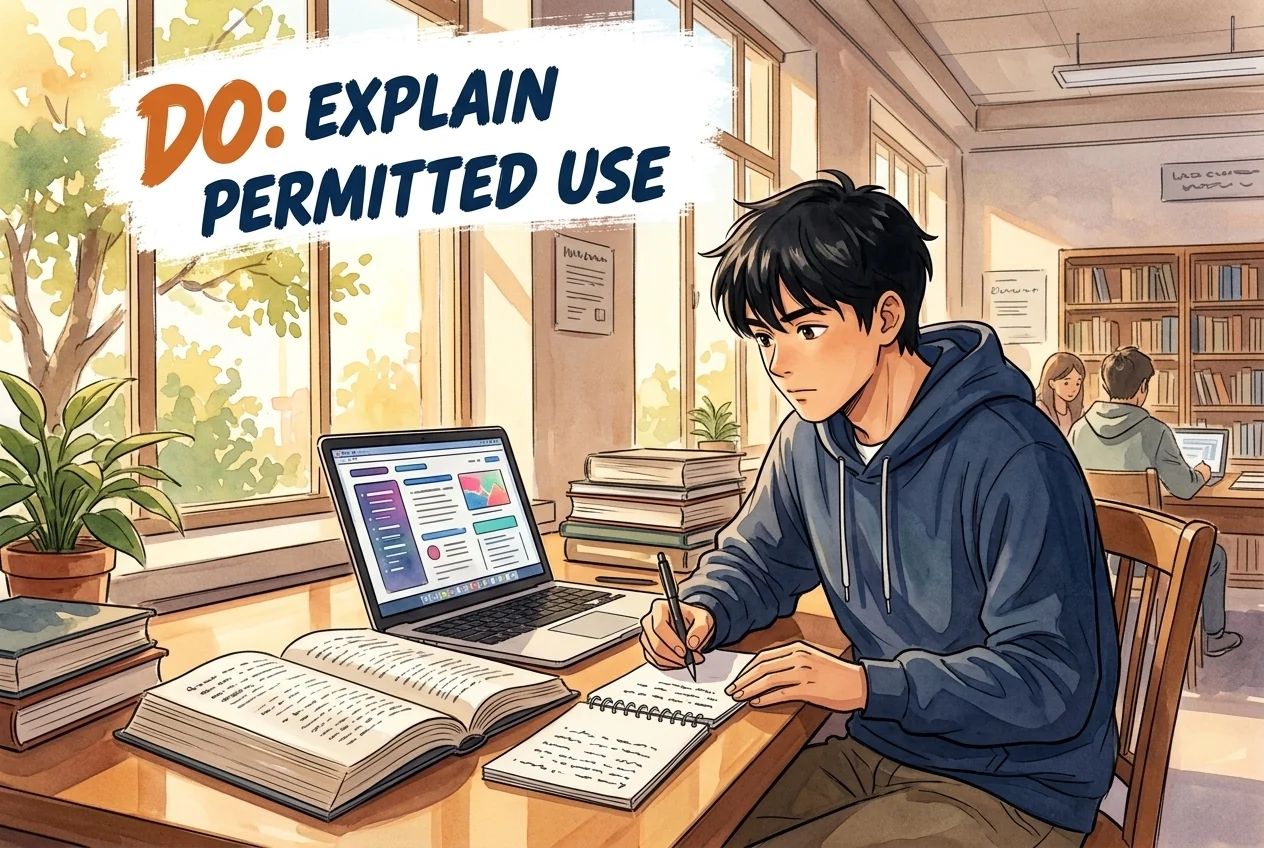
Do
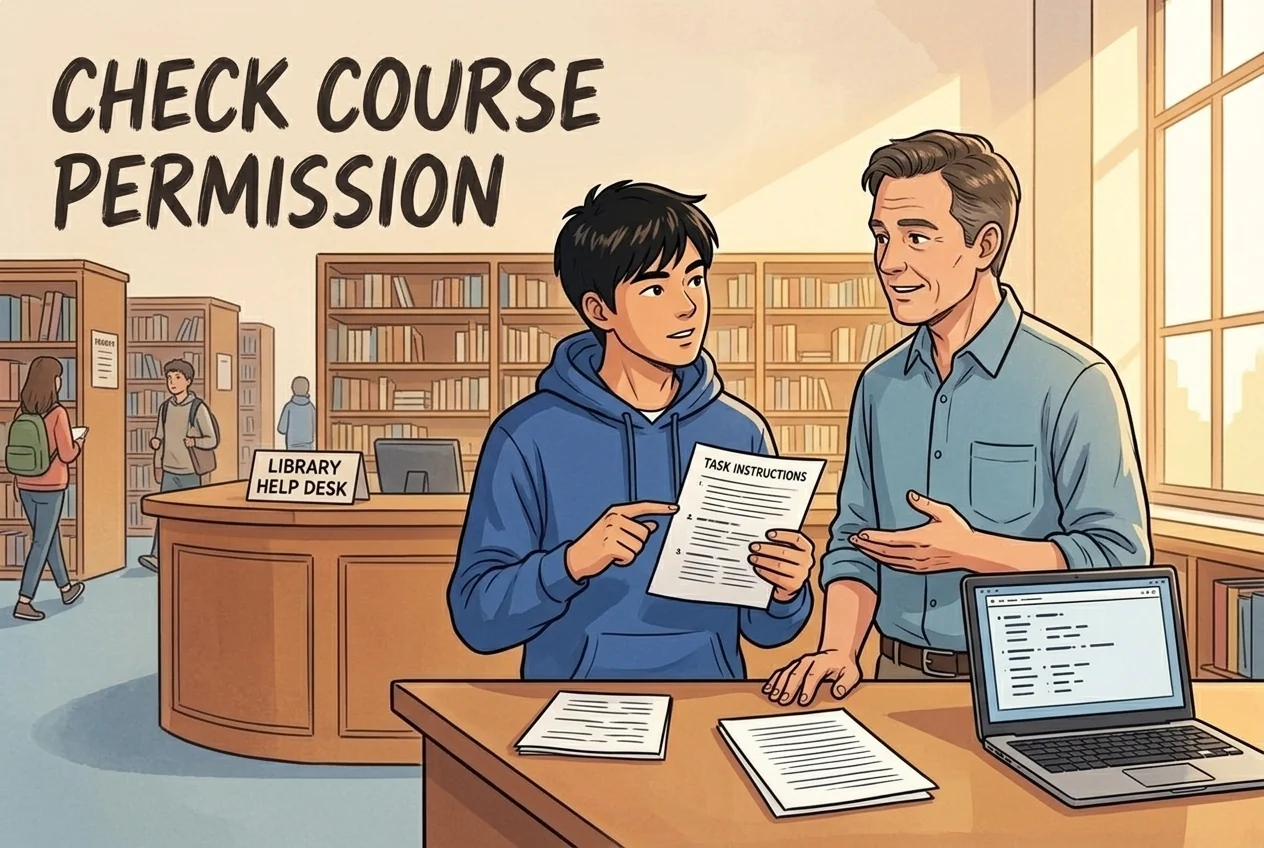
- Obtain supervisor consent before using GenAI.
- Submit the declaration, including no-use cases.
- Keep verifiable records and explain use at defence.
Beijing, China (Mainland)
Student guide · Task scope and procedure
The March 2026 notice covers one undergraduate thesis cohort. Auxiliary use, declarations and reference-only AIGC checks are distinct from the attached CAS research reminder.
A complete student policy summary is not available yet; see the collected claims and sources.
The March 2026 notice covers one undergraduate thesis cohort. Auxiliary use, declarations and reference-only AIGC checks are distinct from the attached CAS research reminder.

Supplement collected: 2026-10-09 · Current applicability not independently confirmed
Site interpretation
UCAS’s 13 March 2026 notice concerns the 2026 undergraduate graduation thesis/design cohort. GenAI use requires prior supervisor consent and remains auxiliary; students must perform intellectual/scientific contributions themselves. AI cannot write the whole thesis, interpret data or directly draw scientific conclusions.
Scope: 2026 undergraduate graduation thesis/design cohort · Only the captured source, version, audience and conditions; no exhaustive currency certification.
Scope: 2026 undergraduate graduation thesis/design cohort · university
Cohort-specific notice does not certify all programmes, postgraduate work or future cohorts.
关于规范2026届本科毕业论文(设计)
生成式人工智能使用的通知
为加强本科生培养过程管理,引导学生负责任地使用生成式人工智能,根据《中国科学院大学本科毕业论文(设计)管理规定》(校发本科字〔2015〕66号)、《中国科学院大学本科毕业论文(设计)管理补充规定(试行)》(校发本科字〔2020〕59号)、《关于在科研活动中规范使用人工智能技术的诚信提醒》(附件1)等相关文件精神,结合学校本科工作实际,对生成式人工智能在2026届本科毕业论文(设计)(以下简称本科毕业论文)中的规范使用做出以下通知。
基本原则
本科毕业论文是培养学生综合运用所学基本理论、专业知识、基本技能进行科学研究的重要环节,是培养学生的创新能力、实践能力的重要途径。学生能否使用生成式人工智能、使用范围、使用方式等以导师要求为准。导师可根据国家和学校相关规定,结合专业和课题研究特点对学生提出有针对性的要求。导师应对学生使用人工智能工具的合规性进行审核,保证学生培养效果。
使用要求
学生在完成毕业论文过程中使用生成式人工智能须事先取得导师同意。导师应与学生充分沟通,引导学生规范使用,并遵守以下基本要求:
坚持论文原创性。本科毕业论文是本科生在导师的指导下独立进行研究工作所取得的成果。所有属于科学或智力贡献范围的任务都应该由学生本人完成。生成式人工智能只能完成辅助性工作,不能用来撰写全文、解释数据或直接得出科学结论。View official source ↗Collected: 2026-10-09 · 1–8
SHA-256: c2bafec52e99f6ac46df19a9376c383afa147ed7dfe6f2a2bb1e7376da47d78b
本科部
2026年3月13日View official source ↗Collected: 2026-10-09 · 23–24
SHA-256: c2bafec52e99f6ac46df19a9376c383afa147ed7dfe6f2a2bb1e7376da47d78b
Site interpretation
All students in the cohort submit an AI-use declaration during similarity checking; it becomes a thesis appendix available at review and defence. AI-assisted parts need reproducible, reviewable process disclosure, and users explain AI use at defence. AIGC reports are reference material for the supervisor and defence committee, not automatic misconduct findings.
Scope: 2026 undergraduate graduation thesis/design cohort · Only the captured source, version, audience and conditions; no exhaustive currency certification.
Scope: 2026 undergraduate graduation thesis/design cohort · university
Declaration applies even when no AI used; detector report remains reference.
正确披露和声明。明确标注生成式人工智能在论文中的应用范围和具体贡献,由人工智能辅助生成的部分需详细写明生成过程,使用过程应能重复、可审查。
保护隐私和数据安全。在选择人工智能技术时,应使用经国家备案登记的服务工具;反对滥用人工智能技术危害数据安全,侵犯知识产权,泄露个人隐私等。
强化责任担当和主体意识。学生需对论文中人工智能辅助生成的内容进行认真核查,确保内容真实准确、价值观正确,且无虚假、违法有害和侵犯他人权益的内容。学生对论文的全部内容负责。
声明与检测
所有学生需在论文查重环节向院系提交《生成式人工智能使用声明》(附件2),说明本人在论文中使用生成式人工智能的情况。该声明将作为论文附录的一部分在论文评阅、答辩等环节中供老师查阅。
学生完成论文查重工作后,院系在知网论文检测系统对学生的论文进行AIGC检测,检测报告供导师和答辩委员会参考。
使用生成式人工智能辅助完成毕业论文工作的同学,应在论文答辩时增加生成式人工智能使用情况的阐述。View official source ↗Collected: 2026-10-09 · 9–15
SHA-256: c2bafec52e99f6ac46df19a9376c383afa147ed7dfe6f2a2bb1e7376da47d78b
Site interpretation
Disputed theses are reviewed by the faculty graduation-work group. Where ghostwriting, plagiarism or fabrication is established, the university may decline or revoke a degree under the cited rules. Faculties may make implementation rules and file them with the undergraduate office; AI use alone does not trigger degree loss.
Scope: 2026 undergraduate graduation thesis/design cohort · Only the captured source, version, audience and conditions; no exhaustive currency certification.
Scope: 2026 undergraduate graduation thesis/design cohort · university
Requires established academic misconduct; possible rather than automatic degree outcome.
重要提醒
1.生成式人工智能的使用目前仍存在多重风险,如生成虚假信息、数据/隐私泄露、算法歧视和偏见、版权问题等,不恰当的使用可能导致严重的学术诚信问题。
2.论文工作开展过程中,若发现存在异议的论文,院系毕业论文工作小组负责审查并提出处理意见。
3.对于认定为存在代写、剽窃、伪造等学术不端行为的学生,根据《中华人民共和国学位法》、《中国科学院大学学位授予工作细则》等文件,学校可作出不授予学位或撤销其学位的决议。
其他
各院系可根据学科特点制定规范使用生成式人工智能的具体实施细则,报本科部备案。
本科部
2026年3月13日View official source ↗Collected: 2026-10-09 · 16–24
SHA-256: c2bafec52e99f6ac46df19a9376c383afa147ed7dfe6f2a2bb1e7376da47d78b
Site interpretation
The undergraduate notice requires state-registered service tools and prohibits misuse harming data security, intellectual property or privacy. Students verify all AI-assisted content and remain responsible for the entire thesis. The template’s DeepSeek example is not an institutional licence or endorsement.
Scope: 2026 undergraduate graduation thesis/design cohort · Only the captured source, version, audience and conditions; no exhaustive currency certification.
Scope: 2026 undergraduate graduation thesis/design cohort · university
Tool example is illustrative; no institutional free service inferred.
正确披露和声明。明确标注生成式人工智能在论文中的应用范围和具体贡献,由人工智能辅助生成的部分需详细写明生成过程,使用过程应能重复、可审查。
保护隐私和数据安全。在选择人工智能技术时,应使用经国家备案登记的服务工具;反对滥用人工智能技术危害数据安全,侵犯知识产权,泄露个人隐私等。
强化责任担当和主体意识。学生需对论文中人工智能辅助生成的内容进行认真核查,确保内容真实准确、价值观正确,且无虚假、违法有害和侵犯他人权益的内容。学生对论文的全部内容负责。View official source ↗Collected: 2026-10-09 · 9–11
SHA-256: c2bafec52e99f6ac46df19a9376c383afa147ed7dfe6f2a2bb1e7376da47d78b
附件2
生成式人工智能使用声明
模板1:在本论文的撰写过程中,本人使用了生成式人工智能 工具名称、版本,开发公司,例:DeepSeek-V3.2,深度求索公司 用于 例:文本润色/部分前期资料的收集(划线部分根据自己实际使用情况填写,可加行加页)。人工智能工具在本论文研究中仅起到辅助作用,所有涉及论文的创新点、技术路线、研究设计、科学结论等学术内容,均由本人独立完成。本人已对人工智能辅助生成的内容进行了逐句审核、验证和修改,并对论文内容承担全部责任。
模板2:在本论文的撰写过程中,本人未使用生成式人工智能工具,对论文内容承担全部责任。View official source ↗Collected: 2026-10-09 · 44–47
SHA-256: c2bafec52e99f6ac46df19a9376c383afa147ed7dfe6f2a2bb1e7376da47d78b
Site interpretation
The attached CAS 10 September 2024 research-integrity reminder has a separate research audience. It allows checked research assistance but rejects AI-generated data as experimental data, AI core innovations/whole outputs/references, and AI-written peer review; peer-review information must not go to unapproved platforms. Research AI use must be declared.
Scope: CAS researchers and students in research activities, attached 2024 reminder · Only the captured source, version, audience and conditions; no exhaustive currency certification.
Scope: CAS researchers and students in research activities, attached 2024 reminder · university
Research reminder is separate from the 2026 undergraduate thesis restrictions.
附件1
关于在科研活动中规范使用人工智能技术的诚信提醒
中国科学院科研道德委员会
(2024年9月10日发布)
为了在科研活动中规范使用人工智能技术,避免误用、滥用人工智能技术引发的科研诚信风险,遵循诚实、透明、负责任的原则,中国科学院科研道德委员会依据科研活动全流程诚信管理要求,对我院科技人员和学生提醒如下:
提醒一:在选题调研、文献检索、资料整理时,可借助人工智能技术跟踪研究动态,收集整理参考文献,并对人工智能生成信息的真实性、准确性、可靠性进行辨识;反对直接使用未经核实的由人工智能生成的调研报告、选题建议、文献综述等。
提醒二:在申报材料撰写时,如使用了由人工智能生成的内容,应对内容负责,并全面如实声明使用情况;反对直接使用未经核实的由人工智能生成的申报材料。
提醒三:在数据收集和使用时,如使用了由人工智能生成的模拟仿真数据、测试数据等,或使用人工智能技术对原始数据进行统计分析,应全面如实声明使用情况;反对将人工智能生成的数据作为实验数据。
提醒四:在音视频和图表制作时,可利用人工智能技术辅助完成,应对生成内容进行标识,并全面如实声明使用情况;反对使用人工智能直接生成音视频和图表。
提醒五:在成果撰写时,可使用人工智能技术辅助整理已有的理论、材料与方法等,可进行语言润色、翻译、规范化检查;反对将人工智能生成内容作为核心创新成果,反对使用人工智能生成整篇成果及参考文献。
提醒六:在同行评议中,反对使用人工智能技术撰写同行评议意见,不得将评议信息上传至未经评议组织者认可的工具平台。
提醒七:在科研活动中,如使用人工智能技术,应在注释、致谢、参考文献或附录等部分声明工具的名称、版本、日期及使用过程;反对未加声明直接使用。
提醒八:在选择人工智能技术时,应使用经国家备案登记的服务工具;反对滥用人工智能技术危害数据安全,侵犯知识产权,泄露个人隐私等。
院属各单位应依据上述提醒,结合本单位学科特点和学术惯例,开展必要的教育培训,引导科技人员和学生透明、规范、负责任地使用人工智能技术。View official source ↗Collected: 2026-10-09 · 29–42
SHA-256: c2bafec52e99f6ac46df19a9376c383afa147ed7dfe6f2a2bb1e7376da47d78b
Published source-based additions. English summaries and original-language quotations are shown separately from the reviewed record. These are possible processes and outcomes, not automatic penalties for AI use. Present applicability has not been independently confirmed; check the source scope and version.
Source-text comparison; not an official translation
Hashes allow comparison of saved content; they do not certify current validity or immutability. These topics are not a mandatory sequence.
Tool access is not permission to use AI in an assessment. Check your assignment rules, eligible users and data restrictions.
Archived tool record; consult the official source for current access.
UCAS library-introduced AI academic-service trial.
Register for the trial from an on-campus IP address under the library's terms.
UCAS's named AI4S scientific-research platform and ecosystem.
Use the platform through the university's AI4S training and research arrangements.
Original quotation
中国科学院大学人工智能学院、党委教师工作部/人力资源部和信息技术中心联合开展“磐石-AI4S”培训,面向师生介绍科学基础大模型、文献罗盘和AI4S操作系统,为师生掌握AI4S科研平台提供支持。UCAS library-introduced AI academic-service trial for research discovery and writing support.
Use the trial and training arrangements announced by the UCAS library.
Reviewed record
5 reviewed claims
Academic Integrity
Normalized value: library_trial_verify_ai_content_no_direct_copying
Original evidence
Evidence 1学术诚信:请广大师生在使用过程中严格遵守学术道德规范,对AI生成数据与内容进行必要的核实与查证,严禁直接照搬。
Localized display only
Academic integrity: users are asked to comply with academic ethics, verify AI-generated data and content, and not copy it directly.
Ai Tool Treatment
Normalized value: {"tool":"institutional_ai_service","rawToolName":"沁言学术","description":"UCAS library-introduced AI academic-service trial.","howToObtain":"Register for the trial from an on-campus IP address under the library's terms.","availability":"conditionally_allowed","endorsementType":"officially_endorsed"}
Original evidence
Evidence 1中国科学院大学南京学院图书馆公告沁言学术AI学术服务平台试用,试用期至2026年9月30日;师生须在校内IP内首次完成注册后使用。
Localized display only
中国科学院大学南京学院图书馆公告沁言学术AI学术服务平台试用,试用期至2026年9月30日;师生须在校内IP内首次完成注册后使用。
Ai Tool Treatment
Normalized value: {"tool":"institutional_ai_service","rawToolName":"磐石-AI4S","description":"UCAS's named AI4S scientific-research platform and ecosystem.","howToObtain":"Use the platform through the university's AI4S training and research arrangements.","availability":"allowed","endorsementType":"officially_endorsed"}
Original evidence
Evidence 1中国科学院大学人工智能学院、党委教师工作部/人力资源部和信息技术中心联合开展“磐石-AI4S”培训,面向师生介绍科学基础大模型、文献罗盘和AI4S操作系统,为师生掌握AI4S科研平台提供支持。
Localized display only
中国科学院大学人工智能学院、党委教师工作部/人力资源部和信息技术中心联合开展“磐石-AI4S”培训,面向师生介绍科学基础大模型、文献罗盘和AI4S操作系统,为师生掌握AI4S科研平台提供支持。
Ai Tool Treatment
Normalized value: {"tool":"institutional_ai_service","rawToolName":"闻道科学导航","description":"UCAS library-introduced AI academic-service trial for research discovery and writing support.","howToObtain":"Use the trial and training arrangements announced by the UCAS library.","availability":"conditionally_allowed","endorsementType":"officially_endorsed"}
Original evidence
Evidence 1中国科学院大学南京学院图书馆联合超星公司引入“闻道科学导航”智能学术服务平台试用,面向师生提供科研探索、文献阅读、智能辅助写作等功能。
Localized display only
中国科学院大学南京学院图书馆联合超星公司引入“闻道科学导航”智能学术服务平台试用,面向师生提供科研探索、文献阅读、智能辅助写作等功能。
Ai Tool Treatment
Normalized value: library_trial_ai_content_reference_only
Original evidence
Evidence 1使用须知与学术规范: 辅助性质:AI工具生成的内容仅供科研参考与灵感启发,不能替代研究者的独立思考与验证。
Localized display only
Usage notice and academic norms: AI-generated content is for research reference and inspiration only, and cannot replace independent thinking and verification.
Source record
4 sources
ai.ucas.ac.cn
njc.ucas.ac.cn
njc.ucas.ac.cn
njc.ucas.ac.cn
Citation: University AI Policy Tracker. "University of Chinese Academy of Sciences (UCAS) AI Policy Tracker record." Last checked July 19, 2026. https://eduaipolicy.org/universities/university-of-chinese-academy-of-sciences-ucas
Original university source language remains canonical. This tracker is not an official university statement.
Open change logSaved from University AI Policy Tracker. This record summarizes the cited sources; it is not an official university statement or assessment permission. Source and review dates are listed above. Hashes identify retained content, not authorization.