Do
- Check the task’s RAG and tutor instructions.
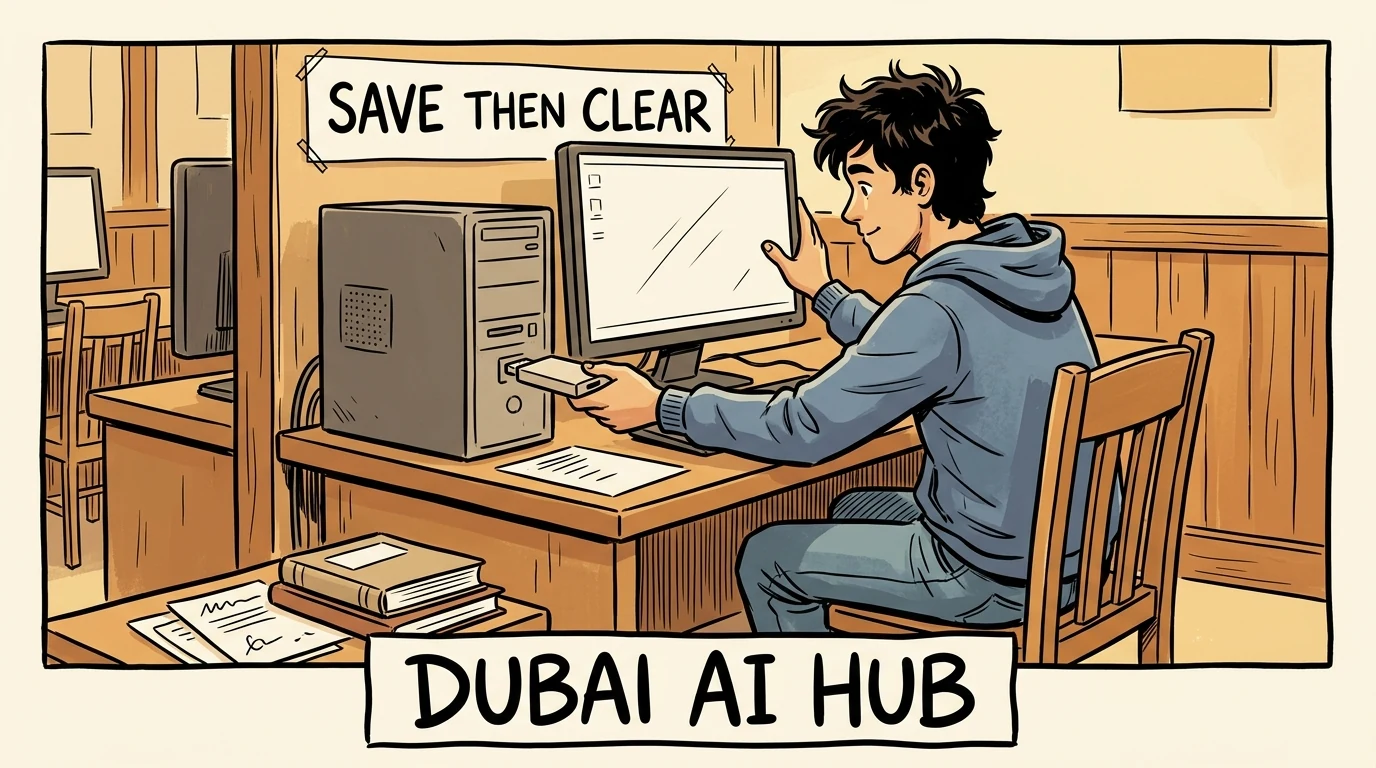
- Dubai Hub: save results and clear files/chats.
- Match appeal/review stage to the actual notice.
London, United Kingdom
Student guide · Task scope and procedure
The task brief selects RED/AMBER/GREEN, with an assistive-adjustment exception. The library’s later study-support wording remains a tension. Premium AI Hub access is Dubai-specific. Public FAQ and linked 2025–26 regulations differ on date versus receipt for appeal/review; the linked AI policy requires login. No 2026–27 replacement is presumed.
A complete student policy summary is not available yet; see the collected claims and sources.
The task brief selects RED/AMBER/GREEN, with an assistive-adjustment exception. The library’s later study-support wording remains a tension. Premium AI Hub access is Dubai-specific. Public FAQ and linked 2025–26 regulations differ on date versus receipt for appeal/review; the linked AI policy requires login. No 2026–27 replacement is presumed.

Supplement collected: 2026-10-08 · Current applicability not independently confirmed
Site interpretation
The September 2026 library guide locates task-specific RAG scope in the Assessment Brief/Module Handbook. RED excludes GenAI except assistive technology via reasonable adjustment; AMBER allows defined preparation/process assistance but not whole final-submission sections; GREEN allows integrated content with acknowledgment/citation. The same guide later says study-support-only rather than creative generation. Keep that tension explicit and consult the actual brief/tutor rather than treating GREEN as a universal permission.
Scope: Students in the cited programme/course/stage only · Table and later study-support wording differ; linked 2025 AI policy redirected to login and was not captured.
Scope: Students in the cited programme/course/stage only · university
RAG Generative AI Assessment rules
Appropriate use of AI in your assessments
The Red Amber Green (RAG) table below defines the different levels of scope you may be given to use GenAI in your assessed work. Your Assessment Brief which can be found in your Module Handbook defines which level applies to the specific assessment task and will include further guidance and support.
When can I use AI for my assessments?
Generative AI Scope in Assessment
What it means
RED –
No scope
GenAI is not permitted in the development or creation of outputs (except assistive technology via reasonable adjustment). Assessments in this category can include exams, Vivas/interviews, and professional / regulatory competencies where GenAI is out of scope.
AMBER –
Assistive Scope
Assistive use is permitted only within defined parameters for assessment preparation and process, such as summarising sources, connecting ideas/themes, self-test and revision prompts, spelling and grammar support in drafts, support for data analysis, project planning and management.
GenAI should not be used to produce entire sections of text or elements of media that appear in the final submission.
GREEN – Integrated Scope
Integrated use: GenAI can be used to create content that appears in the final submission. GenAI can be used at multiple stages of the assessment process. GenAI use must be acknowledged and/or cited, and assessments may ask for student commentary and critical evaluation of its use.
Recording and Acknowledging use of Generative AI for Assessments
How do I record and acknowledge use of GenAI?
The table below is available in your Module Handbook. Use it to record how you have used GenAI for your assessment. It will help you keep track of the tools and prompts you used, reflect on your learning, and explain your study choices if needed - for example in tutorials, group work, reflections, or reflective and methodological sections of your work.
Acknowledge or Reference AI?
Always consult with your module tutor before using AI for your studies or an assignment. It is crucial that you only use AI for your studies or an assignment where, your tutor has advised regarding whether and how AI should be used for their module. Check your Module handbook for the RAG (red, amber, green) AI status for your assignment. - see the table to the left.
Using AI to support your learning can be beneficial if used responsibly and with integrity. However, submitting work generated by AI as your own work is a breach of academic integrity.
You should always be using AI as a study support not as a creative information generator. Therefore you should not need to reference AI as an information source.
Anything that is not your own original creation or thoughts should always be appropriately referenced, AI related or not. You will need to declare any use of generative AI output in your work and should provide a full and correctly formatted in-text citation and reference list entry.
If the AI’s output (for example, a ChatGPT response) is only available to you, please cite and reference this as a Generative AI Personal Communication, as shown in the guides provided on this referencing page.
Please consult with your tutor in case they also require you to provide a copy of the AI output as an appendix to your work. Please also use Cite Them Right Online for further information (including alternative referencing formats).View official source ↗Collected: 2026-10-08 · 25–49
SHA-256: bf3db4630f7657d75cfdfcb642adf4b7973512031b923c2005933720e2eb8854
Site interpretation
The public index still links the 2025–26 taught regulations, whose F1 expressly includes unauthorised and/or unacknowledged AI in graded work. It preserves innocence pending investigation/upholding and balance-of-probability proof. This dated version is preserved as such; retrieval does not establish an unacquired 2026–27 replacement or the complete linked misconduct procedure.
Scope: Students in the cited programme/course/stage only · 2025–26 document; 2026–27 replacement and full AI policy not acquired.
Scope: Students in the cited programme/course/stage only · university
h) Academic misconduct is a breach of the values of academic integrity, and can occur when
a student cheats in an assessment, or attempts to deliberately mislead an examiner that
the work presented is their own when it is not. It includes, but is not limited to,
plagiarism, commissioning or buying work from a third party or copying the work of
others, unauthorized and/or unacknowledged use of artificial intelligence in a piece of work
submitted for grading.
i) If a third party or anonymous whistleblower reports that there has been academic
misconduct by a student of the University, the University may decide to investigate the
allegations.
j) The University deals with breaches of academic integrity through instances of academic
misconduct. It will take action against any student who contravenes these regulations
through negligence, foolishness or deliberate intent in any form of assessment.
k) This procedure is concerned with the actions of students and not their intentions. An
excuse of “not intending to” is not an acceptable defence.
l) Where students are registered on awards which lead to professional registration and there
is Fitness to Practise requirements, a major offence may be referred to an appropriate
Fitness to Practice Committee for consideration.
m) In all cases of alleged academic misconduct and cheating, students will be treated as
innocent until a case against them has been investigated and upheld.
n) A finding that academic misconduct has occurred is a judgement based on available
evidence, the standard of proof being the balance of probability.
o) These Regulations should be read in conjunction with the Policy and Procedures for
Academic Integrity and Misconduct.View official source ↗Collected: 2026-10-08 · 4187–4209
SHA-256: 6b7035880529aa81f36a90aa7f8bba87597fe811ec5fdaa4e444d9af346ef1df
Site interpretation
This is MDX DUBAI’s AI Hub: the page reports free premium ChatGPT, Claude and Perplexity on Hub computers for academic/research purposes, at most thirty minutes per session. Users must save results and delete temporary files/chats, protect unpublished/confidential information and respect upload copyright. This is not evidence of unrestricted UK-campus or personal-account entitlement.
Scope: MDX Dubai AI Hub · Only the captured source, version, audience and conditions; no exhaustive currency certification.
Scope: Students in the cited programme/course/stage only · campus
AI Hub Guidelines
Students must follow the ethical use of AI implemented by MDX Dubai and as discussed by their lecturers on their program level.
Students have free access to premium AI tools (ChatGPT, Claude and Perplexity) through the AI Hub.
Students should use the AI Hub computers for academic or research purposes only.
Students may use the AI Hub computers for up to 30 minutes per session.
AI Hub computers do not save any research done by students. Students are responsible for saving their search results or sending them to their cloud storage / emails before the session ends.
Students are responsible for deleting files temporarily saved in the AI Hub computers and the chats/conversations with the AI accounts that they access.
Students should be cautious of confidential or unpublished information shared in chats/conversations with the AI tools.
Students must adhere to copyright laws for uploading published works in any AI tools.View official source ↗Collected: 2026-10-08 · 39–47
SHA-256: 28e5feb2fadd5f1f9331383d26d6710dfc40991a91a3a05f5f93c7255ce6c0ac
Site interpretation
The public page AIMS to complete the whole appeal in ninety calendar days after receiving the full appeal, with possible extension and notification for good reason. That is a service target, not a guaranteed decision date or a student filing period.
Institution · Institution’s response target
Within the stated period. Check the source summary and original text for the starting point, scope and exceptions.
Scope: Students in the cited programme/course/stage only · Only the captured source, version, audience and conditions; no exhaustive currency certification.
Scope: Students in the cited programme/course/stage only · university
How long does an appeal take to resolve?
In normal circumstances, we aim to complete the whole process within 90 calendar days of receipt of your full appeal.
There will occasionally be circumstances when, for good reason, the University will need to extend the timeframe. If this happens, you will be notified by email.View official source ↗Collected: 2026-10-08 · 216–218
SHA-256: 8e08cd46f08295934b15b9faac011076a1128c234e2fc16ebf547af9cee20ec4
Site interpretation
The current public misconduct FAQ says ten working days from the DATE of the written outcome. The linked 2025–26 regulation G2.3(a) instead says ten working days from RECEIPT of the written result after the named procedures. Grounds include exceptional unavailable evidence, material procedure error, documented bias or excess penalty. Keep the date/receipt source difference visible and confirm the actual notice.
Student · Required when using this procedure
Within the stated period. Check the source summary and original text for the starting point, scope and exceptions.
Student · Required when using this procedure
Within the stated period. Check the source summary and original text for the starting point, scope and exceptions.
Scope: Students in the cited programme/course/stage only · Only the captured source, version, audience and conditions; no exhaustive currency certification.
Scope: Students in the cited programme/course/stage only · university
Reason 3: Student academic misconduct
“Grounds listed in the Academic Integrity and Misconduct regulations Section F4, following a penalty imposed for academic misconduct.”
In fairness to other students, penalties are normally greater than what would follow if you had merely failed the assessment. Penalties will normally affect the grade for the whole module and not just the piece of work in question.
If you have received a penalty following an investigation of your work for academic misconduct (for example, plagiarism in coursework, cheating in an examination, etc) you can appeal if:
There is new and relevant evidence that you were demonstrably and for the most exceptional reasons unable to present to the Secretary to Academic Board or Academic Misconduct Officer or to the Panel of Investigation meeting during the Academic Misconduct investigation
You must be able to present a case to show why it would have been unreasonable for the University to expect you to disclose the evidence at an earlier stage, ie, when you had the opportunity to respond to the allegation of academic misconduct or, if the circumstances were known to you, why you chose not to disclose them at the time.
And/or
That the Academic Integrity and Misconduct procedures were not complied with in such a way that it might cause reasonable doubt as to whether the result would have been different had they been complied with
You must indicate which procedures were not followed and why you think that the decision would have been different if they had been followed.
And/or
That there is documented evidence of prejudice or bias on the part of the Secretary to Academic Board or by one or more members of the Panel of Investigation
And/or
That the penalty imposed exceeds the maximum penalties listed in the regulations
There is no need to discuss your case with members of staff before submitting your appeal. You should submit your appeal within 10 working days of the date of the written outcome to your misconduct case.View official source ↗Collected: 2026-10-08 · 140–153
SHA-256: 8e08cd46f08295934b15b9faac011076a1128c234e2fc16ebf547af9cee20ec4
G2.3 Except where (a) applies, there is a time limit of 28 calendar days from the date of the
Programme Assessment Board results being published for submission of a formal appeal to the
Secretary to Academic Board.
a) If an appeal arises following due process of the Informal Apprenticeship Appeal procedure,
Academic Misconduct procedure or Student Complaints and Grievance procedure, the time
limit is 10 working days from the date the student receives the written result of this
procedure. Regulations G2.1 & G2.2 shall not apply.
G3 How to make a formal appeal
G3.1 Complete the appeal form from MyMDX.
G3.2 Submit the completed form, including the statement and evidence, by email to the Appeals
Officer within the time limit specified in G2.3. If it is received later than this, it is likely to be
rejected unless a statement is attached of the circumstances which prevented the deadline from
being met, and this is accepted as valid by the Secretary to Academic Board.View official source ↗Collected: 2026-10-08 · 4369–4385
SHA-256: 6b7035880529aa81f36a90aa7f8bba87597fe811ec5fdaa4e444d9af346ef1df
Site interpretation
For review after an unsuccessful appeal the FAQ says ten working days from RECEIPT of the decision, while 2025–26 G11.2 says ten working days from the DATE of the outcome letter, with a valid late-circumstance exception. Review is not a reopening solely because the outcome is disliked. Keep both stage-specific wordings; do not compute a single deadline.
Student · Required when using this procedure
Within the stated period. Check the source summary and original text for the starting point, scope and exceptions.
Student · Required when using this procedure
Within the stated period. Check the source summary and original text for the starting point, scope and exceptions.
Scope: Students in the cited programme/course/stage only · Only the captured source, version, audience and conditions; no exhaustive currency certification.
Scope: Students in the cited programme/course/stage only · university
What is a Review?
Within 10 working days of receiving the decision that your appeal is Not Justified, you can request a Review if:
You have new and relevant evidence which you can show that, for exceptional reasons, you were unable to present during the appeal process
You have evidence to show that the appeal regulations and procedures were not complied with in such a way that materially affected the decision
This is not a reopening of your original appeal
Dissatisfaction with the outcome of your appeal is not alone a valid reason for requesting a Review.
The Reviewer will be a senior member of University staff who is neutral to you and has not previously been involved with the appeal case.View official source ↗Collected: 2026-10-08 · 252–258
SHA-256: 8e08cd46f08295934b15b9faac011076a1128c234e2fc16ebf547af9cee20ec4
G11 How to request a Review of appeal
G11.1 Advice on obtaining a Review form is given in the Academic Appeal Letter of Outcome.
G11.2 Send the form, including the statement and any relevant evidence, by email to the
address on the form within 10 working days of the date of the Academic Appeal Letter of
Outcome. If it is received later than this, it is likely to be rejected unless a statement is attached
of the circumstances which prevented the deadline from being met, and this is accepted as valid
by the Reviewer.View official source ↗Collected: 2026-10-08 · 4680–4688
SHA-256: 6b7035880529aa81f36a90aa7f8bba87597fe811ec5fdaa4e444d9af346ef1df
Site interpretation
UniHelp and the Student Union are listed for advice. At the academic Appeal Panel a student may have a companion, bring/question witnesses and comment on evidence; this is not automatically the role at an earlier misconduct investigation. Misconduct appeal decision-makers must be uninvolved in the original case.
Scope: Students in the cited programme/course/stage only · Only the captured source, version, audience and conditions; no exhaustive currency certification.
Scope: Students in the cited programme/course/stage only · university
Who can I contact for advice on the progress of my appeal?
Members of the Faculties/School’s staff are unable to discuss your appeal with you while it is being processed, but if you would like information on its progress, please contact the Appeals Team.
If you would like advice about your status or progress as a student while your appeal is being considered, please contact UniHelp or the Student Union.
What is an informal settlement?
If the people considering your case decide that there are grounds for appeal, the Chair of the Assessment Board may be invited to request the Board to review its decision in the light of the information in your appeal case file. If the Chair agrees that this is appropriate action you would be notified by email of this outcome to your appeal.
The Board is obliged to take full consideration of your case and will either change its original decision in your favour or decide that no change is made to the original decision.
If the Board agrees a change is to be made, this is called an Informal Settlement as it did not require an Appeal Panel to consider the case.
An Appeal Panel will only be held if an Informal Settlement could not be reached.
What is an Appeal Panel?
Following the decision that you do have grounds for appeal, an Appeal Panel is held only if an Informal Settlement cannot be reached.
The Panel is called to clarify evidence by questioning those who have submitted it, including yourself, enabling the Appeal Panel to reach a just decision.
If a Panel is to be called, you will be invited to attend and will be sent all the relevant information.
The Panel normally consists of three senior members of staff from as many Schools as practical and one Student Union representative. No-one is eligible to be a Panel member who has taught you or is likely to teach or assess you.
You can be accompanied by a companion, bring and question witnesses, and comment on the evidence.
If the Appeal Panel finds that an injustice appears to have been caused to you, it will submit all its findings for the Assessment Board's consideration and require the Board to review its decision.
The Board is obliged to take full consideration of your case and would either change its original decision in your favour or decide that no change is made to the original decision.View official source ↗Collected: 2026-10-08 · 229–244
SHA-256: 8e08cd46f08295934b15b9faac011076a1128c234e2fc16ebf547af9cee20ec4
If your appeal is against a penalty for academic misconduct:
No members of staff who were the decision-makers in your academic misconduct case will be involved with your appeal
If you are presenting evidence of extenuating circumstances which you did not submit with your response to the allegation of academic misconduct, the reason you give for not submitting this evidence at the appropriate time will be considered first. If the reason is considered valid, the appeal process will continue. If it is considered not to be valid, you will be notified that the appeal has been rejected.
If the appeal is accepted, they will make a recommendation to the Senior Manager of the University on whether the appeal is formally investigatedView official source ↗Collected: 2026-10-08 · 205–208
SHA-256: 8e08cd46f08295934b15b9faac011076a1128c234e2fc16ebf547af9cee20ec4
Published source-based additions. English summaries and original-language quotations are shown separately from the reviewed record. These are possible processes and outcomes, not automatic penalties for AI use. Present applicability has not been independently confirmed; check the source scope and version.
Source-text comparison; not an official translation
Hashes allow comparison of saved content; they do not certify current validity or immutability. These topics are not a mandatory sequence.
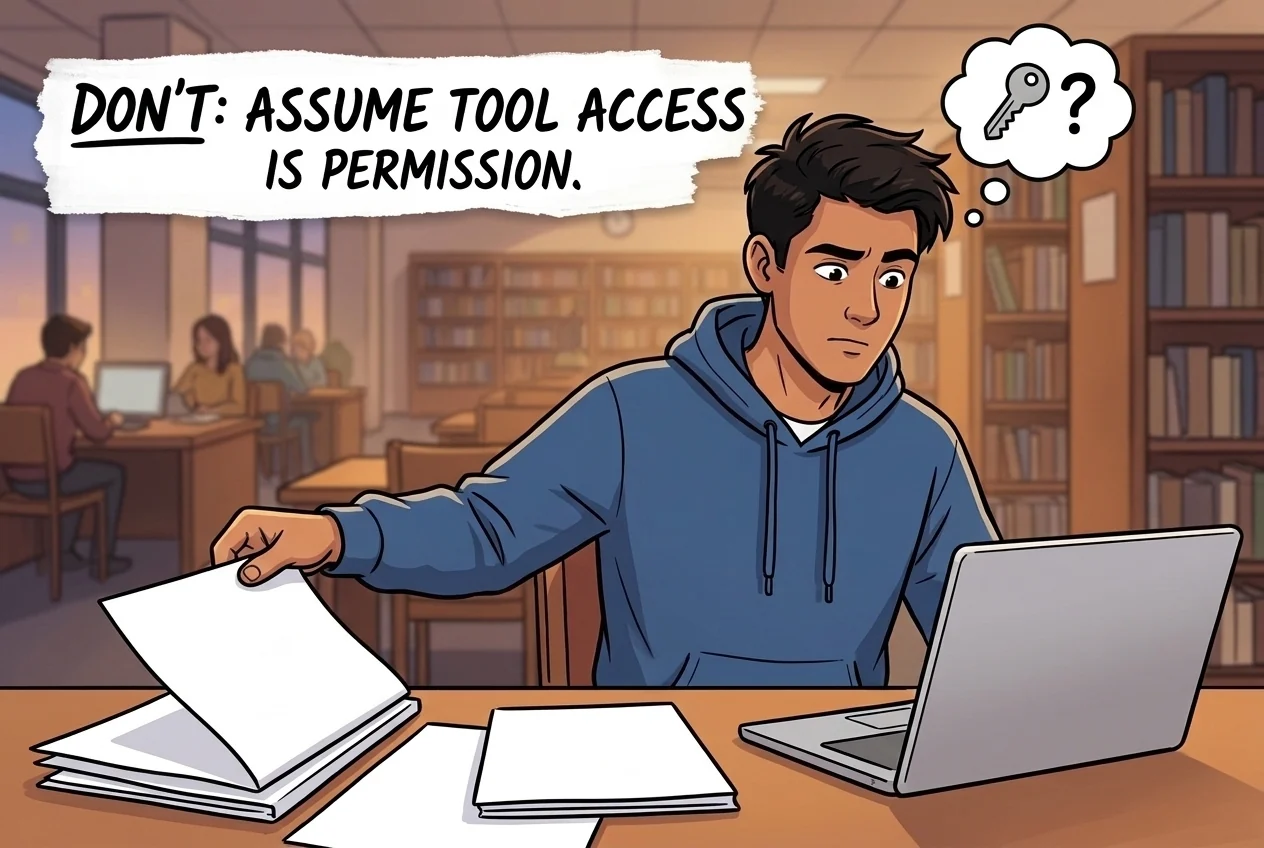
Tool access is not permission to use AI in an assessment. Check your assignment rules, eligible users and data restrictions.
Archived tool record; consult the official source for current access.
MDX Dubai campus AI Hub shared computers provide premium ChatGPT for academic or research use under lecturer/programme ethical instructions. This evidence does not establish UK-campus or personal-account access.
Use the Dubai AI Hub computers; sessions are at most 30 minutes. Save results, then delete temporary files and chats.
The Dubai page reports free premium access through this Hub; no other-campus fee or individual-account entitlement is established.
Supplement source review date:
Original quotation
AI Hub Guidelines
Students must follow the ethical use of AI implemented by MDX Dubai and as discussed by their lecturers on their program level.
Students have free access to premium AI tools (ChatGPT, Claude and Perplexity) through the AI Hub.
Students should use the AI Hub computers for academic or research purposes only.
Students may use the AI Hub computers for up to 30 minutes per session.
AI Hub computers do not save any research done by students. Students are responsible for saving their search results or sending them to their cloud storage / emails before the session ends.
Students are responsible for deleting files temporarily saved in the AI Hub computers and the chats/conversations with the AI accounts that they access.
Students should be cautious of confidential or unpublished information shared in chats/conversations with the AI tools.
Students must adhere to copyright laws for uploading published works in any AI tools.MDX Dubai campus AI Hub shared computers provide premium Claude for academic or research use under lecturer/programme ethical instructions. This evidence does not establish UK-campus or personal-account access.
Use the Dubai AI Hub computers; sessions are at most 30 minutes. Save results, then delete temporary files and chats.
The Dubai page reports free premium access through this Hub; no other-campus fee or individual-account entitlement is established.
Supplement source review date:
Original quotation
AI Hub Guidelines
Students must follow the ethical use of AI implemented by MDX Dubai and as discussed by their lecturers on their program level.
Students have free access to premium AI tools (ChatGPT, Claude and Perplexity) through the AI Hub.
Students should use the AI Hub computers for academic or research purposes only.
Students may use the AI Hub computers for up to 30 minutes per session.
AI Hub computers do not save any research done by students. Students are responsible for saving their search results or sending them to their cloud storage / emails before the session ends.
Students are responsible for deleting files temporarily saved in the AI Hub computers and the chats/conversations with the AI accounts that they access.
Students should be cautious of confidential or unpublished information shared in chats/conversations with the AI tools.
Students must adhere to copyright laws for uploading published works in any AI tools.MDX Dubai campus AI Hub shared computers provide premium Perplexity for academic or research use under lecturer/programme ethical instructions. This evidence does not establish UK-campus or personal-account access.
Use the Dubai AI Hub computers; sessions are at most 30 minutes. Save results, then delete temporary files and chats.
The Dubai page reports free premium access through this Hub; no other-campus fee or individual-account entitlement is established.
Supplement source review date:
Original quotation
AI Hub Guidelines
Students must follow the ethical use of AI implemented by MDX Dubai and as discussed by their lecturers on their program level.
Students have free access to premium AI tools (ChatGPT, Claude and Perplexity) through the AI Hub.
Students should use the AI Hub computers for academic or research purposes only.
Students may use the AI Hub computers for up to 30 minutes per session.
AI Hub computers do not save any research done by students. Students are responsible for saving their search results or sending them to their cloud storage / emails before the session ends.
Students are responsible for deleting files temporarily saved in the AI Hub computers and the chats/conversations with the AI accounts that they access.
Students should be cautious of confidential or unpublished information shared in chats/conversations with the AI tools.
Students must adhere to copyright laws for uploading published works in any AI tools.Reviewed record
8 reviewed claims
Academic Integrity
Normalized value: consult-module-tutor-ai-generated-work-as-own-breach
Original evidence
Evidence 1Please consult with your module tutor before using AI for your studies or an assignment. It is crucial that you only use AI for your studies or an assignment where your tutor has advised regarding whether and how AI should be used for their module. AI can generate a wide range of materials, including text, images, code and even ideas. Using AI to support your learning can be beneficial if used responsibly and with integrity. However, submitting work generated by AI as your own work is a breach of academic integrity.
Academic Integrity
Normalized value: authenticate-ai-generated-references-before-citing
Original evidence
Evidence 1AI generated references must be authenticated before requesting copies from the library or citing them in your work. AI tools have been creating fake references which result in unnecessary work for the Inter- Library Loans team and can also result in academic misconduct proceedings if used in coursework assignments. You should always say where you have used AI to generate a piece of work for complete transparency.
Teaching
Normalized value: assessment-criteria-should-state-ai-use-and-acknowledgment
Original evidence
Evidence 1It may be that some assessments explicitly ask students to work with Generative AI while others specify that AI should not be used, or used in specific ways. It must be made clear to students within the assessment criteria when and how they can use AI for each assessment, and how to acknowledge appropriately when they do so.
Privacy
Normalized value: ai-upload-copyright-permission-and-gdpr-cautions
Original evidence
Evidence 1Other legal and ethical issues to consider include: GDPR infringement where personal data is included in the content sourced, uploaded and generated. Other issues to consider when uploading content to AI tools are: the terms of AI tools require the user to own the copyright or have permission to upload the content onto their platform and to grant permission for it to be retained and used indefinitely by the tool and it's users.
Ai Tool Treatment
Normalized value: {"tool":"chatgpt","rawToolName":"ChatGPT","description":"Middlesex University provides or institutionally supports ChatGPT.","howToObtain":"Use the university AI Hub.","costToUser":"Free.","availability":"allowed","endorsementType":"institutionally_licensed_or_procured"}
Original evidence
Evidence 1Students have free access to premium AI tools (ChatGPT, Claude and Perplexity) through the AI Hub.
Localized display only
Students have free access to premium AI tools (ChatGPT, Claude and Perplexity) through the AI Hub.
Ai Tool Treatment
Normalized value: {"tool":"claude","rawToolName":"Claude","description":"Middlesex University provides or institutionally supports Claude.","howToObtain":"Use the university AI Hub.","costToUser":"Free.","availability":"allowed","endorsementType":"institutionally_licensed_or_procured"}
Original evidence
Evidence 1Students have free access to premium AI tools (ChatGPT, Claude and Perplexity) through the AI Hub.
Localized display only
Students have free access to premium AI tools (ChatGPT, Claude and Perplexity) through the AI Hub.
Ai Tool Treatment
Normalized value: {"tool":"perplexity","rawToolName":"Perplexity","description":"Middlesex University provides or institutionally supports Perplexity.","howToObtain":"Use the university AI Hub.","costToUser":"Free.","availability":"allowed","endorsementType":"institutionally_licensed_or_procured"}
Original evidence
Evidence 1Students have free access to premium AI tools (ChatGPT, Claude and Perplexity) through the AI Hub.
Localized display only
Students have free access to premium AI tools (ChatGPT, Claude and Perplexity) through the AI Hub.
Ai Tool Treatment
Normalized value: module-leader-specified-ai-assessment-use-with-acknowledgment
Original evidence
Evidence 1Generative Artificial Intelligence (AI) tools may be used in your assessments as specified by the module leader. Where the use of Generative AI is allowed you must provide, as a minimum: written acknowledgment of the use of generative artificial intelligence; the extent of use, and how generated materials were used; descriptions of how the information was generated (including the prompts used).
Source record
6 sources
libguides.mdx.ac.uk
libguides.mdx.ac.uk
libguides.mdx.ac.uk
libguides.mdx.ac.uk
libguides.mdx.ac.uk
libguides.mdx.ac.uk
Citation: University AI Policy Tracker. "Middlesex University AI Policy Tracker record." Last checked July 19, 2026. https://eduaipolicy.org/universities/middlesex-university
Original university source language remains canonical. This tracker is not an official university statement.
Open change logSaved from University AI Policy Tracker. This record summarizes the cited sources; it is not an official university statement or assessment permission. Source and review dates are listed above. Hashes identify retained content, not authorization.