Co robić
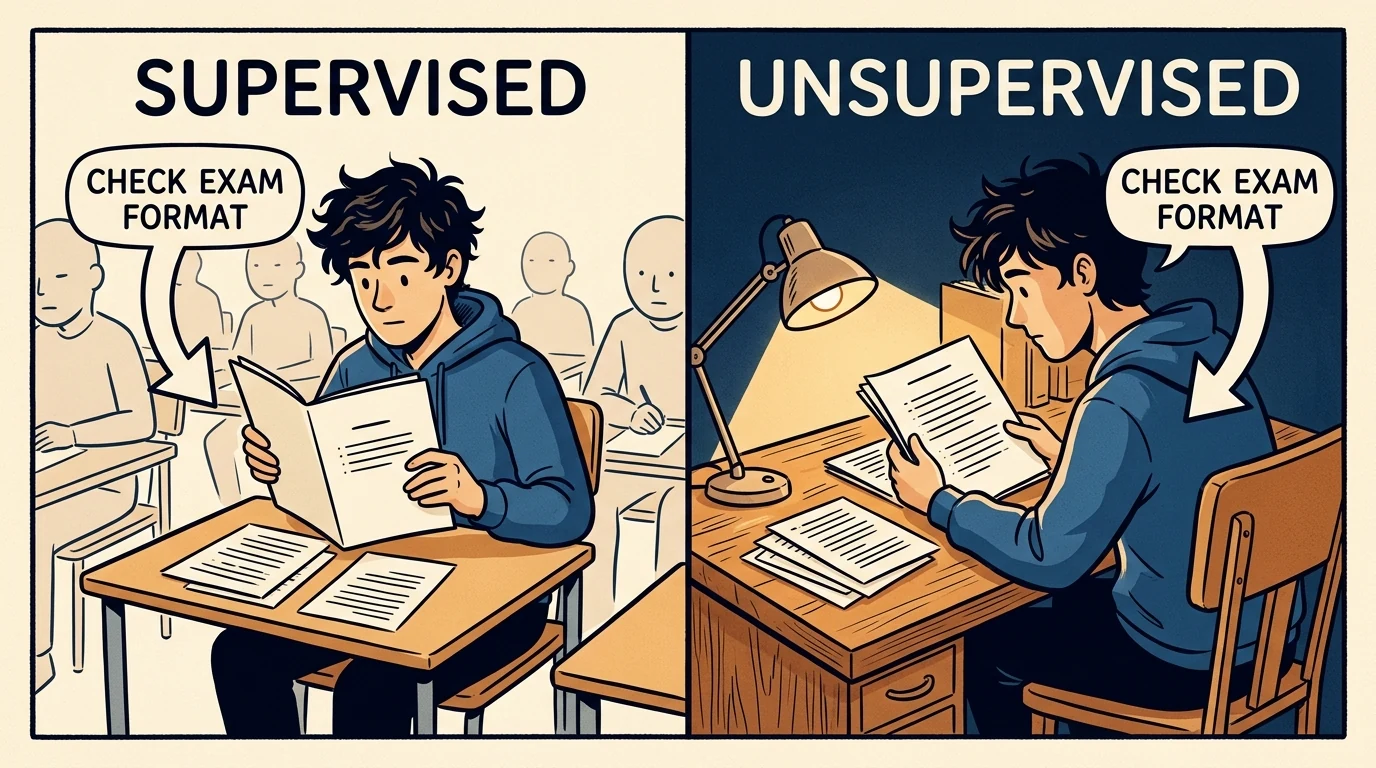
- Check supervised versus unsupervised task instructions.
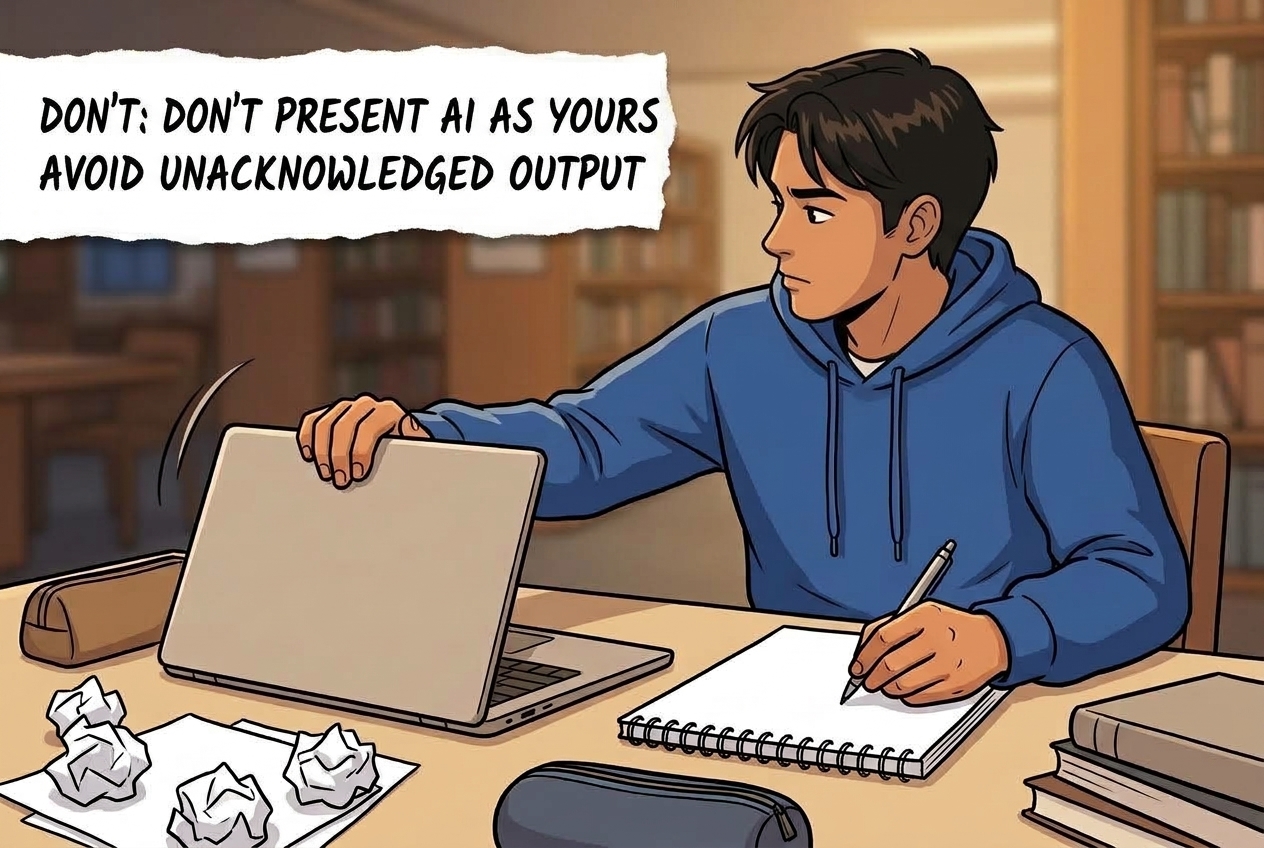
- Explain substantive AI use unless the format waives declaration.
- Use the applicable APO notice and programme scope.

Göttingen, Germany
Student guide · Task scope and procedure
The January 2026 Presidential recommendations distinguish supervised from unsupervised assessment. Social Sciences’ May 2025 commitments have faculty scope. APO applies only where incorporated by the programme; its Board-review period differs from student objection. German wording and notification exceptions remain visible. Academic Cloud access is not task permission.
Poniższe wskazówki są po angielsku; oficjalne dowody zachowano w języku oryginału.
Pełne podsumowanie zasad dla studentów nie jest jeszcze dostępne; sprawdź zebrane stwierdzenia i źródła.
The January 2026 Presidential recommendations distinguish supervised from unsupervised assessment. Social Sciences’ May 2025 commitments have faculty scope. APO applies only where incorporated by the programme; its Board-review period differs from student objection. German wording and notification exceptions remain visible. Academic Cloud access is not task permission.
Zebrano uzupełnienie: 2026-10-08 · Aktualne zastosowanie niepotwierdzone niezależnie
Podsumowanie jest obecnie dostępne po angielsku
Interpretacja serwisu
The Presidential Board’s recommendations decided on 7 January 2026 promote AI integration in teaching. Their examination section distinguishes supervised and unsupervised work: supervised exams do not permit AI unless explicitly allowed, including during breaks. This recommendation document does not replace the actual course or programme examination rules.
Zakres: Students in the cited programme/course/stage only · Only the captured source, version, audience and conditions; no exhaustive currency certification.
Dowody wykrywania · Wsparcie i dostosowania
Zakres: Students in the cited programme/course/stage only · university
DEALING WITH AI MODELS IN STUDY AND TEACHING
Recommendations for Instructors
Decided by the Presidential Board on January 7, 2026
Against the background of experiences gained since 2023 with AI models in study and teaching, the university reinforces its recommendation to integrate these tools into teaching as extensively as possible and to promote their use by instructors and students.Zobacz oficjalne źródło ↗Zebrano: 2026-10-08 · 39–42
SHA-256: fb1e3d58a6c9c0cf9cfaebdc551d7ddd897d3e414b2906293ca13f4fbdef1142
Examinations
For examinations taken without supervision (e.g., term papers, essays), students have access to AI text models. Prohibiting their use is not advisable, not only because supervision is lacking, but also because meaningful use of such tools is already part of prior school education and will be important for future professional life. Proper use in the sense of good scientific practice (GSP) should therefore also be part of the examination. At the same time, it must be ensured that the submitted work represents an independently performed achievement. In principle, a critical analysis of the examination formats should be conducted for each course or module.
Against this background, the following recommendations are provided:
In supervised examinations (e.g., written exams and oral exams), the use of AI tools is not permitted unless explicitly allowed. Use during bathroom breaks or similar situations would constitute an attempt to deceive. In some cases, it may be advisable to use, for instance, an e-examination platform for assignments that are written at home, where the text must be submitted within a defined time frame.Zobacz oficjalne źródło ↗Zebrano: 2026-10-08 · 75–78
SHA-256: fb1e3d58a6c9c0cf9cfaebdc551d7ddd897d3e414b2906293ca13f4fbdef1142
Interpretacja serwisu
For unsupervised examinations the 2026 recommendations say AI should generally be treated as a permissible aid, with independently performed work and transparent use; permissibility ends where AI-origin parts are not declared. A methods section is an alternative/complementary disclosure. Suitable formats may waive declaration, and course requirements should be discussed. This is not unconditional permission for every task.
Zakres: Students in the cited programme/course/stage only · Only the captured source, version, audience and conditions; no exhaustive currency certification.
Dowody wykrywania · Wsparcie i dostosowania
Zakres: Students in the cited programme/course/stage only · university
In unsupervised examinations, the following should apply:
AI models should generally be considered permissible aids in unsupervised exams, also because it cannot be monitored whether students refrained from using them.
The permissibility of AI models as aids ends where parts of the submitted work originate from an AI model and are not transparently declared as such.
The use of AI tools must be transparent. As a rule, students should explain, in addition to the submitted work, using guiding questions (see Appendix 2) how AI tools were used in creating the examination submission.
As an alternative or complementary procedure for declaring AI use, introducing a methodology section is recommended, as is already standard practice in some disciplines. Here, all relevant tools used in preparing the work are explained.
If AI competencies are not direct examination content, transparent use of AI models should have neither positive nor negative effects on the grading of the submission.
Examiners should adjust examination formats and questions so that the independence of student work can still be verified even when AI tools are used. For suitable exam formats, examiners may decide to waive the declaration requirement.
At the beginning of the semester, the specific requirements and framework for AI use should be discussed with students in each course. This should also reflect the students’ personal responsibility in accordance with good scientific practice regarding AI usage.
The nature of independent work changes when using AI models. For example, text passages may be developed, evaluated, and linked with sources in a question-and-answer dialogue with an LLM based on competencies acquired in the course. It does not, per se, contradict independent work if such text blocks, once linked with previously identified sources, are incorporated into the submitted examination result.
All study committees and program deans should work together with instructors and students to consider the recommendations outlined here regarding AI models and their impact on teaching and examinations, and refine them as appropriate for the specific discipline. Special attention should also be paid to examination formats and the design of assessments.Zobacz oficjalne źródło ↗Zebrano: 2026-10-08 · 79–88
SHA-256: fb1e3d58a6c9c0cf9cfaebdc551d7ddd897d3e414b2906293ca13f4fbdef1142
Interpretacja serwisu
The research-and-teaching resource page links Academic Cloud AI models and the University’s AI Usage Cards for documenting use. It says academic institutions, funders and publishing bodies supply relevant research/teaching requirements. A directory link does not establish individual eligibility, fees or permission to input confidential material.
Zakres: Students in the cited programme/course/stage only · Only the captured source, version, audience and conditions; no exhaustive currency certification.
Dowody wykrywania · Wsparcie i dostosowania
Zakres: Students in the cited programme/course/stage only · university
Directory and research resource scope; no account/privacy behaviour test.
The use of artificial intelligence (AI) also offers new opportunities and perspectives for research. At the same time, it presents challenges in research and teaching, e.g. with regard to the process of producing scientific knowledge, the examination system and the practice of publishing academic papers. The university aims to promote a reflected and responsible use of AI systems, such as ChatGPT, in research and teaching.
On this page you will find a compilation of tools and recommendations to help you familiarise yourself with the use of AI systems in academic work and find guidance. Currently, the use of AI tools in teaching and research is primarily regulated by the requirements of academic institutions, funding bodies and publication organs. The demand for transparency regarding the use of AI tools is emerging as a central requirement that links the various statements. For example, the 2023 revised version of The European Code for Research Integrity lists the concealment of the use of AI for the creation of scientific content or the drafting of publications as a violation of scientific integrity.Zobacz oficjalne źródło ↗Zebrano: 2026-10-08 · 43–44
SHA-256: 15a0c9f7305b75af371a2b340c2e0014a3b130d3d5fb1d18cda654f914ecc8fa
TOOLS
Access to various AI models via the Academic Cloud
Service of the University: AI Usage Cards - Create Transparency by Documenting AI UsageZobacz oficjalne źródło ↗Zebrano: 2026-10-08 · 56–58
SHA-256: 15a0c9f7305b75af371a2b340c2e0014a3b130d3d5fb1d18cda654f914ecc8fa
Interpretacja serwisu
The APO version listed as AM I 16/12.05.2026 applies under its programme scope. §18(5) covers cheating/plagiarism or unauthorised aids: the affected work may fail with 5.0, serious cases can exclude further examination work, and lesser cases may avoid a sanction. A hearing is required before the serious-case exclusion decision. §18(6) obliges the Examination Board to review the specified decisions on request within one month; this is a Board processing period, not a student filing countdown.
Uczelnia · Wymagane w tej procedurze
W podanym terminie. Początek terminu, zakres i wyjątki sprawdź w podsumowaniu oraz oryginale.
Zakres: Programmes incorporating APO under §1 · Only the captured source, version, audience and conditions; no exhaustive currency certification.
Zakres: Students in the cited programme/course/stage only · programme
(5) 1Unternimmt es die zu prüfende Person, das Ergebnis von Prüfungs- oder Studienleistungen
durch Täuschung (einschließlich Plagiat) oder Benutzung nicht zugelassener Hilfsmittel oder
durch auch nachträgliche Einflussnahme auf eine Prüfungsperson zum eigenen oder fremden
Vorteil zu beeinflussen, gelten die betreffenden Prüfungs- oder Studienleistungen als mit "nicht
ausreichend" (5,0) bzw. „nicht bestanden“ bewertet. 2Auf die in Satz 1 vorgesehenen Folgen
kann auch erkannt werden, wenn eine zu prüfende Person nach Ausgabe der Aufgabe nicht
zugelassene Hilfsmittel mit sich führt. 3Eine zu prüfende Person, die einen Verstoß gegen die
Prüfungs- und Studienordnung begangen oder in sonstiger Weise gröblich gegen die Ordnung
verstoßen hat, kann von den jeweiligen Prüfenden oder von den Aufsichtführenden von der
Fortsetzung der Prüfungs- oder Studienleistung ausgeschlossen werden; in diesem Fall gilt die
betreffende Prüfungs- oder Studienleistung als mit "nicht ausreichend" (5,0) bzw. „nicht
bestanden“ bewertet. 4In schwerwiegenden Fällen kann die Prüfungskommission die zu
prüfende Person von der Erbringung weiterer Prüfungs- oder Studienleistungen ausschließen;
als schwerwiegender Verstoß gilt insbesondere ein wiederholter Verstoß nach Satz 1. 5In minder
schweren Fällen kann von der Verhängung einer Sanktion abgesehen werden. 6Besteht der
Verdacht des Mitführens unzulässiger Hilfsmittel, ist die zu prüfende Person verpflichtet, an der
Aufklärung mitzuwirken und die Hilfsmittel herauszugeben; im Verweigerungsfalle gelten die
betreffenden Prüfungs- oder Studienleistungen als mit "nicht ausreichend" (5,0) bzw. „nicht
bestanden“ bewertet. 7Vor einer Entscheidung nach Satz 4 ist die oder der Betroffene zu hören.
(6) 1Die Prüfungskommission ist verpflichtet, Entscheidungen nach Absätzen 2 und 5 auf Antrag
der zu prüfenden Person innerhalb eines Monats zu überprüfen. 2Belastende Entscheidungen
sind der zu prüfenden Person unverzüglich mitzuteilen, zu begründen und mit einer
Rechtsbehelfsbelehrung zu versehen.Zobacz oficjalne źródło ↗Zebrano: 2026-10-08 · 1565–1588
SHA-256: bc3d39bcadf7a50934b6ab0866d77092927b09a3d9f421a5a7f63150cce66b63
§ 1 Geltungsbereich
1
Diese Ordnung enthält studiengangsübergreifende Regelungen insbesondere für den
Abschluss von Bachelor- und Master-Studiengängen an der Universität Göttingen. 2Sie gilt für
alle fakultätsübergreifenden Bachelor- und Master-Studiengänge in Verbindung mit einer
ergänzenden Prüfungs- und Studienordnung, im Übrigen für Studiengänge oder sonstige
Studienangebote nur, wenn die Prüfungs- und Studienordnung diese Ordnung in einem
entsprechenden Paragraphen als Bestandteil deklariert. 3Die Prüfungs- und Studienordnung
enthält darüber hinaus ergänzende, insbesondere fach- und studiengangs- beziehungsweise
studienangebotsspezifische Regelungen.Zobacz oficjalne źródło ↗Zebrano: 2026-10-08 · 68–77
SHA-256: bc3d39bcadf7a50934b6ab0866d77092927b09a3d9f421a5a7f63150cce66b63
Interpretacja serwisu
Within the APO’s applicable programme scope, §20 allows an objection to an examination-evaluation decision within one month after notification. Results are normally notified through the examination system, deemed notified no later than the third day after posting unless retrieved earlier, subject to other legal/programme provisions. The unofficial English version omits “within” in this sentence; the German wording is preserved as controlling evidence, with no calculated date.
Student · Wymagane w tej procedurze
W podanym terminie. Początek terminu, zakres i wyjątki sprawdź w podsumowaniu oraz oryginale.
Zakres: Programmes incorporating APO under §1 · Only the captured source, version, audience and conditions; no exhaustive currency certification.
Zakres: Students in the cited programme/course/stage only · programme
§ 20 Widerspruchsverfahren
(1) 1Ablehnende Entscheidungen und andere belastende Verwaltungsakte, die nach den
Prüfungsordnungen getroffen werden, sind zu begründen, mit einer Rechtsbehelfsbelehrung zu
versehen und der*dem Studierenden in Textform bekannt zu geben. 2Gegen eine Entscheidung,
der die Bewertung einer Prüfungsleistung (Teilmodulprüfung, Modulprüfung oder Bachelor- oder
Masterarbeit) im Rahmen dieser Ordnung zugrunde liegt, kann innerhalb eines Monats nach
Bekanntgabe der entsprechenden Prüfungsentscheidung Widerspruch eingelegt werden.
1
(2) Die Bekanntgabe der Bewertung einer Prüfungsleistung erfolgt über das
Prüfungsverwaltungssystem, soweit sich nicht etwas anderes aus gesetzlichen Bestimmungen,
dieser Allgemeinen Prüfungsordnung oder der jeweiligen Prüfungs- und Studienordnung des
Studiengangs, Teilstudiengangs oder sonstigen Studienangebots ergibt. 2Die Bewertung gilt als
spätestens am dritten Tag nach Einstellung der Bewertung in das Prüfungsverwaltungssystem
bekannt gegeben, sofern die zu prüfende Person das Ergebnis nicht zuvor abgerufen hat; die
Studierenden sind insoweit zur Nutzung des Prüfungsverwaltungssystems verpflichtet. 3Über
den Zeitpunkt, ab dem die Bewertung eingestellt ist, ist die zu prüfende Person in Textform zu
informieren.Zobacz oficjalne źródło ↗Zebrano: 2026-10-08 · 1612–1629
SHA-256: bc3d39bcadf7a50934b6ab0866d77092927b09a3d9f421a5a7f63150cce66b63
§ 1 Geltungsbereich
1
Diese Ordnung enthält studiengangsübergreifende Regelungen insbesondere für den
Abschluss von Bachelor- und Master-Studiengängen an der Universität Göttingen. 2Sie gilt für
alle fakultätsübergreifenden Bachelor- und Master-Studiengänge in Verbindung mit einer
ergänzenden Prüfungs- und Studienordnung, im Übrigen für Studiengänge oder sonstige
Studienangebote nur, wenn die Prüfungs- und Studienordnung diese Ordnung in einem
entsprechenden Paragraphen als Bestandteil deklariert. 3Die Prüfungs- und Studienordnung
enthält darüber hinaus ergänzende, insbesondere fach- und studiengangs- beziehungsweise
studienangebotsspezifische Regelungen.Zobacz oficjalne źródło ↗Zebrano: 2026-10-08 · 68–77
SHA-256: bc3d39bcadf7a50934b6ab0866d77092927b09a3d9f421a5a7f63150cce66b63
§ 20 Appeals Procedure
(1) 1Decisions of rejection and other incriminatory administrative decisions made under the
various Examination Regulations must be substantiated, include information concerning legal
remedies and be notified to the student in text form. 2An appeal can be lodged against the
decision one month after notification of an examination decision concerning the evaluation of
an examination result (submodule examination, module examination, or Bachelor or Master
thesis) obtained within the scope of these regulations.
(2) 1Examination results are posted via the examination administration system, unless
otherwise stipulated in related legal provisions, in these General Examination Regulations or
the Examination and Study Regulations of the respective degree programme, partial degree
2
programme [Teilstudiengang] or other study programmes. Notification regarding
examination results has occurred on the third day following activation through the
examination administration system, unless the examinee has had prior access to the results;
as such, students are required to use the examination administration system. Students are
to be informed in text form regarding the time of examination result postings.Zobacz oficjalne źródło ↗Zebrano: 2026-10-08 · 1589–1606
SHA-256: a32038d4946d69b3bbcd7dfff1708ce0163612f8793d552fa06e96238811943b
Interpretacja serwisu
Within programmes incorporating the APO, §20(4) says an objection should be decided as quickly as possible and at the latest within twelve weeks. This is institutional processing, separate from the student’s one-month filing period and §18(6) Board review. The captured clause does not explicitly define the twelve-week starting event, so no date is calculated.
Uczelnia · Należy złożyć
W podanym terminie · Początek terminu nieokreślony. Początek terminu, zakres i wyjątki sprawdź w podsumowaniu oraz oryginale.
Zakres: Programmes incorporating APO under §1 · Only the captured source, version, audience and conditions; no exhaustive currency certification.
Zakres: Students in the cited programme/course/stage only · programme
(3) Den Widerspruchsbescheid in Textform erlässt die Prüfungskommission unter Beachtung
des Verfahrens nach Absatz 4, sofern dem Widerspruch nicht abgeholfen wird.
(4) 1Soweit sich der Widerspruch gegen eine Bewertung durch Prüfende richtet, leitet die
Prüfungskommission den Widerspruch diesen zur Überprüfung (Überdenkungsverfahren) zu.
2
Ändern sie die Bewertung antragsgemäß ab, so hilft die Prüfungskommission dem
Widerspruch ab. 3Andernfalls überprüft sie die Entscheidung aufgrund der Stellungnahme der
betroffenen Prüfenden insbesondere darauf, ob
a) das Prüfungsverfahren ordnungsgemäß durchgeführt worden ist,
b) allgemeingültige Bewertungsgrundsätze beachtet worden sind,
c) bei der Bewertung durchweg von zutreffenden Tatsachenbehauptungen
ausgegangen worden ist,
d) alle vertretbaren und mit gewichtigen Argumenten folgerichtig begründeten
Lösungen als richtig gewertet worden sind,
e) sich die*der Prüfende nicht von sachfremden Erwägungen hat leiten lassen.
4
Soweit konkrete und substantiierte Einwendungen gegen prüfungsspezifische Wertungen und
fachliche Bewertungen vorliegen, werden Prüfungsleistungen durch andere, mit der Abnahme
dieser Prüfung bisher nicht befasste Prüfende erneut bewertet oder die Prüfung wird von diesen
wiederholt, sofern Anhaltspunkte dafür vorliegen, dass die Besorgnis der Befangenheit der
5
Erstprüfenden besteht. Die Neubewertung darf nicht zur Verschlechterung der
Prüfungsbewertung führen. 6Über den Widerspruch soll möglichst schnell, spätestens jedoch
innerhalb von 12 Wochen entschieden werden.Zobacz oficjalne źródło ↗Zebrano: 2026-10-08 · 1630–1654
SHA-256: bc3d39bcadf7a50934b6ab0866d77092927b09a3d9f421a5a7f63150cce66b63
§ 1 Geltungsbereich
1
Diese Ordnung enthält studiengangsübergreifende Regelungen insbesondere für den
Abschluss von Bachelor- und Master-Studiengängen an der Universität Göttingen. 2Sie gilt für
alle fakultätsübergreifenden Bachelor- und Master-Studiengänge in Verbindung mit einer
ergänzenden Prüfungs- und Studienordnung, im Übrigen für Studiengänge oder sonstige
Studienangebote nur, wenn die Prüfungs- und Studienordnung diese Ordnung in einem
entsprechenden Paragraphen als Bestandteil deklariert. 3Die Prüfungs- und Studienordnung
enthält darüber hinaus ergänzende, insbesondere fach- und studiengangs- beziehungsweise
studienangebotsspezifische Regelungen.Zobacz oficjalne źródło ↗Zebrano: 2026-10-08 · 68–77
SHA-256: bc3d39bcadf7a50934b6ab0866d77092927b09a3d9f421a5a7f63150cce66b63
Interpretacja serwisu
The Faculty of Social Sciences joint statement approved on 14 May 2025 says violating an explicitly excluded or specified AI examination rule is attempted deception, with the burden of proof on examiners. It separates plagiarism checks from still-unresolved dedicated AI-verification questions. Its voluntary faculty commitments are not a universal AI-detector deployment or institutional score threshold.
Zakres: Faculty of Social Sciences · Only the captured source, version, audience and conditions; no exhaustive currency certification.
Zakres: Students in the cited programme/course/stage only · faculty
AI in studies and teaching at the Faculty of Social Sciences
A joint declaration by students and faculty members of the Faculty of Social Sciences
Whether it's search queries or text editing, artificial intelligence (AI) has become an integral part of everyday life at our university. “AI is the ability of a machine to display human-like capabilities such as reasoning, learning, planning and creativity” (European Parliament, 2023). AI tools are dedicated applications that integrate AI functionalities and make them usable as tools. They offer potential for scientific work and have long been used in a variety of ways in higher education. Students and lecturers are equally learners in this context, as technical developments are so rapid that didactic and application-related requirements can hardly keep pace.
The writing-intensive social science subjects have to teach a critical approach to text-capturing and text-generating AI tools in teaching and practice this in research in order to use them as positive resources. This is because the use of AI tools generally has an impact on the quality of written work. The general quality criteria for good academic work and regulations on plagiarism keep on being a priority in the assessment of academic performance. Examination regulations are not yet geared toward the use of AI tools. Furthermore, the ethical and political implications of an AI-driven society are of great interest, especially for the social sciences.
An inter-status working group at the Faculty of Social Sciences has developed a joint declaration on standards for the use of AI tools in studies and teaching at the Faculty of Social Sciences at Georg August University of Göttingen.1 Voluntary commitments have been formulated on four key points to support students and lecturers both in the reflective use of AI tools:Zobacz oficjalne źródło ↗Zebrano: 2026-10-08 · 43–47
SHA-256: 3dc3c488a69d664a6407d976b1cf1f0238f8f30d0dcd72ad3679a05f856133b3
4. Clarify examination-related questions
The use of AI tools is not objectionable under examination law, as long as the General Examination Regulations (APO) does not prohibit their use. However, if sources are hallucinated or paraphrased plagiarism is taken from AI-generated texts even when AI tools are permitted, the previous rules on plagiarism and attempts at deception in accordance with §18 (5) APO shall continue to apply and will be punished accordingly under examination law. Appropriate plagiarism detection software may be used in accordance with §15 (3) APO. The Guidelines for dealing with plagiarism for students and for teachers raises awareness of the various forms of plagiarism and measures to prevent it.
If the use of AI tools for examinations is explicitly excluded or specified in the examination regulations (module directory, examination requirements, etc.), failure to comply with these requirements will be considered an attempt at deception. As with plagiarism, the burden of proof lies with the examiners.
Apart from examination-related issues, the quality criteria of academic writing and subject- or course-specific requirements at the Faculty of Social Sciences are decisive for grading. The extent to which dedicated AI verification tools can be used and what consequences this will have for examination regulations in the future remains a question to be clarified at the university level (APO).
What we agree on: We, the lecturers, raise awareness of the different types of plagiarism and point out the possibility of plagiarism checks. In addition, we encourage our students to critically read cited texts with regard to the source work and to orient themselves in their own academic writing to existing standards and conventions as established in the specialist literature and by other authors. We, the students, recognise our rights and obligations in accordance with the General Examination Regulations (APO) and check the texts we write for any unintentional plagiarism.Zobacz oficjalne źródło ↗Zebrano: 2026-10-08 · 82–86
SHA-256: 3dc3c488a69d664a6407d976b1cf1f0238f8f30d0dcd72ad3679a05f856133b3
1 The statement was presented to the Study Commission on 23 April 2025 and approved by the Faculty Council on 14 May 2025.Zobacz oficjalne źródło ↗Zebrano: 2026-10-08 · 92–92
SHA-256: 3dc3c488a69d664a6407d976b1cf1f0238f8f30d0dcd72ad3679a05f856133b3
Interpretacja serwisu
APO §21(1), within its applicable programmes, provides reasonable assessment adjustments when the student establishes the specified disability, chronic/mental illness, pregnancy, care or other important qualifying circumstances in good time before exam registration or beginning the coursework. Possible measures include changed place/time, extra working time, aids/helpers or another assessment form; evidence requirements and no overcompensation remain. Difficult health cases should involve the disability/chronic-illness officer. These are assessment adjustments, not automatic disciplinary-hearing representation or permission to use AI.
Zakres: Programmes incorporating APO under §1 · Only the captured source, version, audience and conditions; no exhaustive currency certification.
Zakres: Students in the cited programme/course/stage only · programme
(1) 1Macht die zu prüfende Person rechtzeitig vor Anmeldung zu einer Prüfungsleistung oder
Antritt einer Studienleistung glaubhaft, dass sie nicht in der Lage ist, aufgrund der Auswirkungen
länger andauernder oder ständiger Behinderung, chronischer Erkrankung oder psychischer
Erkrankung (Behinderungen im Sinne des § 3 BGG-Bund), einer Schwangerschaft, Erziehung
eines Kindes im Alter bis zu 14 Jahren, der Pflege naher Angehöriger im Sinne des § 7 Abs. 3
Pflegezeitgesetz oder aus anderen die Darstellung ihrer Qualifikation einschränkenden
wichtigen Gründen diese Prüfungs- oder Studienleistung ganz oder teilweise in der
vorgesehenen Form, Dauer, Bearbeitungszeit oder Frist, am vorgesehenen Ort oder sonst wie
in der vorgesehenen Weise zu erbringen, so soll die Prüfungskommission angemessenen
Nachteilsausgleich gewähren. 2Als nachteilsausgleichende Maßnahmen kommen insbesondere
die Veränderung der äußeren Bedingungen einschließlich des Orts und des Zeitpunkts der
Leistungserbringung, die Verlängerung der Bearbeitungszeit, die Zulassung von Hilfsmitteln
oder Hilfspersonen und die Bestimmung einer anderen Form der Leistungserbringung in
Betracht; der gewählte Nachteilsausgleich soll festgestellte Nachteile möglichst vollständig
ausgleichen, darf sie aber nicht überkompensieren. 3Umstände nach Satz 1 sind von der zu
prüfenden Person darzulegen, im Falle nicht offensichtlicher gesundheitlicher Sachverhalte
durch qualifizierte ärztliche, in der Regel fachärztliche, oder psychotherapeutische
Stellungnahme nachzuweisen, im Übrigen durch andere geeignete Unterlagen (bspw.
Entlassungsberichte über Klinikaufenthalte, Befundberichte von Therapeut*innen mit
nachweislich besonderer Expertise, Feststellungsbescheid zu Merkzeichen im
Schwerbehindertenausweis) glaubhaft zu machen; die zu prüfende Person soll ferner darlegen,
welche Maßnahmen des Nachteilsausgleichs sie aufgrund der dargelegten Umstände nach
4
Satz 1 für adäquat hält. Ein Antrag nach Satz 1 kann für mehrere Prüfungs- und
Studienleistungen gemeinsam gestellt werden und sich auf alle im Verlauf eines Studiengangs
oder Teilstudiengangs abzuleistenden Prüfungs- und Studienleistungen erstrecken, soweit nicht
mit einer Änderung der Umstände nach Satz 1 zu rechnen ist. 5Die Prüfungskommission legt
die veränderten Bedingungen der Leistungserbringung abschließend fest. 6Diese Bedingungen
sind der zu prüfenden Person wenigstens in Textform mitzuteilen und zu begründen; § 9 Abs. 8
Sätze 1, 2 gelten entsprechend. 7Betrifft eine Entscheidung nach Satz 5 mehrere Studien- und
Prüfungsleistungen über den Zeitraum mehrerer Semester, so ist die zu prüfende Person
verpflichtet, der Prüfungskommission jede Änderung der dargelegten Umstände nach Satz 1
8
unverzüglich mitzuteilen. Bei schwierigen Falllagen gesundheitlicher Art soll die*der
Beauftragte für Studierende mit Behinderungen und chronischen Erkrankungen hinzugezogen
werden.Zobacz oficjalne źródło ↗Zebrano: 2026-10-08 · 1659–1695
SHA-256: bc3d39bcadf7a50934b6ab0866d77092927b09a3d9f421a5a7f63150cce66b63
§ 1 Geltungsbereich
1
Diese Ordnung enthält studiengangsübergreifende Regelungen insbesondere für den
Abschluss von Bachelor- und Master-Studiengängen an der Universität Göttingen. 2Sie gilt für
alle fakultätsübergreifenden Bachelor- und Master-Studiengänge in Verbindung mit einer
ergänzenden Prüfungs- und Studienordnung, im Übrigen für Studiengänge oder sonstige
Studienangebote nur, wenn die Prüfungs- und Studienordnung diese Ordnung in einem
entsprechenden Paragraphen als Bestandteil deklariert. 3Die Prüfungs- und Studienordnung
enthält darüber hinaus ergänzende, insbesondere fach- und studiengangs- beziehungsweise
studienangebotsspezifische Regelungen.Zobacz oficjalne źródło ↗Zebrano: 2026-10-08 · 68–77
SHA-256: bc3d39bcadf7a50934b6ab0866d77092927b09a3d9f421a5a7f63150cce66b63
Opublikowane uzupełnienia oparte na źródłach. Podsumowania angielskie i oryginalne cytaty są oddzielone od sprawdzonego rejestru. Możliwe procedury i wyniki nie oznaczają automatycznych kar za AI. Aktualne zastosowanie nie zostało niezależnie potwierdzone; sprawdź zakres i wersję źródła.
Porównano z zapisanym tekstem; tłumaczenie nieoficjalne
Skróty pozwalają porównać zapisane teksty; nie potwierdzają ich aktualności ani niezmienności. Tematy nie tworzą obowiązkowej sekwencji.
Dostęp do narzędzia nie oznacza zgody na użycie go w ocenianej pracy. Sprawdź zasady zadania, uprawnionych użytkowników i ograniczenia danych.
Zapis archiwalny; sprawdź aktualny dostęp w oficjalnym źródle. Informacje o dostępie i cytaty zachowują język oryginału.
The University of Göttingen lists Academic Cloud access to various AI models, including the Chat AI service.
Access Chat AI through the Academic Cloud.
Not specified by the cited source.
Oryginalny cytat
The University of Göttingen's AI in Research & Teaching page lists access to various AI models via the Academic Cloud and links to the Chat AI service.Reviewed record
Zweryfikowane stwierdzenia: 6
Academic Integrity
Wartość znormalizowana: supervised_exams_ai_not_permitted_unless_allowed
Oryginalny dowód
Dowód 1In Prüfungen unter Aufsicht (z. B. Klausuren und mündlichen Prüfungen) ist der Einsatz von KI-Werkzeugen nicht zulässig, außer er wird explizit erlaubt.
Widok lokalny only
In supervised exams, AI tools are not permitted unless explicitly allowed.
Academic Integrity
Wartość znormalizowana: unsupervised_exams_ai_generally_permissible_transparency_required
Oryginalny dowód
Dowód 1KI-Modelle sollten in Prüfungen ohne Aufsicht grundsätzlich ein zulässiges Hilfsmittel sein ... Der Einsatz von KI-Werkzeugen muss transparent erfolgen.
Widok lokalny only
In unsupervised exams, AI models should generally be permissible aids; AI-tool use must be transparent.
Nauczanie
Wartość znormalizowana: course_ai_rules_discussed_start_semester
Oryginalny dowód
Dowód 1Die Studierenden brauchen auf jeden Fall Klarheit, welche Regeln für die Verwendung von KI in den Veranstaltungen gelten. Dies muss in allen Veranstaltungen zu Beginn des Semesters mit den Teilnehmenden einer Veranstaltung besprochen werden.
Widok lokalny only
Students need clarity on course AI-use rules; these should be discussed at the start of the semester.
Prywatność
Wartość znormalizowana: no_personal_data_without_anonymization_no_required_student_registration
Oryginalny dowód
Dowód 1Geben Sie keine personenbezogenen Daten ein, es sei denn, diese wurden vorher sicher und vollständig anonymisiert. ... Studierende dürfen im Rahmen von Lehrveranstaltungen von Lehrenden nicht zur Nutzung, insbesondere nicht zur Registrierung, verpflichtet werden.
Widok lokalny only
Do not enter personal data unless securely and completely anonymized; students may not be required to use or register for systems in courses.
Ai Tool Treatment
Wartość znormalizowana: {"tool":"institutional_ai_service","rawToolName":"Chat AI (Academic Cloud)","description":"The University of Göttingen lists Academic Cloud access to various AI models, including the Chat AI service.","howToObtain":"Access Chat AI through the Academic Cloud.","costToUser":"Not specified by the cited source.","availability":"allowed","endorsementType":"officially_endorsed"}
Oryginalny dowód
Dowód 1The University of Göttingen's AI in Research & Teaching page lists access to various AI models via the Academic Cloud and links to the Chat AI service.
Widok lokalny only
The University of Göttingen's AI in Research & Teaching page lists access to various AI models via the Academic Cloud and links to the Chat AI service.
Ai Tool Treatment
Wartość znormalizowana: ai_tools_supported_with_transparency_and_competence
Oryginalny dowód
Dowód 1die Universität Göttingen versteht die KI-Modelle als Werkzeuge, die benutzt werden und für deren intelligente Nutzung Studierende und Lehrende Kompetenzen erwerben müssen. Voraussetzung dafür ist ein transparenter Umgang
Widok lokalny only
The University of Göttingen understands AI models as tools that are used, requiring competencies and transparent handling.
Source record
Źródła: 3
uni-goettingen.de
uni-goettingen.de
uni-goettingen.de
Citation: University AI Policy Tracker. "University of Göttingen AI Policy Tracker record." Last checked July 19, 2026. https://eduaipolicy.org/universities/university-of-gottingen
Original university source language remains canonical. This tracker is not an official university statement.
Otwórz dziennik zmianSaved from University AI Policy Tracker. This record summarizes the cited sources; it is not an official university statement or assessment permission. Source and review dates are listed above. Hashes identify retained content, not authorization.