Qué hacer
- Thesis: confirm the permitted extent with your examiner.
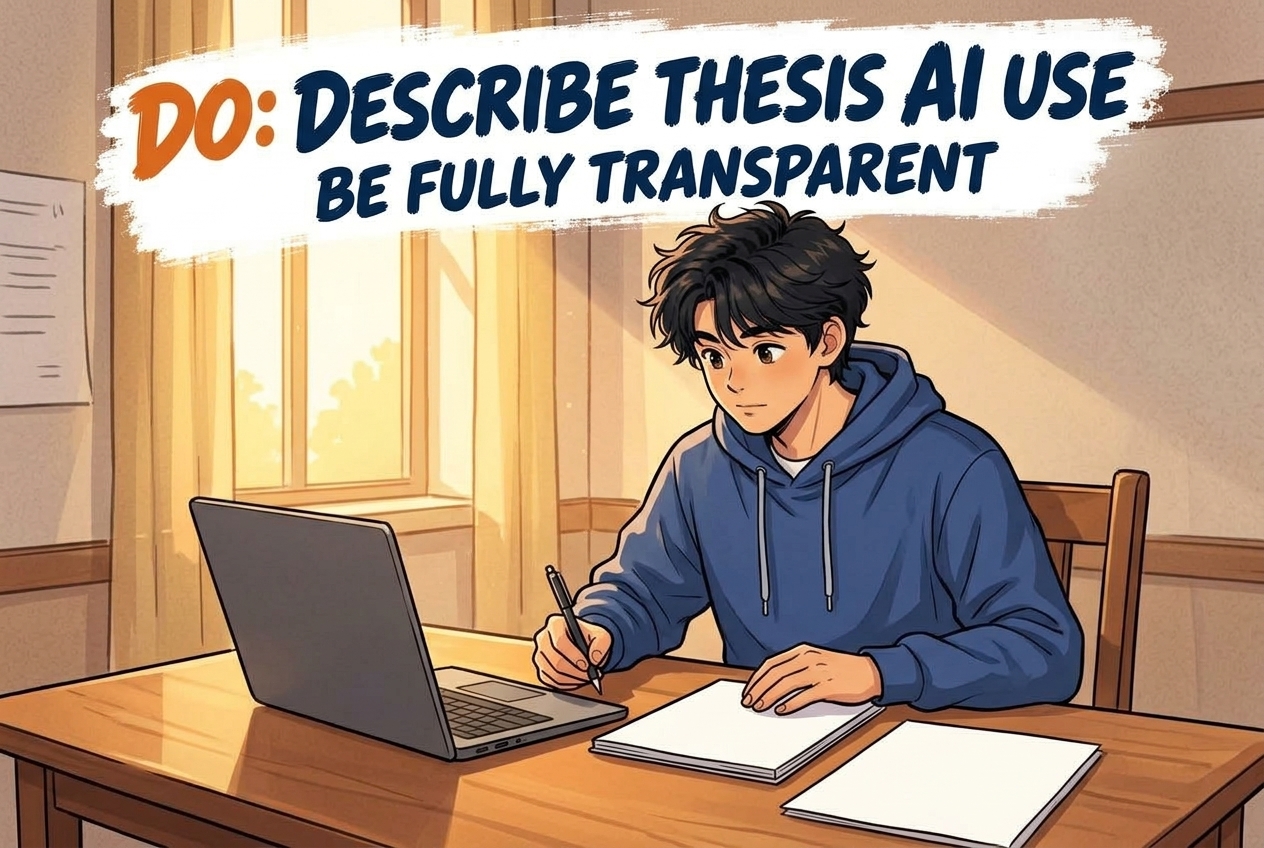
- Explain how AI contributed and cite generated content.
- If reported, review the evidence and ask about student ombud support.
Gothenburg, Sweden
Student guide · Task rules and procedure
Thesis AI permission varies by examiner and project; describe its extent and cite generated content. The 2024 tool wording is dated. Discipline guidance and the linked 2019 rules disagree on whether the three-week appeal starts at communication or issue. Preserve this conflict and seek case-specific clarification; no date is calculated.
La guía siguiente está en inglés; las pruebas oficiales conservan su idioma original.
Aún no hay un resumen completo de las normas para estudiantes; consulta las afirmaciones y fuentes recopiladas.
Thesis AI permission varies by examiner and project; describe its extent and cite generated content. The 2024 tool wording is dated. Discipline guidance and the linked 2019 rules disagree on whether the three-week appeal starts at communication or issue. Preserve this conflict and seek case-specific clarification; no date is calculated.


Complemento recopilado: 2026-10-08 · Aplicabilidad actual no confirmada de forma independiente
Resumen disponible actualmente en inglés
Interpretación del sitio
For thesis work, the examiner determines how much and how AI may be used, even differently across theses with the same examiner. Students retain responsibility and must explain AI’s role; at minimum describe how/extent and cite generated content. This thesis-specific guidance is not permission for every course assessment.
Ámbito: bachelor/master thesis students · Thesis guidance last updated 18 December 2024; course assessment rules remain separate.
Ámbito: bachelor/master thesis students · university
Regulations for the use of AI tools in thesis work
Image 1 of 1
The examiner for your thesis determines the extent to which and how AI tools are allowed in your thesis work. It's important to note that this decision may vary among theses, even when they share the same examiner.
Consequently, you may have permission to employ AI tools for tasks such as generating text, code, and conducting data analysis, among other applications. However, this is contingent upon executing these tasks in a responsible and transparent manner, as outlined below.
You are required to assume full responsibility
You are required to assume full responsibility for your work and must be capable of justifying the choices you've made regarding its content. This includes engaging in discussions about and defending the role AI played in shaping your thesis, demonstrating a clear understanding of how it contributed.
When using AI tools in your thesis work, it's crucial to approach them responsibly, which means ethically, ensuring data integrity and academic honesty. This involves:
Being cautious of over-reliance on AI, which includes the risks of uncritically accepting AI-generated answers that can be biased or wrong. For example, do not uncritically accept a rewrite of your text, code, literature review, or analysis of your data.
Understanding the potential for plagiarism and copyright infringements. For example, GitHub Copilot has used copyright protected code when helping programmers to code, so always be wary of such problems.
That the use of AI tools must be clear and transparent. At a minimum, provide a description detailing how and to what extent AI tools have been utilized in your work. If you have used AI generated content in you thesis, this should be cited as other works.Ver fuente oficial ↗Recopilado: 2026-10-08 · 21–30
SHA-256: b5ceaf266c454d02296e1eb65515d5837d585661d2bca17791c7ad24cb78e4af
Interpretación del sitio
Library guidance advises against uploading sensitive/private information or copyrighted material to chatbots, and says thesis, dissertation or scientific-publication text should not be submitted because doing so may mean relinquishing copyright. This is attributed Library advice, not a legal determination of copyright ownership.
Ámbito: users of the Library chatbot guide · Library should-not advice; separate from examiner-specific thesis permission and not a legal copyright judgment.
Ámbito: users of the Library chatbot guide · university
It’s not always clear whether your prompts or the material you upload to chatbots are used as training data for the AI companies’ language models. In some chatbots, it’s possible to change the settings and disable this feature, but some require you to use the paid version to turn it off. Because of this, you should not upload material that contains sensitive or private information, or any material protected by copyright law, for example PDFs of scientific articles that you’ve downloaded from library databases. If you have text intended for a thesis, dissertation, or scientific publication, you should not submit it to a chatbot, as doing so may mean relinquishing your copyright to that material.Ver fuente oficial ↗Recopilado: 2026-10-08 · 24–24
SHA-256: b0ee6ae3a98bc9ac21bd7be00922009212beaf9fcb21dd43e3a98f1f3f576cd9
Interpretación del sitio
Chalmers’ student page describes written suspicion and opportunity for a written response, optional oral information at the Disciplinary Committee and support from the student ombud plus another companion. The student can comment before deliberation and receives a decision. These are general discipline steps, not AI-specific guilt.
Ámbito: students · Scope is limited to the cited official source and stated conditions; this is a local candidate, not a complete university rule set.
Ámbito: students · university
Chalmers’ Disciplinary Committee consists of the Vice President of Education and Lifelong Learning, two legally qualified external members, two teacher representatives and two student representatives elected by the Student Union. The Committee meets once a month during the semesters. You will be offered support from Chalmers’ student support person (Student ombud) throughout the process.
Reporting disciplinary matters
Students, teachers and staff are responsible for reporting a substantiated suspicion of disciplinary misconduct covered by the Rules of Discipline to registrator@chalmers.se addressed to the President. You are entitled to finish writing an exam that is in progress, even if attempted cheating is suspected, for example if cheat sheets have been discovered. Written tests or assignments submitted for assessment should be attached to the report and not marked until the case has been adjudicated.
How will I know if I have been suspected of cheating?
If you have been reported for attempted deception, you will be informed in writing of the suspicion and allowed to comment in writing on the report. If the case goes to the Disciplinary Committee, you are able to provide verbal information to the Committee if you wish. You will be represented by a student support person but another support person will also be allowed to attend the Disciplinary Committee’s meeting.
What happens at a meeting of the Disciplinary Committee?
A meeting of the Disciplinary Committee begins with the case being presented. You then have the opportunity to comment and answer questions. You must leave the room while the Disciplinary Committee deliberates and makes a decision on the matter. When a decision has been made, you are called back in and informed of the decision. You may be acquitted, warned or suspended. You may appeal against the decision by the Disciplinary Committee to Chalmers University Board. Appeals must be made in writing to the Registrar, be addressed to the President and reach Chalmers no later than three weeks after the Committee’s decision was communicated to you.Ver fuente oficial ↗Recopilado: 2026-10-08 · 49–55
SHA-256: d8e2ae4644624f7660adca53bcb1ccbfdf31edee10693be54d7957dae1a8c6d4
Interpretación del sitio
The linked Rules of Discipline, decided 14 January 2019, permit warning or suspension for attempted assessment deception and other listed breaches; suspension is at most six months. Expulsion has separate manifest-harm-risk or serious-criminal-activity criteria and is not a routine consequence of AI-assisted assessment. The dated formal document is retained as such.
Ámbito: students · 2019 formal rules currently linked from student guidance; later legal/document changes not independently resolved.
Ámbito: students · university
Disciplinary measures
The disciplinary measures that can be taken at Chalmers are a warning, suspension from studies for a
certain period or expulsion from Chalmers.
A decision to issue a warning results in a disciplinary note in the Chalmers’ register. The note remains
in the register until graduation or for at most three years.
A suspension decision means that the student may not take part in instruction, examinations or
other activities as part of their course or study programme at Chalmers. The decision may cover
suspension from only instruction, examinations or other activities. The decision shall apply to a
limited period of time, but at most six months.
A student on a course or study programme at Chalmers can be expelled under the conditions stated
in these Rules of Discipline. The decision can apply to a specific course or study programme at
Chalmers or to all courses and study programmes at Chalmers. This decision applies until further
notice. The Disciplinary Committee has to reconsider the case at the request of the student. Such a
request may not be made until two years after the expulsion decision was issued.
The Committee may not decide to issue a warning or suspend a student if more than two years have
passed since the breach took place.
Decision criteria
A student may be warned or suspended if they:
1. make an attempt to mislead in connection with an examination or other assessment of study
performance;
2. disturb or impede teaching, an examination or other activity at Chalmers;
3. subject any other student or employee at Chalmers to harassment violating their integrity within
activities at Chalmers; or
4. breach Chalmers’ rules or other regulations for students in some other way.
The Committee can only decide to expel a student if:
1. it is deemed that there is a manifest risk that the student may harm themselves or some other
person or damage valuable property during their course or study programme on account of, for
example, mental disturbance or misuse of alcohol or drugs; or
2. the student is guilty of serious criminal activity.Ver fuente oficial ↗Recopilado: 2026-10-08 · 46–80
SHA-256: ff534f8423fd70e537db661f2b1b6f3d7afd9da8554d22a671f4ee0f8eed7ffa
Interpretación del sitio
The student portal says a written appeal to the University Board, submitted to the Registrar and addressed to the President, must reach Chalmers within three weeks after the Committee decision was communicated. The linked 2019 formal rules instead use issued; this trigger conflict is unresolved, so do not calculate a deadline from the portal alone.
Estudiante · Obligatorio en este procedimiento
Dentro del plazo indicado. Compruebe el inicio, el ámbito y las excepciones en el resumen y el original.
Ámbito: students · Portal communication trigger differs from formal PDF issue trigger; unresolved source discrepancy, not an assurance of extra time.
Ámbito: students · university
A meeting of the Disciplinary Committee begins with the case being presented. You then have the opportunity to comment and answer questions. You must leave the room while the Disciplinary Committee deliberates and makes a decision on the matter. When a decision has been made, you are called back in and informed of the decision. You may be acquitted, warned or suspended. You may appeal against the decision by the Disciplinary Committee to Chalmers University Board. Appeals must be made in writing to the Registrar, be addressed to the President and reach Chalmers no later than three weeks after the Committee’s decision was communicated to you.Ver fuente oficial ↗Recopilado: 2026-10-08 · 55–55
SHA-256: d8e2ae4644624f7660adca53bcb1ccbfdf31edee10693be54d7957dae1a8c6d4
Interpretación del sitio
The linked 2019 formal rules say appeal of warning, suspension or expulsion goes in writing to the President and must reach Chalmers within three weeks after the decision was issued. The portal says communicated instead. Preserve both attributions and obtain case-specific clarification; this record does not resolve current precedence or compute a date.
Estudiante · Obligatorio en este procedimiento
Dentro del plazo indicado. Compruebe el inicio, el ámbito y las excepciones en el resumen y el original.
Ámbito: students · 2019 formal issue-date wording versus current portal communication-date wording; unresolved discrepancy.
Ámbito: students · university
Decisions on disciplinary measures
The Committee itself makes decisions on disciplinary measures.
A decision by the Committee to suspend a student hall come into effect at the earliest after the final
date for appeal has passed. However, the Disciplinary Committee may decide that a suspension
decision according to points 2 and 3 under "Decision criteria" and an expulsion decision shall be
applied immediately.
A student may appeal the decision of the Committee regarding a warning, suspension or expulsion to
the Board of Chalmers. An appeal shall be made in writing to the President and reach Chalmers no
later than three weeks after the Committee’s decision was issued.Ver fuente oficial ↗Recopilado: 2026-10-08 · 165–176
SHA-256: ff534f8423fd70e537db661f2b1b6f3d7afd9da8554d22a671f4ee0f8eed7ffa
Interpretación del sitio
The thesis guide warns against uncritical output, plagiarism/copyright risks and exposing sensitive or proprietary collaborator data; consult the supervisor/collaborator when uncertain. Its 2024 wording mentions a Bing Chat Enterprise licence. That dated name is not verified as the present student tool catalogue, account entitlement or blanket data authorization.
Ámbito: bachelor/master thesis students · Scope is limited to the cited official source and stated conditions; this is a local candidate, not a complete university rule set.
Ámbito: bachelor/master thesis students · university
Being cautious of over-reliance on AI, which includes the risks of uncritically accepting AI-generated answers that can be biased or wrong. For example, do not uncritically accept a rewrite of your text, code, literature review, or analysis of your data.
Understanding the potential for plagiarism and copyright infringements. For example, GitHub Copilot has used copyright protected code when helping programmers to code, so always be wary of such problems.
That the use of AI tools must be clear and transparent. At a minimum, provide a description detailing how and to what extent AI tools have been utilized in your work. If you have used AI generated content in you thesis, this should be cited as other works.
Recognizing the need to secure sensitive or proprietary information. For example, you might have access to valuable information in the organization you are writing your thesis and sharing it with the AI tool might not be advisable.
Always consult with your supervisor
Always consult with your Chalmers’ supervisor or relevant industry/public sector collaborators before using AI tools if you have any uncertainties, particularly concerning data privacy and ethical issues. To date, Chalmers has licensing agreements in place with Bing Chat Enterprise, which include privacy arrangements.
Tags:
studies
education
Updated 18 December 2024, 08:21Published 21 December 2023, 12:20Ver fuente oficial ↗Recopilado: 2026-10-08 · 28–37
SHA-256: b5ceaf266c454d02296e1eb65515d5837d585661d2bca17791c7ad24cb78e4af
Complementos publicados basados en fuentes. Los resúmenes en inglés y las citas originales se separan del registro revisado. Los procesos y resultados posibles no son sanciones automáticas por usar IA. La aplicabilidad actual no se ha confirmado de forma independiente; compruebe el ámbito y la versión de la fuente.
Comparado con el original guardado; traducción no oficial
Los hashes permiten comparar textos guardados; no certifican vigencia ni inmutabilidad. Los temas no forman una secuencia obligatoria.
El acceso no autoriza su uso en una evaluación. Comprueba las reglas de la tarea, los usuarios elegibles y las restricciones de datos.
Registro archivado; consulta la fuente oficial para el acceso actual. Los detalles de acceso y las citas conservan su idioma original.
Cita original
Chalmers Library's teacher guidance says all Chalmers students and employees have access to Microsoft Copilot, while Chalmers does not currently have a license for ChatGPT.Cita original
Chalmers Library says students and employees have Microsoft Copilot access and that Chalmers does not currently license ChatGPT.Cita original
Chalmers Library's teacher guidance says all Chalmers students and employees have access to Microsoft Copilot, while Chalmers does not currently have a license for ChatGPT.Cita original
All students and employees at Chalmers have access to the chatbot Microsoft Copilot.Cita original
In addition, Chalmers offers Microsoft Copilot Pro licenses to employees who are interested, please contact your immediate manager.Cita original
Chalmers Library says students and employees have Microsoft Copilot access and that Chalmers does not currently license ChatGPT.Reviewed record
Afirmaciones revisadas: 6
Academic Integrity
Valor normalizado: student AI use requires transparency and citation in academic-integrity context
Evidencia original
Evidencia 1Claiming that what someone else has written is your own text without referencing to it correctly is considered as plagiarism. In relation to AI, this can be interpreted as either plagiarism or ghostwriting, so you need to be fully transparent in your use of AI. Describe what you have done and cite correctly, including which AI tool you have used.
Vista localizada only
Chalmers Library links AI use to plagiarism or ghostwriting risk and tells students to be transparent and cite the AI tool used.
Privacidad
Valor normalizado: thesis AI-tool uncertainty around data privacy calls for supervisor or collaborator consultation
Evidencia original
Evidencia 1Always consult with your Chalmers’ supervisor or relevant industry/public sector collaborators before using AI tools if you have any uncertainties, particularly concerning data privacy and ethical issues.
Vista localizada only
Chalmers says thesis students should consult a supervisor or collaborator before AI use when data privacy or ethical issues are uncertain.
Privacidad
Valor normalizado: avoid uploading sensitive private copyrighted or unpublished scholarly material to chatbots
Evidencia original
Evidencia 1Because of this, you should not upload material that contains sensitive or private information, or any material protected by copyright law, for example PDFs of scientific articles that you’ve downloaded from library databases. If you have text intended for a thesis, dissertation, or scientific publication, you should not submit it to a chatbot, as doing so may mean relinquishing your copyright to that material.
Vista localizada only
Chalmers Library cautions against uploading sensitive, private, copyrighted, or unpublished scholarly material to chatbots.
Ai Tool Treatment
Valor normalizado: thesis AI-tool use may be permitted with responsibility and transparent disclosure
Evidencia original
Evidencia 1You are required to assume full responsibility for your work and must be capable of justifying the choices you've made regarding its content. This includes engaging in discussions about and defending the role AI played in shaping your thesis, demonstrating a clear understanding of how it contributed.
Vista localizada only
Chalmers requires thesis authors to take full responsibility for their work and be able to justify the role AI played.
Ai Tool Treatment
Valor normalizado: course-level coordinator and examiner decide examination AI-tool use
Evidencia original
Evidencia 1It is up to the coordinator and examiner for each individual course to decide whether and how AI tools are allowed to be used within the framework of the various examinations. Remember to ask at the beginning of each course!
Vista localizada only
Chalmers Library says course coordinators and examiners decide whether and how AI tools are allowed in each course's examinations.
Ai Tool Treatment
Valor normalizado: students and employees have Microsoft Copilot access; no current Chalmers ChatGPT license
Evidencia original
Evidencia 1All students and employees at Chalmers have access to the chatbot Microsoft Copilot. In addition, Chalmers offers Microsoft Copilot Pro licenses to employees who are interested, please contact your immediate manager. Chalmers does not currently have a license for ChatGPT.
Vista localizada only
Chalmers Library says students and employees have Microsoft Copilot access and that Chalmers does not currently license ChatGPT.
Source record
Fuentes: 4
guides.lib.chalmers.se
guides.lib.chalmers.se
chalmers.se
guides.lib.chalmers.se
Citation: University AI Policy Tracker. "Chalmers University of Technology AI Policy Tracker record." Last checked May 15, 2026. https://eduaipolicy.org/universities/chalmers-university-of-technology
Original university source language remains canonical. This tracker is not an official university statement.
Abrir registro de cambiosSaved from University AI Policy Tracker. This record summarizes the cited sources; it is not an official university statement or assessment permission. Source and review dates are listed above. Hashes identify retained content, not authorization.