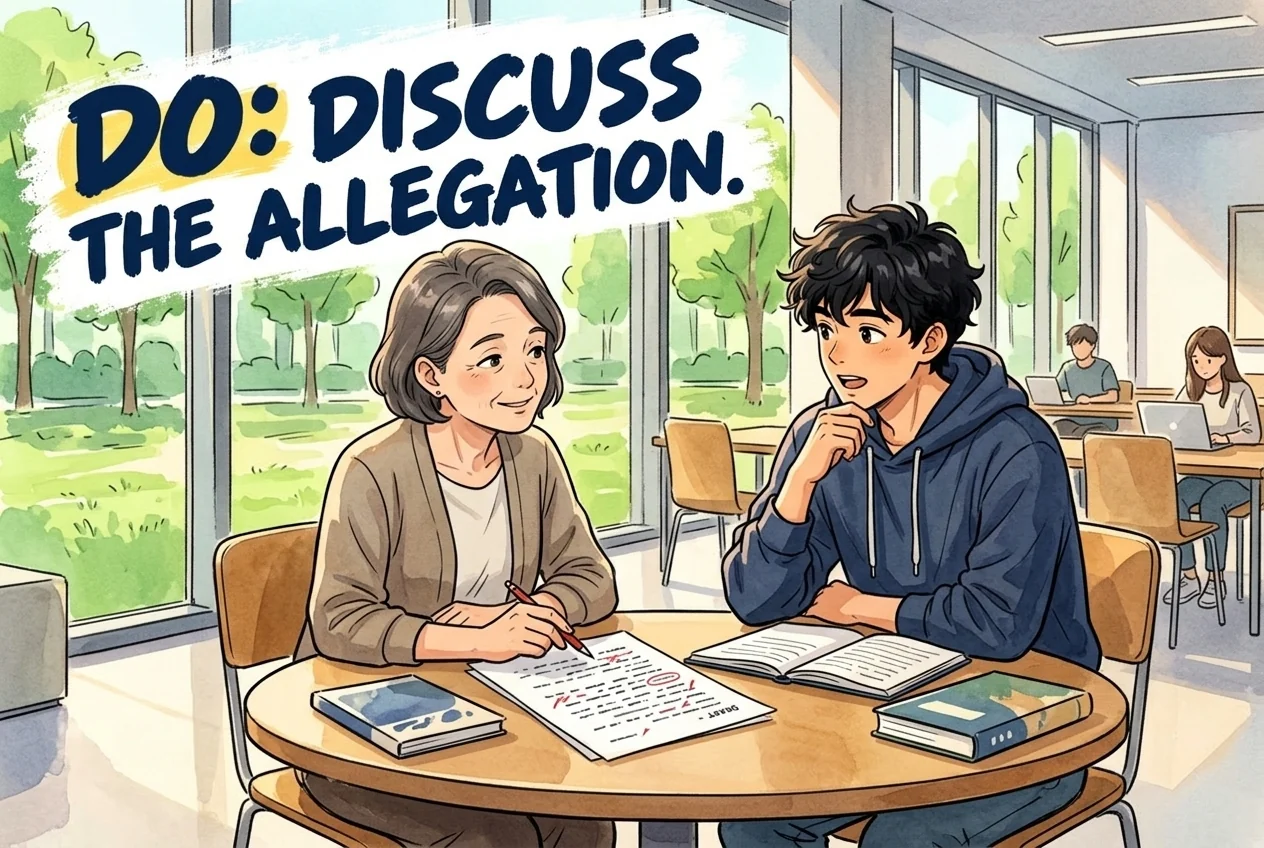
Do
- Ask which outside assistance is specified for the assessment.
- Seek Student Advocacy and prepare your own account and evidence.
- For the captured appeal route, check the letter date and applicable Appeal Body.
Winnipeg, Canada
Student guide · Task rules and procedure
Instructor instructions control assessment assistance. The served tool guidance contains historical Bing Chat/M365 wording and no specific-software approval. The investigation guide explains evidence and a student response, while the captured undergraduate-calendar appeal uses the date on the letter. Detector use is discouraged, not formally prohibited in this guide.
A complete student policy summary is not available yet; see the collected claims and sources.
Instructor instructions control assessment assistance. The served tool guidance contains historical Bing Chat/M365 wording and no specific-software approval. The investigation guide explains evidence and a student response, while the captured undergraduate-calendar appeal uses the date on the letter. Detector use is discouraged, not formally prohibited in this guide.

Supplement collected: 2026-10-08 · Current applicability not independently confirmed
Site interpretation
Assessments are expected to be completed without outside assistance unless the instructor specifies otherwise; instructions should clearly state permitted tools. If a prohibited GenAI tool is found to have been used, the instructor should consult the discipline bylaw or Head/Dean. Do not guess that AI outlines or drafts are allowed.
Scope: students · Scope is limited to the cited official source and stated conditions; this is a local candidate, not a complete university rule set.
Detection evidence · Support & adjustments
Scope: students · university
Are students permitted to use genAI tools to complete assessments?
Students are expected to complete assessments on their own, without any outside assistance, unless otherwise specified by their instructors. Instructors are strongly encouraged to speak to their students about what tools, if any, are permitted in completing assessments. Written assignment instructions should indicate what types of tools are permitted; vague references will generally not suffice. If adding a prohibition on genAI tools to assignment instructions, it is best to state that the ‘use of generative artificial intelligence (or genAI) tools’ is prohibited, as opposed to the use of one particular tool, as there are many generative AI tools available.
A document is available for download at the top of this webpage that contains sample language that instructors may include in their course syllabi to clarify for students if the use of genAI tools for completing course work is acceptable, or not, and why. Instructors are also encouraged to include information on specific assignment instructions to explicitly indicate whether the use of genAI is acceptable or not.
If an instructor indicates that use of genAI tools is not permitted on an assessment, and a student is later found to have used such a tool on the assessment, the instructor should consult the Student Discipline Bylaw, and/or the Department Head or Dean.
Some students may ask if they can create their assignment outline or draft using genAI, and then edit that draft. Before discussing the assignment with your students, consider what your response to this question might be, and address this question in advance.View official source ↗Collected: 2026-10-08 · 180–184
SHA-256: b9de76d84584ab4f11cf2d9611fa83ccaadc221ee7d8b31ba0ddd75154f08443
Site interpretation
The integrity page defines unauthorized content generation as academic-credit work using technological assistance not explicitly approved or undeclared. It specifically includes AI writing without instructor permission and says permitted AI must follow instructions and be transparent. This supplies the AI-specific bridge to the separate general discipline framework.
Scope: students · Scope is limited to the cited official source and stated conditions; this is a local candidate, not a complete university rule set.
Detection evidence · Support & adjustments
Scope: students · university
Unauthorised Content Generation
Unauthorised Content Generation is defined as "the production of academic work, in whole or part, for academic credit, progression or award, whether or not any payment or other benefit is involved, using not explicitly approved or undeclared technological assistance" (University of Manitoba, 2025)
Examples of Unauthorised Content Generation
Using any AI tool to write part or all of an assignment without instructor permission
Submitting an AI-generated essay, lab report, or reflection as if it were your own work
Generating citations or references using AI without checking for accuracy or disclosing the use of AI
Letting an AI tool paraphrase or rewrite portions of your text
How to Avoid Unauthorised Content Generation
Familiarize yourself with your course syllabus and know when AI use is not permitted in a course. If you are allowed to use AI, always follow your instructor's guidelines and complete your work using only the tools that are explicitly permitted. When using AI tools you must be transparent about how you used it. If you're unsure, talk to your instructor.View official source ↗Collected: 2026-10-08 · 341–349
SHA-256: 67d9fc26ddc033af8903c05e7667071561c3c0e68c8ece94648c8a93aaf3fe99
Site interpretation
The administrator investigation guide supplements rather than replaces governing documents. An allegation letter should give the specific allegation and evidence, explain Student Advocacy access and a reply deadline for arranging a meeting or advising of an Advocacy meeting; nonresponse does not prevent a decision. No universal numeric response clock is given here.
Scope: disciplinary authorities; explanation of student-facing process · Scope is limited to the cited official source and stated conditions; this is a local candidate, not a complete university rule set.
Detection evidence · Support & adjustments
Scope: disciplinary authorities; explanation of student-facing process · university
The materials on this page are intended to provide disciplinary authorities with guidance about how to investigate an allegation of academic misconduct.
On this page:
Process Letter templates Educational outcomes Disciplinary outcomes
Note: The materials on this page are intended to provide disciplinary authorities with guidance about how to investigate an allegation of academic misconduct. The information contained herein is not intended to replace relevant University of Manitoba governing documents. Please consult the Student Discipline bylaw and related procedures.
Process
1. Review the allegation
Begin documentation process: Ask the questions who, what, when, where and why?
Review relevant policies.
Determine jurisdiction. Consider the following:
Authority to review - Ensure that the matter is one that falls under your jurisdiction. For example, second allegations and misconduct related to final exams and personation automatically fall under the jurisdiction of the Dean’s Office.
Concurrent jurisdiction - If the student is not part of the faculty in which the course is offered, be sure to inform the student’s home faculty of the allegation. Refer to appropriate authority, if matter falls outside your jurisdiction. If you are unsure of the jurisdiction, contact Student Advocacy or the dean’s office.
Issues of bias - If the professor who brought forward the allegation is the same as the normal decision-maker, ensure an alternative decision-maker is assigned to the case.
Collect facts - Review the evidence that was forwarded by the instructor and ensure there is enough evidence to move forward with an allegation letter. If witnesses need to be interviewed, or other data collected, be sure to reference the appropriate procedures.
2. Write and send an allegation letter
Review student discipline bylaw.
Write a letter to the student and include all of the following information:
Details of the investigation. Student should be informed about the specific form of academic misconduct they are alleged to have breached. All evidence should be provided to the student within the letter so they are able to understand the allegation and prepare for the discipline meeting.
Provide a deadline by which the student must contact the decision-maker to either set up a meeting OR advise once they have scheduled a meeting with Student Advocacy.
Inform the student of their right to advocacy and show them how to get in touch with Student Advocacy. The Student Advocacy confidential intake assistant can be reached at 204-474-7423 or stadv@umanitoba.ca.
Explain that a hold has been placed on the student’s account and inform them why.
The letter should be clear that if there is no response to the letter by the deadline then a decision will still be made.View official source ↗Collected: 2026-10-08 · 123–143
SHA-256: 4639aba693f94f771618f050200bc8468216236589139400b3718bed8a48e77e
Site interpretation
The guide’s meeting gives the student a statement, evidence and questions before a decision. The instructor bears the balance-of-probabilities burden; the student need not disprove the allegation. If upheld, decision-makers consider mitigation/aggravation and explain evidence, penalty reasons and appeal/support information in writing.
Scope: students · Scope is limited to the cited official source and stated conditions; this is a local candidate, not a complete university rule set.
Detection evidence · Support & adjustments
Scope: students · university
3. Meeting with the student
Sample meeting itinerary
Introductions:
Introduce everyone at the meeting.
Confirm the student’s home address.
Confirm the advocate may be copied on all future communication.
Confirm decision not yet made and that this is an investigation.
Emphasize that decision will be made on the balance of probabilities.
Overview of allegation: The decision maker should outline the information they were provided by the instructor and speak broadly about the nature of the evidence and allegation.
Student response:
Give student the chance to make a formal statement.
The faculty should request a copy of the statement from the student so they have a complete record on file.
The student may present evidence to the decision-maker during this period and explain the relevance of the evidence.
If possible, the decision-maker should make copies of the evidence for the file.
Question period. After the student provides their statement, questions may be raised by the decision maker and the instructor (if present). The student may also ask questions of the instructor and/or decision maker regarding the evidence.
Final question and answer period. If there are any new questions arising for or from the student they can be addressed at this point.
Closing remarks. The student may make a closing statement at this point re-iterating or clarifying any points. The decision-maker should make their own closing remarks thanking everyone for attending and giving the student a timeline for a decision.
Additional fact-finding consultation: If the decision maker has additional issues they need to examine following the meeting, the student should be informed of the ongoing process. If an allegation is to be upheld and the student is not in the same faculty as the course offering, then the home faculty needs to be consulted about the disciplinary action.
4. Make the decision
Determine if there is enough evidence by weighing the following:
Is it more probable than not that the alleged act was committed based on the facts and evidence (balance of probabilities)?
Weigh aggravating/mitigating factors.
The burden is on the instructor to show, on a balance of probabilities, that the misconduct took place. The student is not required to disprove the allegation. If this burden is met and the student’s evidence fails to satisfy the decision-makers, then the allegation should be upheld.
If the allegation is upheld, it is the responsibility of the decision maker to devise a disciplinary action.
5. Write and send the decision letter
Write a decision letter to the student with the following information:
Re-state the allegation.
Summarize the information that was received. The decision maker should outline all the evidence they received from the instructor, from the student, and potentially from the witnesses.
Explain the weight given to information for purpose of making the decision. If there is evidence the decision-maker found untrustworthy, this should be stated clearly in the letter. It is important for the student to understand exactly how the decision-maker arrived at their decision.
Reference the relevant policies.
Set out the reasons for the penalty, including aggravating and mitigating factors.
Provide information about the right to appeal, and where to receive further information and support.
If you have reason to believe that the misconduct was due to a lack of understanding, poor writing, poor research practices, or you feel the student would otherwise benefit from post-discipline education consult with the academic integrity coordinator.View official source ↗Collected: 2026-10-08 · 152–184
SHA-256: 4639aba693f94f771618f050200bc8468216236589139400b3718bed8a48e77e
Site interpretation
Under the captured undergraduate-calendar procedure, deliver the Notice of Appeal within 10 working days of the date on the lower body’s disciplinary letter, not receipt. Include the decision, grounds/remedy and applicable evidence/representation. The Appeal Body or specified chair may extend time and accept lateness; factual appeal rights can be limited under s2.23.
Student · Required when using this procedure
Within the stated period. Check the source summary and original text for the starting point, scope and exceptions.
Scope: students using the captured undergraduate-calendar appeal procedure · Clock is quoted from undergraduate-calendar source; do not silently apply a different graduate-calendar receipt trigger.
Scope: students using the captured undergraduate-calendar appeal procedure · university
Filing an Appeal
2.15 The Appellant must deliver the Notice of Appeal to the appropriate Appeal Body within ten (10) working days as of the date on the letter notifying the Appellant of the Disciplinary Action from the lower body.
2.16 The Notice of Appeal must include:
(a) such appeal application form, with current mailing address and telephone numbers, as may be required by the Appeal Body;
(b) copies of such written materials as the Appellant wishes considered in connection with the appeal;
(c) copies of the letter indicating the lower level decision, if not a first level appeal;
(d) A letter clearly outlining the reason for the appeal and the remedy sought, including an indication of whether the Appellant is appealing the decision on:
(i) the finding of facts; where permitted subject to s. 2.23 of the Student Discipline Bylaw;
(ii) the Disciplinary Action imposed by the Disciplinary Authority; or
(iii) both the facts and the Disciplinary Action, where permitted subject to s. 2.23 of the Student Discipline Bylaw; and
(e) the name and contact information of any representative that the Appellant wishes to have present at the appeal hearing, subject to subject to sections 2.7, 2.40 and 2.81 of this Appeal Procedure.
(f) In the case of an appeal of a decision of the LDC to the UDC on the Disciplinary Action only, the Notice of Appeal must also include reference to the grounds of appeal set out in section 2.62.
(g) In the case of an appeal to the LDC or UDC, a listing of all resources or witnesses the Appellant wants in attendance at the hearing and their relevance. The scheduling of witnesses and resource people is the responsibility of the Appellant.
2.17 Subject to section 2.18, if an appeal is not received by the next level Appeal Body by the deadline set out in section 2.15, the Disciplinary Action against the Student will be implemented.
2.18 The time for delivery of a Notice of Appeal may be extended by the Appeal Body, or by the chair of the Appeal Body where the Appeal Body is the LDC or the UDC.
2.19 The Disciplinary Action implemented may be put on hold if the Appeal Body receiving the next level of appeal deems the lateness acceptable and grants the Appellant permission to proceed with the appeal after deadline.View official source ↗Collected: 2026-10-08 · 281–296
SHA-256: f00ad2856d0c7d98a8a75b23bccedabfc8d31838f43cb9b96a88115dd22fc41b
Site interpretation
The teaching page describes Bing Chat Enterprise within the University’s M365 A3 licence for students/staff/faculty, while saying specific GenAI software has not been formally approved and privacy caution still applies. The page contains historical product/version language; this is an attributed access record, not a current account or product-specification test.
Scope: students · Undated live-served teaching guidance contains historical Bing Chat/GPT version language; do not promote those product specifications to current facts.
Scope: students · university
What is Bing Chat Enterprise?
Microsoft made Bing Chat Enterprise available in preview on Bing.com and the Edge sidebar.
Bing Chat Enterprise provides AI-powered chat with commercial data protection. Bing Chat is integrated with Microsoft Edge, allowing users to access the chatbot through the browser's sidebar. This integration ensures that the chatbot is accessible and can be used alongside other productivity tools, such as Microsoft 365 applications. Bing Chat Enterprise is grounded in web data and provides verifiable answers with citations (although sources may not have reliable or accurate information), along with visual answers that include graphs, charts and images.
Microsoft has included Bing Chat in the Office365 suite, and it is now part of the University of Manitoba’s M365 A3 license, which is available to all students, staff, and faculty.
The University of Manitoba, however, has not formally approved the use of specific genAI software, genAI tools within our M365 A3 license should be considered with the same caution that would be applied to other third-party applications that ingest personal data.View official source ↗Collected: 2026-10-08 · 157–161
SHA-256: b9de76d84584ab4f11cf2d9611fa83ccaadc221ee7d8b31ba0ddd75154f08443
Site interpretation
Manitoba discourages AI-detection software because of unreliability and student-work privacy concerns; this is discouragement, not a formal blanket prohibition. It suggests other evidence and a conversation about the assessment under the discipline procedures.
Scope: students · Scope is limited to the cited official source and stated conditions; this is a local candidate, not a complete university rule set.
Scope: students · university
Can I or should I use an AI-detector?
The University of Manitoba discourages the use of AI-detection software programs on student work. Such software programs are unreliable and often incorrectly flag instances of genAI use in human-written content (Weber-Wulff, 2023). Some of the AI-detection software programs assess if a piece of writing was generated by artificial intelligence simply on its level of sophistication. Using such detection programs could negatively impact students if they were to be improperly accused of using a genAI tool.
Sharing your students’ work with these software programs without their permission also raises a range of privacy, intellectual property, and ethical concerns.
Instructors are encouraged to continue to use their traditional methods for detection of potential academic misconduct, including:
lack of citations
citations that do not match the content
false citations
topic of papers/essays veer off from assignment instructions
content that is too general
similarity to text generated using artificial intelligence using assessment instructions as a prompt
argumentation that is too sophisticated for the level of the student
sweeping statements that a student could not have generated on their own
significant contrast between the writing and other samples of writing from the same student in the same course (e.g., assignment vs. final exam)
a great essay from a student who rarely attended class.
Some of the methods described above require instructors to have a solid understanding of the level and style of their students' academic work.
Meeting with a student to discuss their assignment in person, as per the Student Discipline Bylaw – Academic Misconduct Procedures, is another option. If you have suspicions about a submitted assessment, engaging the student in a conversation about their assessment can be helpful to understand the issue. Refer to this UM Discovery Interview Tips resource for examples of questions you may ask to gain clarification.View official source ↗Collected: 2026-10-08 · 187–202
SHA-256: b9de76d84584ab4f11cf2d9611fa83ccaadc221ee7d8b31ba0ddd75154f08443
Site interpretation
The captured undergraduate-calendar appeal procedure permits the student to attend, explain and ask questions, and eligible representation subject to the cited sections. An appeal can leave the sanction unchanged or make it more/less severe, with advance warning. Remote participation requires chair consent and a request at least one week before the hearing.
Student · Required when using this procedure
At least this many days before the hearing. Check the source summary and original text for the starting point, scope and exceptions.
Scope: students using the captured undergraduate-calendar appeal procedure · Scope is limited to the cited official source and stated conditions; this is a local candidate, not a complete university rule set.
Scope: students using the captured undergraduate-calendar appeal procedure · university
Appeals Generally
2.2 Students have a right to appeal Disciplinary Actions made by a Disciplinary Authority, subject to section 2.23 of the Bylaw.
2.3 Only the Student who has been the subject of a Disciplinary Action has the right to appeal.
2.4 An Appeal Body may dispose of the matter by instituting any Disciplinary Action authorized to it under Table 3. The resulting disposition may be the same, more severe or less severe than the original Disciplinary Action and the Appellant must be so informed of this possibility prior to the commencement of an appeal hearing.
2.5 When an appeal is heard by an Appeal Body, the Appellant must be invited to attend the hearing and, if in attendance, be permitted to ask questions and offer an explanation. Every reasonable attempt should be made to schedule the hearing at a time and place that permits the Appellant's participation.
2.6 If the Appellant, Respondent or their respective representatives are unable to attend the hearing in person, the use of a digital communication, such as audio or video conferencing, may be used with prior consent of the chair of the Appeal Body, provided that such means enable all parties to clearly communicate. A request for such a meeting must be made at least one week in advance of the hearing date.
2.7 Subject to sections 2.40 and 2.81 of this Appeal Procedure, the Appellant may appear in person and be represented by a Student Advocate, a representative from the University of Manitoba Students' Union, a representative from the University of Manitoba Graduate Students' Association, a member of the University Community not receiving payment for appearing, or a member of the Appellant's immediate family. It is the Appellant's sole responsibility to determine the adequacy of their representation.
2.8 Subject to sections 2.40, 2.45, 2.81, and 2.86 of this Appeal Procedure, a representative designated in writing by the Appellant may:
(a) attend any disciplinary hearing; and
(b) participate in any disciplinary hearing to the extent of asking questions of anyone in attendance and making submissions to any Appeal Body.View official source ↗Collected: 2026-10-08 · 253–262
SHA-256: f00ad2856d0c7d98a8a75b23bccedabfc8d31838f43cb9b96a88115dd22fc41b
Published source-based additions. English summaries and original-language quotations are shown separately from the reviewed record. These are possible processes and outcomes, not automatic penalties for AI use. Present applicability has not been independently confirmed; check the source scope and version.
Source-text comparison; not an official translation
Hashes allow comparison of saved content; they do not certify current validity or immutability. These topics are not a mandatory sequence.
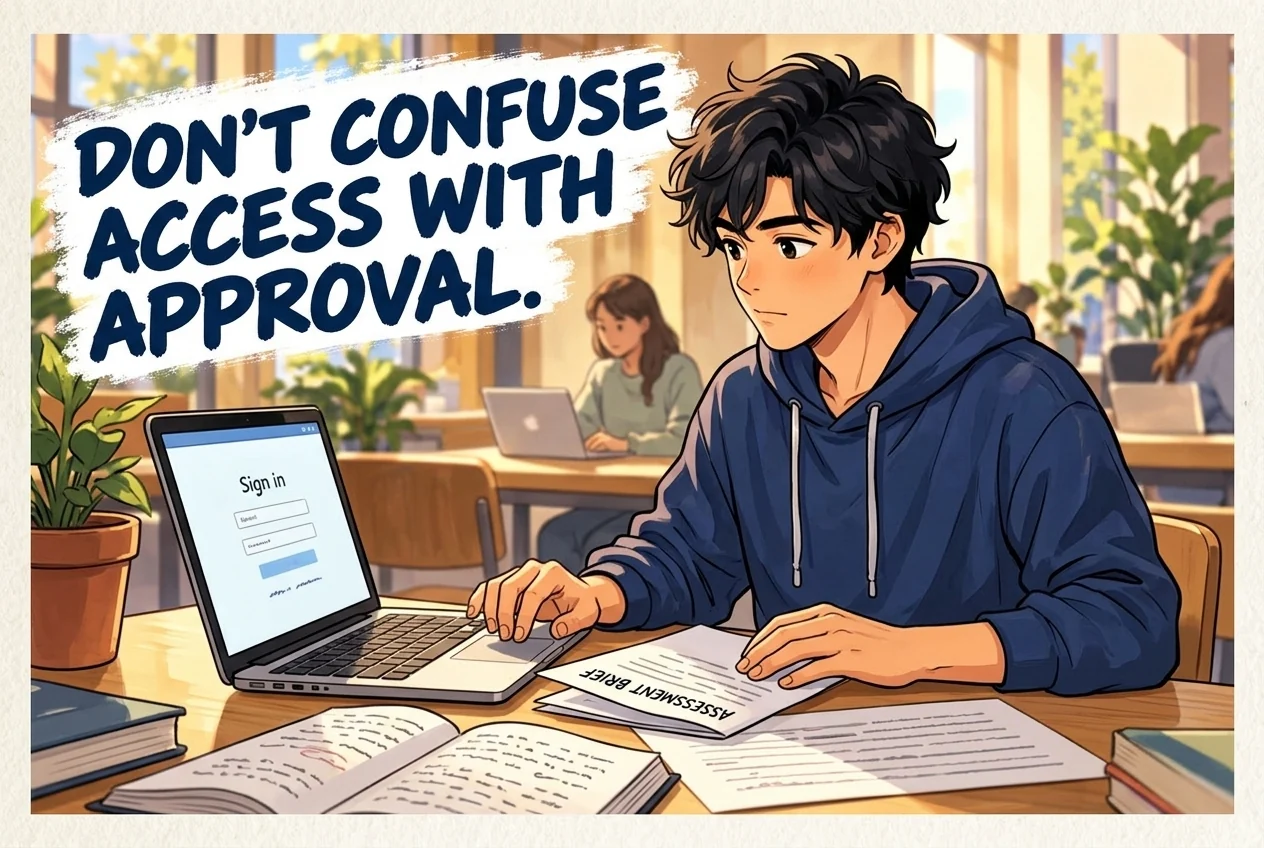
Tool access is not permission to use AI in an assessment. Check your assignment rules, eligible users and data restrictions.
Archived tool record; consult the official source for current access.
Bing Chat Enterprise is included in the University of Manitoba M365 A3 licence and available to all students, staff, and faculty, although the university cautions that it has not formally approved specific GenAI software.
Access through the university Microsoft 365 environment.
Included in the institutional M365 A3 licence.
Original quotation
Microsoft has included Bing Chat in the Office365 suite, and it is now part of the University of Manitoba’s M365 A3 license, which is available to all students, staff, and faculty.Original quotation
The University of Manitoba, however, has not formally approved the use of specific genAI software, genAI tools within our M365 A3 license should be considered with the same caution that would be applied to other third-party applications that ingest personal data.Reviewed record
8 reviewed claims
Academic Integrity
Normalized value: unauthorized_genai_academic_misconduct
Original evidence
Evidence 1Unauthorized use of Generative AI is recognized as a form of academic misconduct at UM. As such, students who are not permitted to use AI or students who do not use AI within the parameters indicated by their instructors may face an academic misconduct allegation.
Academic Integrity
Normalized value: course_specific_explicit_permission_required
Original evidence
Evidence 1Students may only use AI and GenAI tools if permission has been explicitly stated by their instructor--students are encouraged to check their syllabus and to ask questions to confirm what is allowed in their course.
Teaching
Normalized value: ai_detection_software_discouraged
Original evidence
Evidence 1The University of Manitoba discourages the use of AI-detection software programs on student work. Such software programs are unreliable and often incorrectly flag instances of genAI use in human-written content.
Teaching
Normalized value: broad_mandatory_student_genai_discouraged_until_data_protection_assured
Original evidence
Evidence 1The broad or mandatory use of such systems by students for the purpose of learning or assessment are discouraged until we are assured that the system is protecting personal data that is entered into such systems.
Privacy
Normalized value: avoid_confidential_sensitive_content_in_genai_inputs
Original evidence
Evidence 1You should ensure that you are legally permitted to upload any content to a Generative AI tool, and that it does not contain any confidential or sensitive information that should not be used by others.
Security Review
Normalized value: ai_risk_assessment_operational_controls_for_data_privacy_ip
Original evidence
Evidence 1UM must ensure that appropriate risk assessments and operational controls are implemented so that our UM data (including that of students, faculty, and staff) is not compromised, that privacy is maintained for our user community, and that intellectual property is protected.
Ai Tool Treatment
Normalized value: {"tool":"microsoft_copilot","rawToolName":"Bing Chat Enterprise","description":"Bing Chat Enterprise is included in the University of Manitoba M365 A3 licence and available to all students, staff, and faculty, although the university cautions that it has not formally approved specific GenAI software.","howToObtain":"Access through the university Microsoft 365 environment.","costToUser":"Included in the institutional M365 A3 licence.","availability":"allowed","endorsementType":"institutionally_licensed_or_procured"}
Original evidence
Evidence 1Microsoft has included Bing Chat in the Office365 suite, and it is now part of the University of Manitoba’s M365 A3 license, which is available to all students, staff, and faculty.
Localized display only
Microsoft has included Bing Chat in the Office365 suite, and it is now part of the University of Manitoba’s M365 A3 license, which is available to all students, staff, and faculty.
Original evidence
Evidence 2The University of Manitoba, however, has not formally approved the use of specific genAI software, genAI tools within our M365 A3 license should be considered with the same caution that would be applied to other third-party applications that ingest personal data.
Localized display only
The University of Manitoba, however, has not formally approved the use of specific genAI software, genAI tools within our M365 A3 license should be considered with the same caution that would be applied to other third-party applications that ingest personal data.
Ai Tool Treatment
Normalized value: no_specific_genai_software_formally_approved
Original evidence
Evidence 1The University of Manitoba, however, has not formally approved the use of specific genAI software, genAI tools within our M365 A3 license should be considered with the same caution that would be applied to other third-party applications that ingest personal data.
Source record
5 sources
umanitoba.ca
umanitoba.ca
umanitoba.ca
umanitoba.ca
umanitoba.ca
Citation: University AI Policy Tracker. "University of Manitoba AI Policy Tracker record." Last checked July 19, 2026. https://eduaipolicy.org/universities/university-of-manitoba
Original university source language remains canonical. This tracker is not an official university statement.
Open change logSaved from University AI Policy Tracker. This record summarizes the cited sources; it is not an official university statement or assessment permission. Source and review dates are listed above. Hashes identify retained content, not authorization.