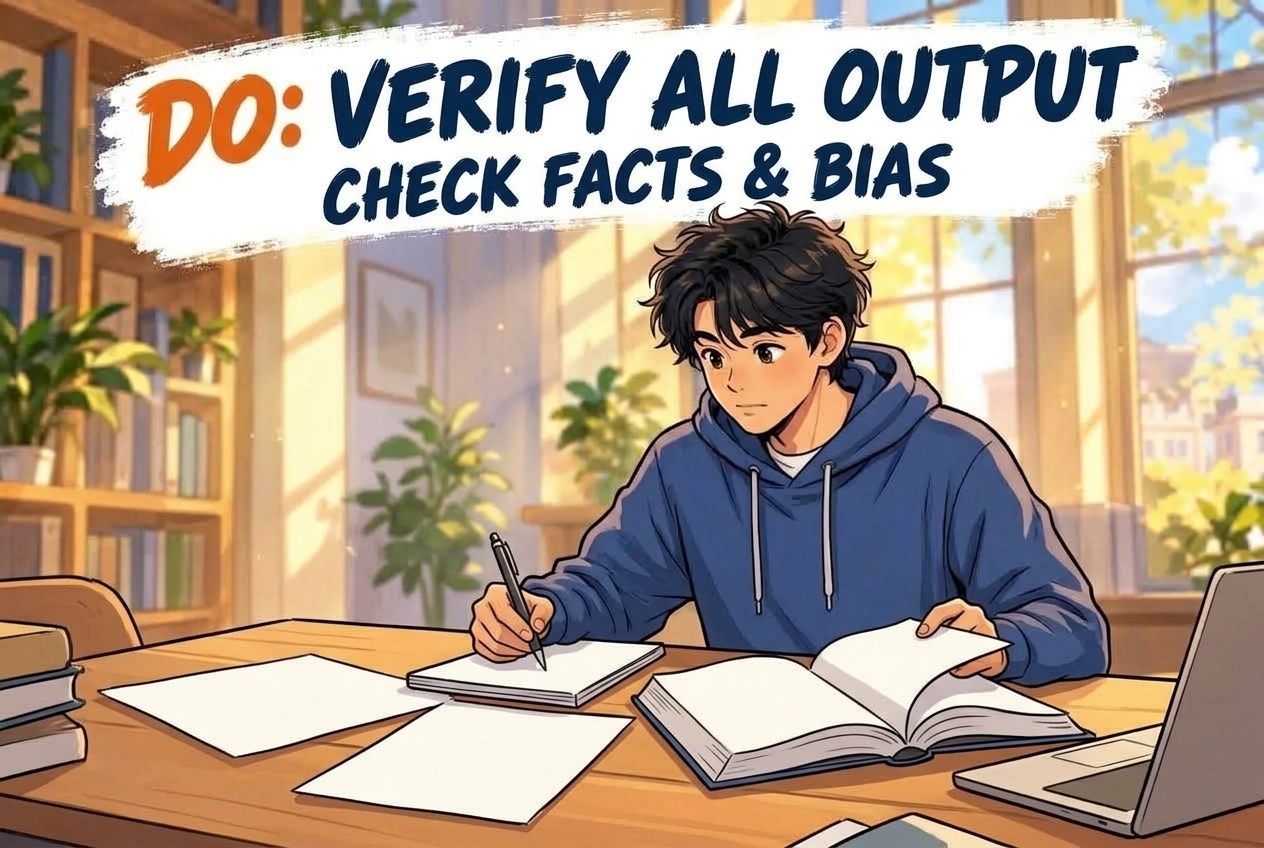
Do
- Verify AI outputs and follow the applicable tool/data conditions.
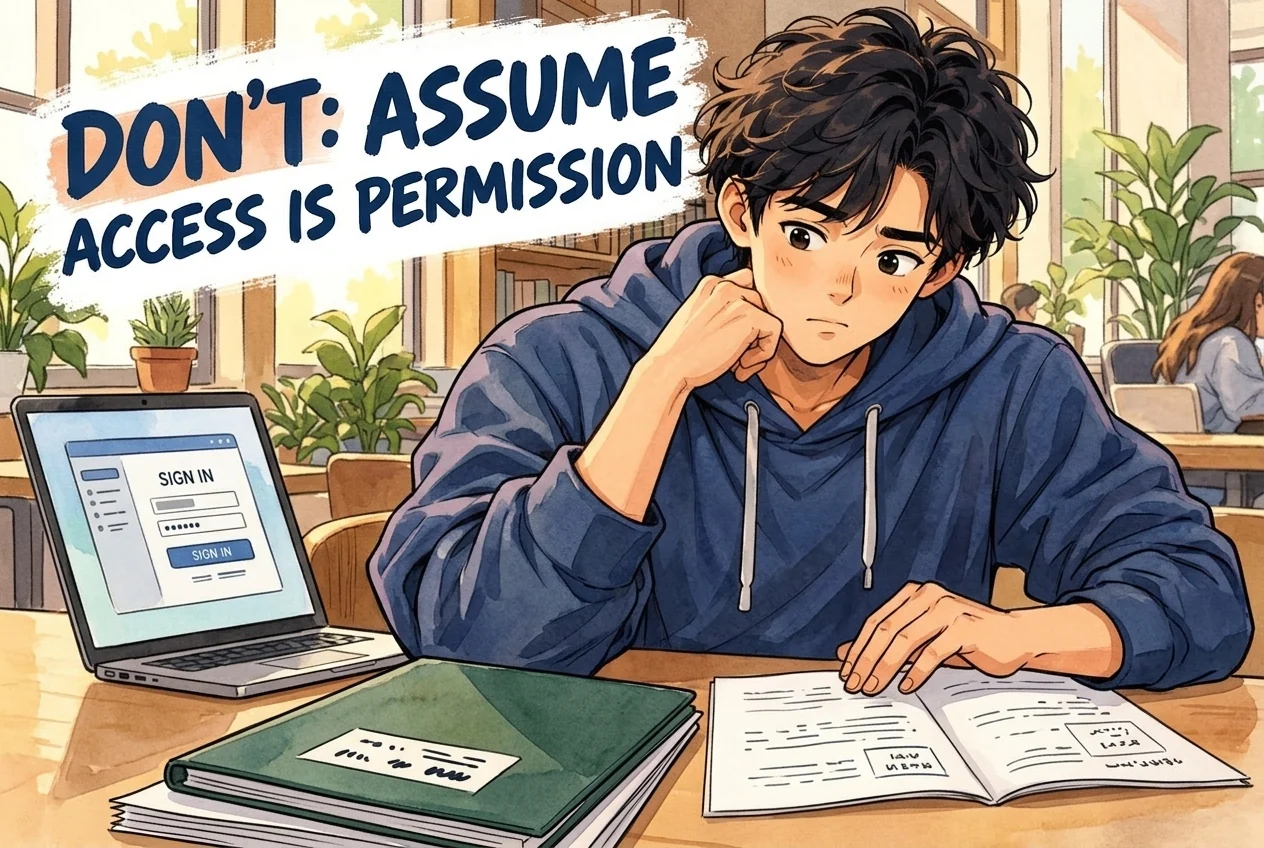
- Sign in with the University account for free Tilly access.
- If appealing an eligible decision, get the appeal to EAB within six weeks of the decision made.
Tilburg, Netherlands
Student guide · Task rules and procedure
TSHD requires explicit lecturer permission; other schools have supplementary rules. Tilly is now free to students and staff with a University account, with role-specific research/internal-data uses and opt-in chat sharing. Access does not override assessment rules. EAB appeals have a six-week decision-date window; full faculty hearing rules remain a gap.
A complete student policy summary is not available yet; see the collected claims and sources.
TSHD requires explicit lecturer permission; other schools have supplementary rules. Tilly is now free to students and staff with a University account, with role-specific research/internal-data uses and opt-in chat sharing. Access does not override assessment rules. EAB appeals have a six-week decision-date window; full faculty hearing rules remain a gap.
Supplement collected: 2026-10-08 · Current applicability not independently confirmed
Site interpretation
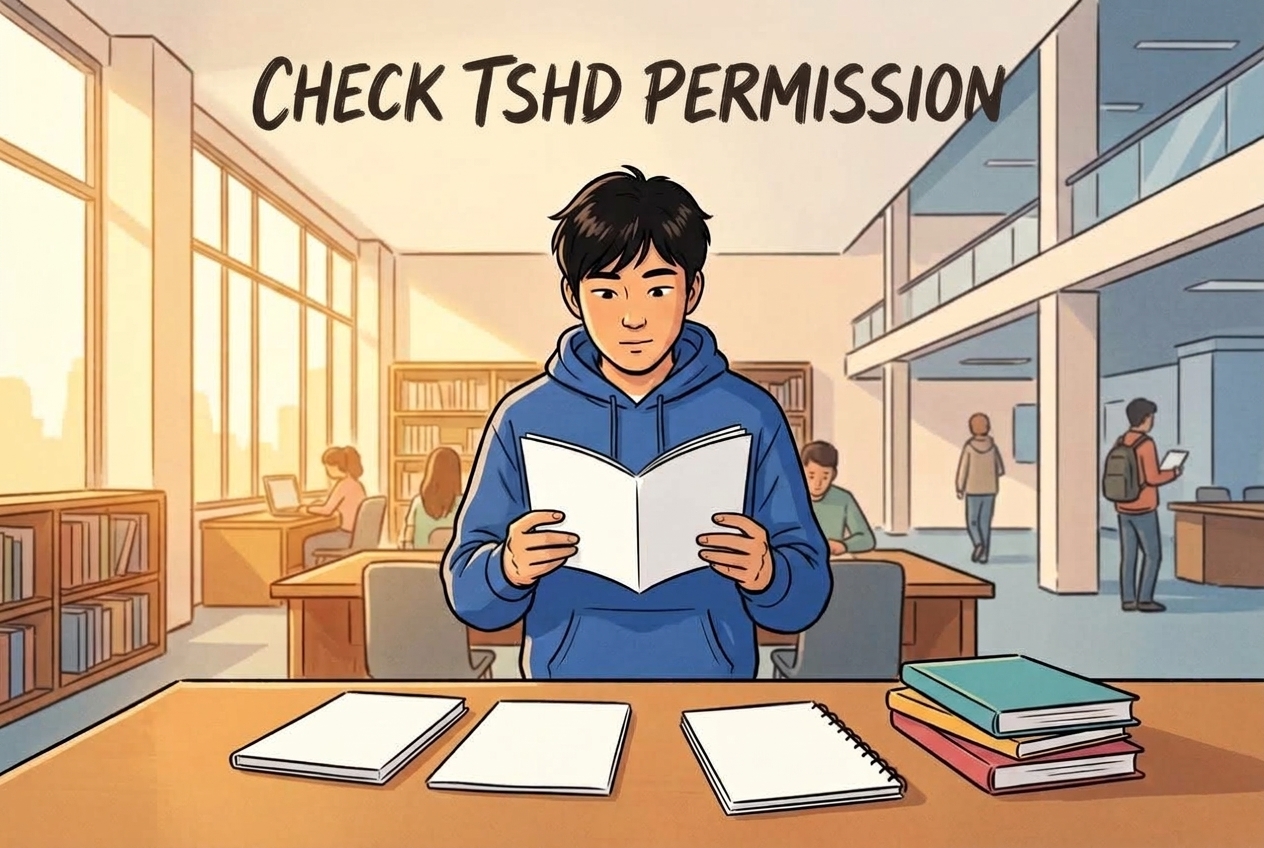
At Tilburg School of Humanities and Digital Sciences (TSHD), AI is not permitted in exams/tests/assignments unless the lecturer explicitly says otherwise. Check the assignment instructions and ask if unsure. This faculty rule is not a university-wide default.
Scope: Tilburg School of Humanities and Digital Sciences · TSHD only; other Tilburg schools have their own supplementary rules.
Scope: TSHD students · faculty
Fraud, plagiarism, and AI use Tilburg School of Humanities and Digital Sciences (TSHD)
Within the Tilburg School of Humanities and Digital Sciences, we place great value on academic integrity. This means that you must always work honestly and independently. With the rise of AI tools, it is more important than ever to know what is and is not permitted.
Use of AI in exams and assignments
AI tools are increasingly being used in education. At our School, the following principle applies:
The use of AI is not permitted unless a lecturer explicitly states otherwise.
This applies to exams, tests, and assignments. Therefore, always submit your own work and be careful and transparent in your use of tools.
To provide clarity, lecturers may refer to the AI Index for students in assignments. This document describes for what purposes and in what ways you may possibly use AI. Always read the lecturer’s instructions carefully before using AI tools and consult your lecturer if you are unsure whether a tool is allowed.View official source ↗Collected: 2026-10-08 · 28–34
SHA-256: 2d02717639a033430c2cda71520e6265ecd058b159da00d86cd337788499279a
Site interpretation
The general privacy guide calls for careful output verification, limits input to public/published University data, asks for reporting accidental sensitive sharing, and requires pre-assessment for sensitive-data use. Its September 2025 general cautions must be read alongside the current Tilly Q&A’s expressly role-specific protected research/internal-document uses; do not turn it into a universal Tilly upload ban.
Scope: students · General privacy guidance dated September 2025; current Tilly Q&A has specific role/service exceptions, so cross-source boundaries are retained.
Scope: students · university
Look critically at input as well as output
It is essential to remain critical and careful with input and output, especially in situations where accuracy is essential. The following principles should be observed when using GenAI:
Only use your Tilburg University email address for business (AI) purposes and limit it to work-related matters.
Use only publicly available or published university data in GenAI. Do not enter personal data, confidential or business-sensitive information or research data because it may be stored, reused, or processed, posing privacy and confidentiality risks. If confidential or personal information has been shared with GenAI, please report it via the report button on the Privacy & Security Portal. Timely notification ensures that action can be taken quickly.
Please adhere to the Privacy & Data Protection Policy and the Tilburg University Information Security Policy. A lot of GenAI does not comply with European or Dutch regulations, in part because data are stored outside the European Economic Area (EEA).
Do not use GenAI for illegal, fraudulent activities or violations of University policies (see IT Code of Conduct and Conduct Rules) and never disseminate misleading information.
Carefully verify generated information before using or distributing it. Do not blindly rely on GenAI output.
Turn on additional risk-avoidance features
A GenAI tool can provide options to reduce the risk of data loss. We recommend using these features, such as:
The option to exclude data from model training. Then the data you enter will not be used to further train the AI model. This reduces the risk of storing or sharing confidential data.
Features such as "Enterprise Data Protection," often provide encryption, enhanced access control, and compliance with regulations such as the General Data Protection Regulation (GDPR). It makes data processing more secure by implementing specific security measures, such as data restriction and auditing.
Avoid entering sensitive or confidential information even when risk mitigation features are enabled
While these measures reduce risk, critical and deliberate use remains essential. Avoid entering sensitive or confidential information even when risk mitigation features are enabled because:
There are no guarantees, data can still be temporarily stored or accessed by third parties, depending on the provider's policies and infrastructure.
Even with security options, data can be processed outside the European Economic Area (EEA), which is in violation of the GDPR that we, as Tilburg University, must comply with.
Do you want to use GenAI precisely for processing sensitive information?
If so, it is important that the tool you are going to use has been pre-assessed for privacy and information security risks. To do so, follow the regular software procurement process through your Division or School's information manager.View official source ↗Collected: 2026-10-08 · 46–62
SHA-256: 196f1b4f2195632a762b5fb0f6e70d29c528d18c7eded02cf75d1624c2617e9f
Published:
07th February 2025
Last updated:
29th September 2025View official source ↗Collected: 2026-10-08 · 32–35
SHA-256: 196f1b4f2195632a762b5fb0f6e70d29c528d18c7eded02cf75d1624c2617e9f
Site interpretation
For TSHD, unauthorized AI-generated submissions can be fraud. A lecturer reports suspected fraud to the Examination Board, which determines whether it occurred. Confirmed cases may lead to invalidation or exclusion from tests/exams. The page names plagiarism software and other methods, not a named AI detector or automatic verdict.
Scope: Tilburg School of Humanities and Digital Sciences · TSHD only; sanctions depend on confirmation and the Rules and Guidelines.
Scope: TSHD students · faculty
When is it considered fraud?
Fraud is defined as the actions or omissions of an examinee that make it wholly or partially impossible to accurately assess the knowledge, understanding, and skills of the examinee, or of a fellow examinee. This includes, among other things:
Plagiarism: copying work (text segments, reasoning, or ideas) from someone else without proper citation.
Using unauthorized tools during tests or exams.
Manipulating research data.
Submitting work that is (partially) generated by AI without permission.
In Chapter 5 of the Rules and Guidelines, you will find a complete overview of what is considered fraud and how the procedure is conducted.
Suspicion and assessment of fraud
When a lecturer suspects fraud, including unauthorized use of AI, they are required to report it to the Examination Board.
The Examination Board then carefully assesses the situation and determines whether fraud has indeed occurred. The Tilburg School of Humanities and Digital Sciences use plagiarism detection software and may also employ other methods to identify unauthorized use of AI.
Consequences and sanctions
The consequences of fraud are sometimes underestimated but can be significant. When fraud is confirmed, the Examination Board may impose sanctions. In Chapter 5 of the Rules and Guidelines, you will find a complete overview of the possible sanctions.
The most common sanctions are:
Invalidation of an exam or thesis, including the withdrawal of the obtained grade.
Exclusion (possibly retroactively) from one or more partial tests or exams.
These sanctions can have direct consequences for your academic progress.
Questions or doubts?
Are you unsure whether the use of AI is allowed in your assignment, or do you have questions about fraud and plagiarism? Always consult the course description and assignment instructions, and if in doubt, contact your lecturer before deciding to use a tool or submit an assignment. For general questions about fraud and plagiarism, you can refer to the TiU-wide page What is Fraud? | Tilburg University. This page also provides more information about fraud, possible sanctions, and tips for preventing fraud and plagiarism.View official source ↗Collected: 2026-10-08 · 36–53
SHA-256: 2d02717639a033430c2cda71520e6265ecd058b159da00d86cd337788499279a
Site interpretation
The general cheating page says the Examination Board’s sanctions depend on seriousness, with invalidation, exclusion from up to five specified opportunities and a new thesis for thesis fraud. Written decisions can be appealed, and faculties have supplementary rules. These general outcomes are not an automatic tariff for every AI use.
Scope: students · Scope is limited to the cited official source and stated conditions; this is a local candidate, not a complete university rule set.
Scope: students · university
If examiners or invigilators notice someone cheating during an examination, they make a note of it on the work after it has been handed in and they also confiscate any pieces of evidence. After the examination, the examiners or invigilators write a report for the school examining board. In the case of plagiarism, the lecturer involved will notify this fact to the examining board.
The type of punishment students can expect, if they plagiarize something or cheat, depends on the seriousness of the misconduct. The examining board can impose one or more of the following measures:
In all cases: the examination involved is declared invalid;
The examinee is excluded from up to five specified examination opportunities. In doing so, the examining board takes the stage reached in the examinees course of study into account;
If there is fraud involved in writing up a bachelor or master thesis, a new thesis will have to be written.
As soon as the examining board has decided on appropriate sanctions, the student involved is informed in writing of the decision. If the student does not agree with the imposed punishment, he or she can appeal in writing to the Commission of Appeal for Examinations.
In addition to the rules made for the whole university, individual faculties have their own supplementary rules and measures for dealing with cheating and plagiarism. Please consult the websites of the schools.View official source ↗Collected: 2026-10-08 · 28–34
SHA-256: 4db1d616aadd4d1dc1df6b9c2c81314698ceba0299e518c7291c459ac4aa6b4b
Site interpretation
For decisions eligible for Examination Appeals Board review, including fraud, the appeal must reach the EAB through OSIRIS within six weeks after the contested decision was made. State the decision and grounds; an amicable-settlement attempt precedes formal consideration. The clock runs from decision made, not receipt.
Student · Required when using this procedure
Within the stated period. Check the source summary and original text for the starting point, scope and exceptions.
Scope: students · Scope is limited to the cited official source and stated conditions; this is a local candidate, not a complete university rule set.
Scope: students · university
Every university has an Examination Appeals Board (EAB: CBE in Dutch). Students can appeal to this EAB against certain decisions, for example decisions about exemptions, binding study advice, fraud, and examinations.
Directly lodge an appeal at the EAB
Article 7.61 of the Higher Education and Research Act (HERA (Dutch only)) provides a list of decisions that students can appeal against to the EAB.
This may include:
decisions by an Examining Board regarding whether or not to grant an exemption;
decisions regarding the binding study advice;
decisions regarding fraud;
decisions regarding examination results, admission to examinations, additional examination opportunities. (Note: You cannot appeal the result of a subtest. Only the final grade for the course).
the result of the colloquium doctum examination.
Usually, at the end of the decision you received, it says that you can appeal to the EAB. Check the webpage Jurisprudence and annual reports EAB for additional information.
How does the procedure work?
The appeal
Within six weeks after the decision that you are appealing against was made, the notice of appeal must have been received by the EAB via OSIRIS. You will receive a confirmation of receipt. In the notice of appeal, you indicate which decision you are appealing against and on which grounds. If an error is made with regard to the form of the notice of appeal or if you did not attach a copy of the decision against which you are appealing, the EAB will inform you of this. You will then be given the opportunity to rectify this omission within a certain period of time.
Amicable Settlement
Before the appeal is officially processed, it is first examined whether an amicable settlement is possible. The EAB forwards the appeal to the Examination Board of your program* and asks it to check whether an amicable settlement is possible. The Examination Board will contact you within three weeks. It is then the intention to carefully examine whether the facts on which the Examination Board based its decision are correct and whether the justification is correct. You can discuss together whether a solution can still be found. Subsequently, the Examination Board will inform the EAB whether an amicable settlement has been reached.
* In most cases, the Examination Board is the one who made the decision you are appealing against. In a few cases, it is a decision of another person or committee. In that case, the same procedure applies.View official source ↗Collected: 2026-10-08 · 27–42
SHA-256: 559d8bc509cdcf4935791b04cbe3d0ac9bda9b11481525fd451161f87ec9fdf9
Site interpretation
If more time is needed to develop appeal arguments, Tilburg describes filing a pro forma appeal before the appeal period expires. The EAB then gives a period, generally 14 days, for grounds; this is not permission to miss the initial six-week filing window.
Scope: students · Scope is limited to the cited official source and stated conditions; this is a local candidate, not a complete university rule set.
Scope: students · university
I need more time to file my appeal. Is that possible?
If you need more than six weeks to properly substantiate the arguments for your appeal, for example because you want to obtain advice first, a 'pro forma' appeal can be submitted.
In a pro forma appeal, you announce that you are appealing and what decision you are appealing against, but you do not yet indicate the grounds for your appeal. In this way you can avoid exceeding the appeal period.
You can submit a pro forma appeal both via the online system (if you have a student number) and by letter or e-mail. You will be told by the EAB within which period - generally within 14 days - the grounds for the appeal must be sent.View official source ↗Collected: 2026-10-08 · 65–68
SHA-256: 559d8bc509cdcf4935791b04cbe3d0ac9bda9b11481525fd451161f87ec9fdf9
Site interpretation
The current Tilly Q&A says all Tilburg students and employees can use it free with a University account; available uses depend on role. Research/personal-data processing and safe internal-document upload are described for research/business operations, not as blanket assessment permission for students.
Scope: students and staff; research/business-operation permissions are role-specific · Scope is limited to the cited official source and stated conditions; this is a local candidate, not a complete university rule set.
Scope: students and staff; research/business-operation permissions are role-specific · university
Do I need an account to access Tilly?
You can log on to Tilly with your Tilburg University account, so you do not need an extra account. Tilly can be used by all employees and students free of charge.
Tilly can also be used during workshops with external participants by means of a QR code. Do you need help? Please contact the Tilly Support team at [email protected].
Go directly to Tilly
What can I use Tilly for?
Tilly is available for Tilburg University as a whole: students, instructors, researchers, and support staff. What you can use Tilly for depends on your role.
As an instructor, you can use Tilly in lots of different ways for educational purposes. For instance, you can let Tilly answer questions by students on the course material in Canvas. You can set up Tilly to generate test questions to help students prepare for exams or give them hints if they get stuck. You can also use Tilly to, for instance, help students practice certain skills, including negotiating or presenting arguments. Within the Tilly Academy, you can find more examples of how other instructors use Tilly for their courses.
For research, Tilly also offers opportunities, including finding relevant literature, summarizing articles, as an aid to coding, as a sparring partner during a brainstorm, or to assist with writing or translation – also if personal data need to be processed. The same also goes for business operations, whereby the functionality ‘Upload file’ also allows you to work safely with internal documents.View official source ↗Collected: 2026-10-08 · 41–48
SHA-256: 97c3942de61bb4e63c13efce482c2a1450c9e06fca25ea5a45ab59394ed1731d
Site interpretation
Tilly’s Q&A describes European hosting, no underlying-model training on uploaded data, and current automatic chat deletion after 30 days. Chatbot creators cannot see individual chats by default; Share with creator is an explicit student opt-in. These are service descriptions, not independent account/security tests, and differ from general external-tool warnings.
Scope: students · Scope is limited to the cited official source and stated conditions; this is a local candidate, not a complete university rule set.
Scope: students · university
What happens with data/documents that I upload?
Tilly is hosted in European datacenters, operates under Tilburg University’s agreements with Microsoft, and is managed by our Library and IT Services (LIS) with strict access checks. There is continuous monitoring for any misuse in the context of cybersecurity.
The data and documents you upload will only be used for the purpose for which you submit them. They are not used to train the underlying language models.
You can remove earlier dialogues and uploaded content/data at any time. In addition, chats are automatically removed after a limited period (30 days, at the moment). And you don't have to worry about backups floating around somewhere.
Data collection within the platform itself is set up in such a way that it is minimal and purpose-oriented (for instance, to allow services to function, guarantee security, and improve quality).
Where user statistics are shown to builders of chatbots for shared use, they are presented in aggregated form (a summarizing line per chat and the number of messages sent by chatbot users).
As a default setting, the builder of a chatbot (for instance, an instructor) cannot see the chats of individual users. However, there is now an opt-in feature "Share with creator", whereby students themselves can opt to share a specific chat with the builder of the chatbot. Instructors see those shared chats in a tab on their dashboard. The idea behind this function is to make the instructor part of the learning process (“teacher in the loop”) and stimulate the conversation on the quality of AI answers, for instance, by discussing such a chat in class. It is important that sharing remains the students’ active choice. Without their explicit permission, chats remain private.View official source ↗Collected: 2026-10-08 · 82–88
SHA-256: 97c3942de61bb4e63c13efce482c2a1450c9e06fca25ea5a45ab59394ed1731d
Published source-based additions. English summaries and original-language quotations are shown separately from the reviewed record. These are possible processes and outcomes, not automatic penalties for AI use. Present applicability has not been independently confirmed; check the source scope and version.
Source-text comparison; not an official translation
Hashes allow comparison of saved content; they do not certify current validity or immutability. These topics are not a mandatory sequence.
Tool access is not permission to use AI in an assessment. Check your assignment rules, eligible users and data restrictions.
Archived tool record; consult the official source for current access.
Tilburg University's chatbot platform for instructor-created course bots.
Tilburg University instructors can try Tilly at chatbot.tilburg.ai.
Not specified.
Original quotation
Tilburg University says it developed its own chatbot platform, Tilly, through Tilburg.ai, and invites Tilburg University instructors to try it at chatbot.tilburg.ai. The model operates in European data centres.Reviewed record
7 reviewed claims
Academic Integrity
Original evidence
Evidence 1The use of AI is not permitted unless a lecturer explicitly states otherwise. This applies to exams, tests, and assignments. Therefore, always submit your own work and be careful and transparent in your use of tools.
Academic Integrity
Original evidence
Evidence 1This includes, among other things: Plagiarism: copying work (text segments, reasoning, or ideas) from someone else without proper citation. Using unauthorized tools during tests or exams. Manipulating research data. Submitting work that is (partially) generated by AI without permission.
Privacy
Original evidence
Evidence 1Do not enter personal data, confidential, or commercially sensitive information into GenAI tools. These may be stored or processed by third parties and often do not comply with privacy legislation. This also applies when risk-mitigating features are enabled. Do you want to process sensitive data with GenAI? Then have the tool assessed by your information manager first.
Privacy
Original evidence
Evidence 1Comply with the Privacy & Personal Data Protection Policy and the Information Security Policy. Do not use GenAI for illegal or fraudulent purposes.
Security Review
Original evidence
Evidence 1If confidential or personal information has been shared with GenAI, please report it via the report button on the Privacy & Security Portal . Timely notification ensures that action can be taken quickly.
Ai Tool Treatment
Normalized value: {"tool":"institutional_ai_service","rawToolName":"Tilly","description":"Tilburg University's chatbot platform for instructor-created course bots.","howToObtain":"Tilburg University instructors can try Tilly at chatbot.tilburg.ai.","costToUser":"Not specified.","availability":"conditionally_allowed","endorsementType":"officially_endorsed"}
Original evidence
Evidence 1Tilburg University says it developed its own chatbot platform, Tilly, through Tilburg.ai, and invites Tilburg University instructors to try it at chatbot.tilburg.ai. The model operates in European data centres.
Localized display only
Tilburg University says it developed its own chatbot platform, Tilly, through Tilburg.ai, and invites Tilburg University instructors to try it at chatbot.tilburg.ai. The model operates in European data centres.
Ai Tool Treatment
Original evidence
Evidence 1GenAI may contain errors, fabrications, or biases. It is not a search engine that you can use to retrieve or verify facts. Always verify the generated information before using or sharing it. Ultimately, you remain responsible for what happens with the output.
Source record
4 sources
tilburguniversity.edu
tilburguniversity.edu
tilburguniversity.edu
tilburguniversity.edu
Citation: University AI Policy Tracker. "Tilburg University AI Policy Tracker record." Last checked July 19, 2026. https://eduaipolicy.org/universities/tilburg-university
Original university source language remains canonical. This tracker is not an official university statement.
Open change logSaved from University AI Policy Tracker. This record summarizes the cited sources; it is not an official university statement or assessment permission. Source and review dates are listed above. Hashes identify retained content, not authorization.