Co robić
- Confirm this instructor’s AI permission and citation rules.
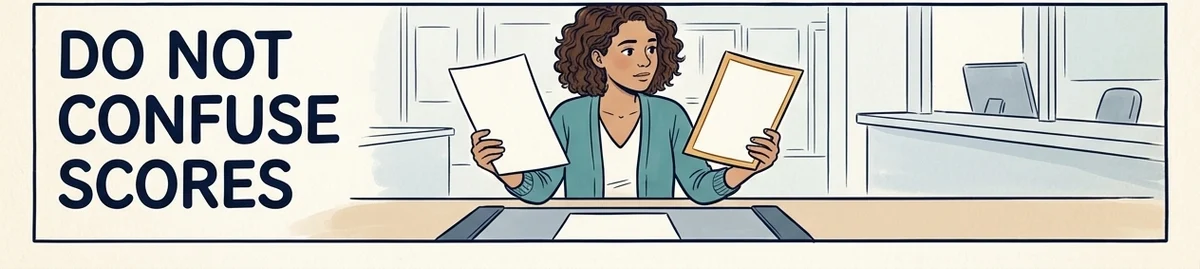
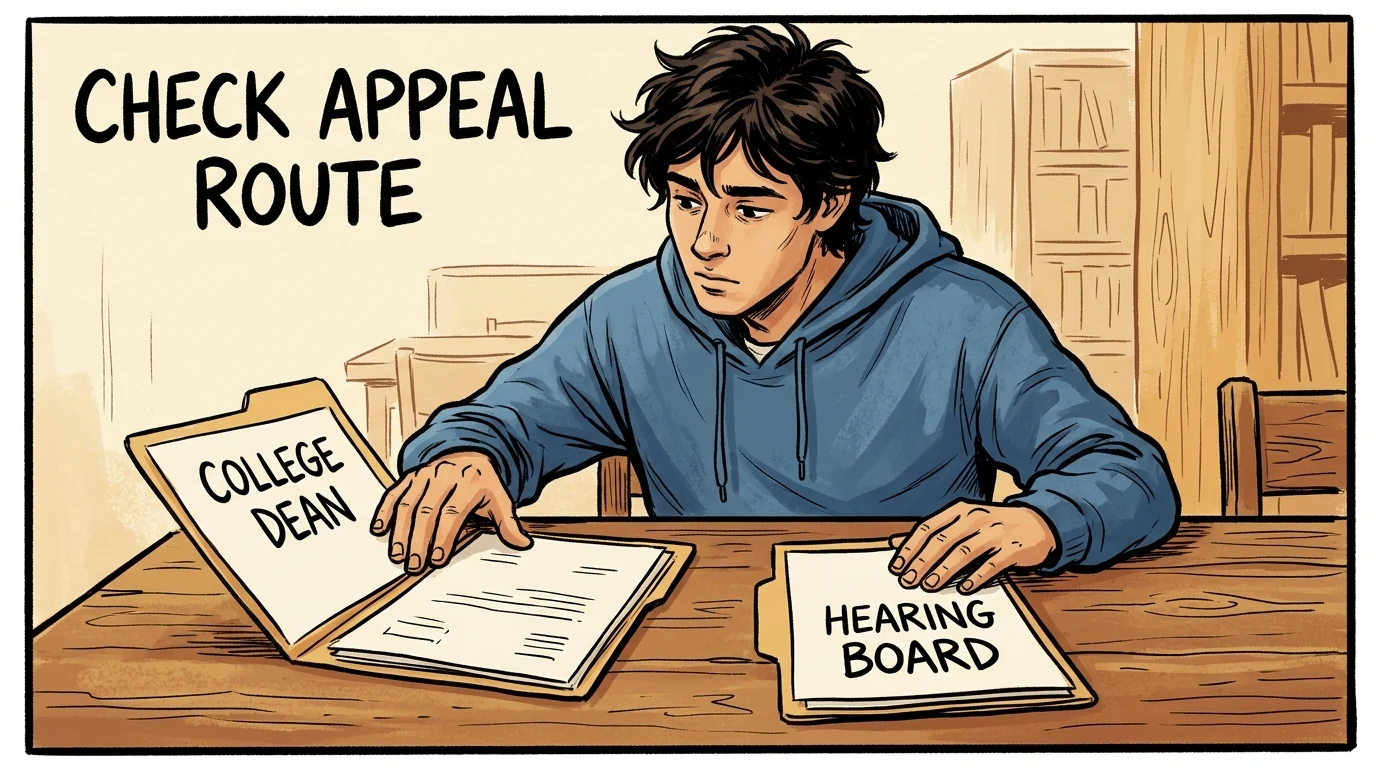
- Match notice, trigger and recipient before appealing.
- Use the advisor/attorney role applicable to your stage.

Tucson, United States
Student guide · Task scope and procedure
Assignment AI needs instructor permission and citation; departments may differ. The Code defines academic days and uses postmark/College Dean, while the response guide uses receipt/DOS. Hearing Board eligibility includes specified sanctions, failure to act or a Dean-granted disputed-F option. Data approval and FERPA conditions are tool-specific.
Poniższe wskazówki są po angielsku; oficjalne dowody zachowano w języku oryginału.
Pełne podsumowanie zasad dla studentów nie jest jeszcze dostępne; sprawdź zebrane stwierdzenia i źródła.
Assignment AI needs instructor permission and citation; departments may differ. The Code defines academic days and uses postmark/College Dean, while the response guide uses receipt/DOS. Hearing Board eligibility includes specified sanctions, failure to act or a Dean-granted disputed-F option. Data approval and FERPA conditions are tool-specific.
Zebrano uzupełnienie: 2026-10-08 · Aktualne zastosowanie niepotwierdzone niezależnie
Podsumowanie jest obecnie dostępne po angielsku
Interpretacja serwisu
The student guide says AI in assignments needs instructor permission and proper citation; different colleges/programmes may have their own rules. Red/Yellow/Green is described as a model MANY instructors use, not a mandatory university-wide classification. Unauthorised use could violate academic integrity; permission and transparency must be checked for the actual task.
Zakres: Students in the cited programme/course/stage only · Only the captured source, version, audience and conditions; no exhaustive currency certification.
Dowody wykrywania · Wsparcie i dostosowania
Zakres: Students in the cited programme/course/stage only · university
Student AI Guidelines & Principles
Image
AI tools like ChatGPT and Copilot can be helpful in your classes—but it’s important to know the rules. At the University of Arizona, academic honesty includes how you use AI. That means using these tools the right way, with permission and transparency.
What You Need to Know
Ask before you use AI: You can only use AI for assignments if your instructor says it’s OK. Using AI without permission could be a violation of the Code of Academic Integrity and may be treated as academic misconduct.
Check the syllabus: Many instructors use a Red-Yellow-Green model to explain their AI rules:
Red: AI use is not allowed
Yellow: You can use AI, but only with permission
Green: AI use is encouraged, as long as you follow the rules and cite it
Cite your sources: If your instructor allows AI, be sure to give credit. Just like quoting a source, AI-generated content needs to be cited. View AI citation guidelines
Different programs may have different rules: Some colleges or departments have their own guidelines for AI use:
College of Medicine(Tucson) Policy on Student Use of AI
James E. Rogers College of Law Generative AI Legal Research Guide
University of Arizona Global Campus Responsible Use of AI Guidelines
Helpful Resources
AI Guide for Students
AI Citation Guidelines
AI Guidelines & Principles
AI Guidelines
Student Guidelines
Instructor AI Policy Guide
Generative AI Use in ResearchZobacz oficjalne źródło ↗Zebrano: 2026-10-08 · 79–100
SHA-256: 3d6b69ac44a83602bf664978d9798335988bb861989a8aa2ae085cbe0d104f35
Interpretacja serwisu
The Code gives students evidence/fair-consideration/confidentiality and an advisor. The faculty conference is normally within fifteen ACADEMIC days after receiving suspected-violation evidence, with good-cause Dean-approved extension of at most thirty days; nonresponse and faculty inaction have different consequences. Conditional sanctions range from warning/credit or grade loss to severe outcomes; severe sanctions trigger a College Dean appeal. This is a general Code, not an automatic AI penalty.
Uczelnia · Wymagane w tej procedurze
W podanym terminie. Początek terminu, zakres i wyjątki sprawdź w podsumowaniu oraz oryginale.
Zakres: Students in the cited programme/course/stage only · Only the captured source, version, audience and conditions; no exhaustive currency certification.
Dowody wykrywania · Wsparcie i dostosowania
Zakres: Students in the cited programme/course/stage only · university
Students have the right to a fair consideration of the charges, to see the evidence, and to confidentiality, as allowed by law and fairness to other affected persons. Procedures under this Code shall be conducted in a confidential manner, although a student has the right to an advisor in all procedures under this Code. The Dean of Students serves as advisors to students on any questions of process related to this Code.
Academic Integrity Procedures
I. Faculty-Student Conference
The faculty member of record for the course (i.e., responsible for signing the grade sheet) conducts these procedures and is responsible for ensuring that they are followed. If faculty allege a violation of this Code has occurred, they shall make sure that students receive written notice in advance of the conference within a reasonable timeframe, detailed reason for the conference, and fair consideration of the charges against them. The faculty member must confer with the student within 15 academic days (hereinafter referred to as “days”) of receiving evidence of a suspected violation of this Code, unless good cause is shown for an extension of no more than 30 days. Such an extension must be approved by the Dean of the College. After 15 academic days the faculty member may proceed with imposing decision and sanction for an alleged violation if the student has not responded to reasonable attempts for the conference to take place. If the faculty member has not acted on the alleged violation after 15 academic days, then the student shall not be subject to this code for the alleged violation in question. The faculty member shall confer with the student in private, explain the allegations, present any evidence, and hear the student's response. If more than one student is involved in an incident, separate conferences are recommended but not required. When dealing with students who are unavailable for the conference, students not enrolled in the class, or graduate students, refer to the General Provisions.
After the conference, the faculty member shall decide by a preponderance of the evidence whether or not the student has committed an act prohibited by this Code. “Preponderance of the evidence” means that it is more likely than not that a violation of this Code occurred. If the evidence does not support a finding of a violation, the University will make no record of the incident in any University files. The student may continue in the class without prejudice.
If the evidence supports a finding that the student has engaged in misconduct, the faculty member shall impose sanctions after considering the seriousness of the misconduct, the student's state of mind, and the harm done to the University and to other students. In addition, the faculty member shall consider mitigating and aggravating factors in accordance with the provisions of ABOR Policy 5-308.H. A faculty member may impose any one or a combination of the following sanctions: a written warning, loss of credit for the work involved, reduction in grade, notation of the violation(s) on the student’s transcript, a failing grade in the course, or revocation of a student’s degree. The faculty member may also impose a sanction of suspension or expulsion from the program, department, college, or University. When appropriate, faculty members may also assign students to participate in educational sanctions that address the violation of this Code. If the faculty member assigns a notation on the transcript, suspension or expulsion from the University, or revocation of a degree as a sanction, the student is automatically granted an appeal to the Dean of the College. Within 10 days of the conference, the faculty member shall prepare a written decision outlining the charges, evidence, findings, conclusions, and sanctions imposed. The faculty member should complete the online Record of Faculty-Student Conference form. The Dean of Students Office will send notification to the student (as provided in the "Notice" section under General Provisions) and to the Academic Dean. The faculty will be copied on the notice. See the General Provisions section for Grade Before Appeals.Zobacz oficjalne źródło ↗Zebrano: 2026-10-08 · 128–133
SHA-256: 26a7083bb367ca86ceb45445edd484b22b9591c856d9fcdd60921987be7d7d4a
Students or Faculty Not Available For Conference
In cases where the student is not available, e.g., out of the area after final exams, the faculty member shall make every reasonable effort to contact the student through personal contact, telephone, University email, or mail to inform the student of the charges. If the faculty member is able to contact the student, the Faculty-Student Conference shall be scheduled as soon as both parties are available, e.g., at the beginning of the next semester. If either of the parties will not be available for an extended period, the Faculty-Student Conference shall be held via telephone. If after several efforts, contact cannot be established, the faculty member may impose sanctions but must send a letter or copy of the "Record of Faculty-Student Conference" form via certified return receipt requested mail to the student's last permanent address outlining the charges, findings, conclusions and sanctions.Zobacz oficjalne źródło ↗Zebrano: 2026-10-08 · 178–179
SHA-256: 26a7083bb367ca86ceb45445edd484b22b9591c856d9fcdd60921987be7d7d4a
Interpretacja serwisu
The data-use guide distinguishes U of A GenAI, Soteria and enterprise Copilot/Gemini/Zoom from free or paid NON-enterprise tools; the latter are Public-data-only in its matrix. Enterprise use requires NetID. The FERPA footnote is conditional and recommends removing PII/deleting chats, and says not to store or maintain student records in the tool. This is a source-reported approved-data matrix, not a privacy-behaviour test or assignment permission.
Zakres: Students in the cited programme/course/stage only · Table column spans checked from raw HTML; individual account/implementation not tested.
Dowody wykrywania · Wsparcie i dostosowania
Zakres: Students in the cited programme/course/stage only · university
Allowed Data Types
Public
Internal
Restricted
Restricted & Regulated
AI Tools
FERPA
HIPAA
U of A GenAI
Yes
Yes
Yes
Yes2
No
U of A Soteria
Yes
Yes
Yes
No
Yes
CoPilot Enterprise1
Yes
Yes
No
Yes2
No
Google Gemini Enterprise1
Yes
Yes
No
Yes2
No
Zoom AI Companion Enterprise1
Yes
Yes
No
Yes2
No
Free AI tools, no enterprise license
(ChatGPT, Claude, Gemini, etc.)
Yes
No
No
No
No
Paid AI tools, no enterprise license
(ChatGPT, Claude, Gemini, etc.)
Yes
No
No
No
No
Allowed Data Types Continued
Restricted & Regulated
AI Tools
PII
PCI
ITAR/EAR
IRB
CUI
GLBA
U of A GenAI
No
No
No
No
No
No
U of A Soteria
No
No
No
No
No
No
CoPilot Enterprise1
No
No
No
No
No
No
Google Gemini Enterprise1
No
No
No
No
No
No
Zoom AI Companion Enterprise1
No
No
No
No
No
No
Free AI tools, no enterprise license
(ChatGPT, Claude, Gemini, etc.)
No
No
No
No
No
No
Paid AI tools, no enterprise license
(ChatGPT, Claude, Gemini, etc.)
No
No
No
No
No
No
1) Enterprise License requires that you use the tool with your U of A NetID account.
2) Yes, when used appropriately. The tool itself does not use inputs to train AI models, and access to prompts and outputs is limited to the user who enters them. However, any outputs that are of or about an identifiable student and are maintained by the university (for example, saved, downloaded, or incorporated into institutional systems or files) may become education records under FERPA. If maintained by the institution, those records would be subject to student records requests and institutional retention and disclosure obligations. To minimize FERPA risk, the university recommends removing all personally identifiable information (PII) before using the tool with student-related scenarios and deleting the chat after use. The tool should not be used to store, retain, or maintain student records.Zobacz oficjalne źródło ↗Zebrano: 2026-10-08 · 90–203
SHA-256: d8f203858d0d74ed89a4fbe273a1c68ade28a7c2b8b76845d8b39d9b89058dcb
Interpretacja serwisu
The formal Code requires the College Dean appeal within ten defined academic days from electronic/postal POSTMARK of the conference record, with good-cause extension. The student response guide instead says ten academic days from RECEIPT, delivered to DOS. Keep both trigger and recipient differences and check the notice. The Code separately gives the Dean fifteen days to schedule and thirty to conclude the appeal after receipt; these are institutional periods.
Student · Wymagane w tej procedurze
W podanym terminie. Początek terminu, zakres i wyjątki sprawdź w podsumowaniu oraz oryginale.
Student · Wymagane w tej procedurze
W podanym terminie. Początek terminu, zakres i wyjątki sprawdź w podsumowaniu oraz oryginale.
Uczelnia · Wymagane w tej procedurze
W podanym terminie. Początek terminu, zakres i wyjątki sprawdź w podsumowaniu oraz oryginale.
Uczelnia · Wymagane w tej procedurze
W podanym terminie. Początek terminu, zakres i wyjątki sprawdź w podsumowaniu oraz oryginale.
Zakres: Students in the cited programme/course/stage only · Only the captured source, version, audience and conditions; no exhaustive currency certification.
Zakres: Students in the cited programme/course/stage only · university
The student may appeal the faculty member’s decision and sanctions to the Dean of the College or his/her designee. The student shall deliver the form entitled "Request for Appeal to Dean of the College" to the Dean of the College within 10 days of the date on which the “Record of Faculty-Student Conference” is postmarked electronically or via postal mail. The Dean of the College may extend this filing period if the student shows good cause for the extension. If a student does not appeal within the time provided, the decision and sanctions of the faculty member will be final.
Within 15 days of receiving the appeal, the Dean of the College shall schedule the appeal hearing for this specific case only. The appeal hearing must be concluded within 30 days of receiving the appeal. Upon appeal, the Dean of the College shall review the faculty member’s decision, sanctions and supporting evidence, and any evidence provided by the student, and shall confer with the faculty member and the student. The Dean of the College shall have the authority to uphold, modify, or overturn the faculty member’s decision and sanctions. If the Dean of the College finds:
that the conclusion of a violation is not supported by the evidence, then he/she shall render a finding of no violation and that the sanction(s) imposed be overturned.
that the conclusion of a violation is supported by the evidence and the sanction imposed is appropriate, then he/she shall uphold the faculty member's decision and sanction(s).
that the conclusion of a violation is supported by the evidence, and the sanction(s) imposed are inadequate or excessive, then he/she shall modify the sanction(s) as appropriate.
The Dean of the College shall notify the student, the faculty member and the Dean of Students in writing of his/her decision as provided in the "Notice" section under General Provisions. The Dean of the College should use the form entitled "Record of Appeal to Dean of the College" for this purpose if the Dean of the College decides no violation occurred, all reference to the charge shall be removed from the student's University records, and the student may continue in the class without prejudice. If the semester has ended prior to the conclusion of the appeal process, the faculty member shall calculate the grade without the sanction. If work was not completed due to the academic integrity allegation, the faculty member and the student shall confer and a grade of "I" shall be assigned. If a grade of "I" is assigned, the student shall have the opportunity to complete any remaining work without prejudice within the timeframe set forth in the student’s academic catalog.
If the alleged academic integrity violation and subsequent appeal process continues past a student’s graduation date, the Dean of the College should make every reasonable attempt to hear the appeal in an expedited manner. If the Dean of the College is unable to hear the appeal in an expedited manner the Vice President for Instruction will hear the appeal according to the procedures set forth above.Zobacz oficjalne źródło ↗Zebrano: 2026-10-08 · 138–144
SHA-256: 26a7083bb367ca86ceb45445edd484b22b9591c856d9fcdd60921987be7d7d4a
The faculty member of record for the course (i.e., responsible for signing the grade sheet) conducts these procedures and is responsible for ensuring that they are followed. If faculty allege a violation of this Code has occurred, they shall make sure that students receive written notice in advance of the conference within a reasonable timeframe, detailed reason for the conference, and fair consideration of the charges against them. The faculty member must confer with the student within 15 academic days (hereinafter referred to as “days”) of receiving evidence of a suspected violation of this Code, unless good cause is shown for an extension of no more than 30 days. Such an extension must be approved by the Dean of the College. After 15 academic days the faculty member may proceed with imposing decision and sanction for an alleged violation if the student has not responded to reasonable attempts for the conference to take place. If the faculty member has not acted on the alleged violation after 15 academic days, then the student shall not be subject to this code for the alleged violation in question. The faculty member shall confer with the student in private, explain the allegations, present any evidence, and hear the student's response. If more than one student is involved in an incident, separate conferences are recommended but not required. When dealing with students who are unavailable for the conference, students not enrolled in the class, or graduate students, refer to the General Provisions.Zobacz oficjalne źródło ↗Zebrano: 2026-10-08 · 131–131
SHA-256: 26a7083bb367ca86ceb45445edd484b22b9591c856d9fcdd60921987be7d7d4a
The instructor should notify and confer with the student to gather more information about the allegation.
If the instructor determines, by a preponderance of evidence, that a violation has occurred, the incident should be documented on the Record of Faculty/Student Conference form. The student should receive a copy of this form.
The student has the right to appeal an instructor’s decision and the sanctions imposed.
To appeal, the student should follow the steps below:
Within 10 academic days of receiving the Record of Faculty/Student Conference form, the student should complete and deliver a form called the Request to Appeal to the College Dean to the Dean of Students Office. If the student does not appeal within the time provided, the decision and sanctions of the instructor are final.
Once submitted, the College Dean will meet separately with the student and the instructor to discuss the incident. After this meeting, the College Dean will rule on the case. The appeal process can take up to 30 academic days and usually the College Dean’s decision is final.Zobacz oficjalne źródło ↗Zebrano: 2026-10-08 · 124–129
SHA-256: e5c0f487d48c5405c8313083581929410f1a248e2f3ba2e0bbca2d3fd58b87ef
Interpretacja serwisu
University Hearing Board appeal is available for specified severe sanctions, College Dean failure to act within thirty days, or a Dean-granted option for a disputed F where reasonable people could disagree. File within ten defined days after receiving the decision or the Dean’s failure to act. The Board convenes within thirty days of filing, and this stage expressly allows advisor assistance or attorney representation. It is not a second appeal automatically available after every minor penalty.
Student · Wymagane w tej procedurze
W podanym terminie. Początek terminu, zakres i wyjątki sprawdź w podsumowaniu oraz oryginale.
Uczelnia · Wymagane w tej procedurze
W podanym terminie. Początek terminu, zakres i wyjątki sprawdź w podsumowaniu oraz oryginale.
Zakres: Students in the cited programme/course/stage only · Only the captured source, version, audience and conditions; no exhaustive currency certification.
Zakres: Students in the cited programme/course/stage only · university
V. Appeal to University Hearing Board
The student may appeal to a University Hearing Board any decision of the Dean of the College or the Academic Dean that imposes suspension or expulsion from the University, provides for a notation on the student’s transcript, or revokes a student’s degree. The student may also appeal to a University Hearing Board if the Dean of the College failed to act on a request for an appeal of a faculty member’s decision within the 30 day period. The Dean of the College may grant the student the option to appeal to a University Hearing Board if the sanction of a failing grade is imposed and the Dean of the College believes reasonable persons would disagree on whether a violation occurred. The appeal must be filed within 10 days from receipt of the decision or the Dean of the College’s failure to act, by providing written notice of appeal to the Dean of Students Office. The student should use the form entitled “Request for Appeal to a University Hearing Board” for this purpose. If a student does not appeal within the time allowed, the most recent decision of record shall become final. The University Hearing Board shall follow the procedures set forth in The Student Disciplinary Procedures with the following modifications:
The Hearing Board shall be composed of three faculty and two students and shall convene within 30 days of the time the student files the appeal.
Wherever the term Vice President of Student Affairs appears, it shall be replaced with Senior Vice President for Academic Affairs/Provost. The Provost is empowered to change grades and the Registrar shall accept the Provost's decision. The Provost shall also notify the parties of the final decision. The Provost may designate a Vice Provost or other Vice President to act on his/her behalf.
Wherever the Dean of Students is indicated as presenting evidence or witnesses, it shall be replaced with the faculty member who made the charges or his/her representative. Additionally, the Academic Dean or designee may also present evidence to support sanctions for multiple violations.
The student may be assisted throughout the proceedings by an advisor or may be represented by an attorney. If the student is represented by an attorney, the faculty member may also be represented by an attorney selected by the University’s Office of the General Counsel.
The faculty member has the same right as students to challenge the participation of any Board member, as noted in the Student Disciplinary Procedures.
The Board may, in its recommendations, address any egregious violations of process.
Sanctions for multiple violations will be recommended and presented to the Board by the Academic Dean or his/ her designee.Zobacz oficjalne źródło ↗Zebrano: 2026-10-08 · 150–158
SHA-256: 26a7083bb367ca86ceb45445edd484b22b9591c856d9fcdd60921987be7d7d4a
The faculty member of record for the course (i.e., responsible for signing the grade sheet) conducts these procedures and is responsible for ensuring that they are followed. If faculty allege a violation of this Code has occurred, they shall make sure that students receive written notice in advance of the conference within a reasonable timeframe, detailed reason for the conference, and fair consideration of the charges against them. The faculty member must confer with the student within 15 academic days (hereinafter referred to as “days”) of receiving evidence of a suspected violation of this Code, unless good cause is shown for an extension of no more than 30 days. Such an extension must be approved by the Dean of the College. After 15 academic days the faculty member may proceed with imposing decision and sanction for an alleged violation if the student has not responded to reasonable attempts for the conference to take place. If the faculty member has not acted on the alleged violation after 15 academic days, then the student shall not be subject to this code for the alleged violation in question. The faculty member shall confer with the student in private, explain the allegations, present any evidence, and hear the student's response. If more than one student is involved in an incident, separate conferences are recommended but not required. When dealing with students who are unavailable for the conference, students not enrolled in the class, or graduate students, refer to the General Provisions.Zobacz oficjalne źródło ↗Zebrano: 2026-10-08 · 131–131
SHA-256: 26a7083bb367ca86ceb45445edd484b22b9591c856d9fcdd60921987be7d7d4a
Interpretacja serwisu
UCATT says AI detection is unreliable and not recommended because of false accusations and bias. Its syllabus examples and suggested AI-use options require actual course adoption; neither an example prohibition nor detector availability establishes the rule for every student.
Zakres: Students in the cited programme/course/stage only · Only the captured source, version, audience and conditions; no exhaustive currency certification.
Zakres: Students in the cited programme/course/stage only · university
Be specific about what tools are or are not allowed (Grammarly, research tools, etc.)
Note: AI detection software is not reliable and can lead to false accusations.
SYLLABUS TEMPLATE: AI is Never Permitted
This course is designed to build your original thinking, writing, and problem-solving skills, and using GenAI tools to replace this work would interfere with your learning.
Therefore, using GenAI to complete graded assignments in this course will be considered a violation of the Code of Academic Integrity, specifically the prohibition against submitting work that is not your own.
If you are in doubt as to whether you are misusing AI tools or want to discuss AI usage in this course, please contact me.
Questions to Consider
Regardless of your chosen course AI policy:
Have you created opportunities for students to ask questions and have discussions about AI and its use in your course?
How will you explain policy benefits for student learning, personal, and professional development?
Will you need to adjust instructions, assignments, or assessments?
What specific information should students provide when acknowledging AI use, and how much detail is required?
How will you handle course AI policy violations? We recommend a tiered approach that begins with a direct conversation with the student.
Best Practices for Communication and Implementation
Please note that AI detection software is not recommended. These tools are unreliable and biased, which can result in false accusations, erode student confidence, and undermine the effectiveness of a learning environment.
Communicate your AI policy early and often. Explain your AI policy in the syllabus, the start module in your Brightspace course site, and when giving assignment instructions.Zobacz oficjalne źródło ↗Zebrano: 2026-10-08 · 160–175
SHA-256: ba5b4c704615f38e9ff4b4eea896f41bd48ae23a345671489142824859959323
Opublikowane uzupełnienia oparte na źródłach. Podsumowania angielskie i oryginalne cytaty są oddzielone od sprawdzonego rejestru. Możliwe procedury i wyniki nie oznaczają automatycznych kar za AI. Aktualne zastosowanie nie zostało niezależnie potwierdzone; sprawdź zakres i wersję źródła.
Porównano z zapisanym tekstem; tłumaczenie nieoficjalne
Skróty pozwalają porównać zapisane teksty; nie potwierdzają ich aktualności ani niezmienności. Tematy nie tworzą obowiązkowej sekwencji.
Dostęp do narzędzia nie oznacza zgody na użycie go w ocenianej pracy. Sprawdź zasady zadania, uprawnionych użytkowników i ograniczenia danych.
Zapis archiwalny; sprawdź aktualny dostęp w oficjalnym źródle. Informacje o dostępie i cytaty zachowują język oryginału.
Arizona provides Adobe Firefly and Creative Cloud generative-AI tools to employees and students.
Use the University-provided Adobe service with a UA Adobe login.
Free.
Oryginalny cytat
The university already offers several free AI tools to its employees and students through University Information and Technology Services: Zoom AI Companion, Microsoft Copilot, Adobe Firefly & Creative Cloud, Google Notebook LM and Google Gemini Chat.Arizona provides Google Gemini Chat to employees and students as a free AI service.
Sign up through Google Workspace for Education with a UA NetID.
Free.
Oryginalny cytat
The university already offers several free AI tools to its employees and students through University Information and Technology Services: Zoom AI Companion, Microsoft Copilot, Adobe Firefly & Creative Cloud, Google Notebook LM and Google Gemini Chat.Arizona provides Google NotebookLM to employees and students as a free AI service.
Use Google NotebookLM with a UA NetID.
Free.
Oryginalny cytat
The university already offers several free AI tools to its employees and students through University Information and Technology Services: Zoom AI Companion, Microsoft Copilot, Adobe Firefly & Creative Cloud, Google Notebook LM and Google Gemini Chat.Arizona provides Microsoft Copilot to employees and students as a free, privacy-protected AI assistant.
Use Bing or Windows Copilot with a University of Arizona NetID.
Free.
Oryginalny cytat
The university already offers several free AI tools to its employees and students through University Information and Technology Services: Zoom AI Companion, Microsoft Copilot, Adobe Firefly & Creative Cloud, Google Notebook LM and Google Gemini Chat.Arizona's U of A GenAI platform gives pilot users secure, university-governed access to multiple commercial LLMs.
Availability is in pilot expansion; the cited source reports several thousand campus members already piloting it.
Planned as free access according to the cited source.
Oryginalny cytat
Several thousand members of the campus community are already piloting the first AI Platform tool, U of A Gen AI. The new AI-powered U of A platform provides secure, university-governed access to AI tools.Arizona provides Zoom AI Companion to employees and students as a free AI service.
Use the University-provided Zoom AI Companion service; course use remains subject to faculty choice.
Free.
Oryginalny cytat
The university already offers several free AI tools to its employees and students through University Information and Technology Services: Zoom AI Companion, Microsoft Copilot, Adobe Firefly & Creative Cloud, Google Notebook LM and Google Gemini Chat.Reviewed record
Zweryfikowane stwierdzenia: 11
Academic Integrity
Wartość znormalizowana: students_use_ai_for_assignments_only_if_instructor_approves
Oryginalny dowód
Dowód 1Ask before you use AI: You can only use AI for assignments if your instructor says it’s OK. Using AI without permission could be a violation of the Code of Academic Integrity and may be treated as academic misconduct.
Academic Integrity
Wartość znormalizowana: coursework_ai_guided_by_academic_integrity_code
Oryginalny dowód
Dowód 1At the University of Arizona, the use of generative AI tools—such as ChatGPT—in coursework is guided by the Code of Academic Integrity, which prohibits all forms of academic dishonesty. This includes submitting AI-generated work as your own without permission.
Nauczanie
Wartość znormalizowana: ucatt_suggests_ai_syllabus_statement
Oryginalny dowód
Dowód 1The following guidance aims to help instructors thinking about the impact of generative artificial intelligence (AI) tools on teaching and learning. Specifically these guidelines suggest instructors: include a syllabus statement regarding use of AI tools; create transparent and productive learning environments by explicitly discussing appropriate, creative, and/or ethical AI use within a course, discipline, and/or profession.
Prywatność
Wartość znormalizowana: nonenterprise_ai_tools_public_data_only
Oryginalny dowód
Dowód 1Free AI tools, no enterprise license (ChatGPT, Claude, Gemini, etc.) | Yes | No | No | No | No ... Paid AI tools, no enterprise license (ChatGPT, Claude, Gemini, etc.) | Yes | No | No | No | No
Widok lokalny only
The data-use table lists non-enterprise free and paid AI tools as allowed for Public data and not allowed for the listed non-public or regulated data categories.
Ai Tool Treatment
Wartość znormalizowana: {"tool":"adobe_firefly","rawToolName":"Adobe Firefly & Creative Cloud","description":"Arizona provides Adobe Firefly and Creative Cloud generative-AI tools to employees and students.","howToObtain":"Use the University-provided Adobe service with a UA Adobe login.","costToUser":"Free.","availability":"allowed","endorsementType":"officially_endorsed"}
Oryginalny dowód
Dowód 1The university already offers several free AI tools to its employees and students through University Information and Technology Services: Zoom AI Companion, Microsoft Copilot, Adobe Firefly & Creative Cloud, Google Notebook LM and Google Gemini Chat.
Widok lokalny only
The university already offers several free AI tools to its employees and students through University Information and Technology Services: Zoom AI Companion, Microsoft Copilot, Adobe Firefly & Creative Cloud, Google Notebook LM and Google Gemini Chat.
Ai Tool Treatment
Wartość znormalizowana: {"tool":"gemini","rawToolName":"Google Gemini Chat","description":"Arizona provides Google Gemini Chat to employees and students as a free AI service.","howToObtain":"Sign up through Google Workspace for Education with a UA NetID.","costToUser":"Free.","availability":"allowed","endorsementType":"officially_endorsed"}
Oryginalny dowód
Dowód 1The university already offers several free AI tools to its employees and students through University Information and Technology Services: Zoom AI Companion, Microsoft Copilot, Adobe Firefly & Creative Cloud, Google Notebook LM and Google Gemini Chat.
Widok lokalny only
The university already offers several free AI tools to its employees and students through University Information and Technology Services: Zoom AI Companion, Microsoft Copilot, Adobe Firefly & Creative Cloud, Google Notebook LM and Google Gemini Chat.
Ai Tool Treatment
Wartość znormalizowana: {"tool":"institutional_ai_service","rawToolName":"U of A GenAI","description":"Arizona's U of A GenAI platform gives pilot users secure, university-governed access to multiple commercial LLMs.","howToObtain":"Availability is in pilot expansion; the cited source reports several thousand campus members already piloting it.","costToUser":"Planned as free access according to the cited source.","availability":"conditionally_allowed","endorsementType":"officially_endorsed"}
Oryginalny dowód
Dowód 1Several thousand members of the campus community are already piloting the first AI Platform tool, U of A Gen AI. The new AI-powered U of A platform provides secure, university-governed access to AI tools.
Widok lokalny only
Several thousand members of the campus community are already piloting the first AI Platform tool, U of A Gen AI. The new AI-powered U of A platform provides secure, university-governed access to AI tools.
Ai Tool Treatment
Wartość znormalizowana: {"tool":"microsoft_copilot","rawToolName":"Microsoft Copilot","description":"Arizona provides Microsoft Copilot to employees and students as a free, privacy-protected AI assistant.","howToObtain":"Use Bing or Windows Copilot with a University of Arizona NetID.","costToUser":"Free.","availability":"allowed","endorsementType":"officially_endorsed"}
Oryginalny dowód
Dowód 1The university already offers several free AI tools to its employees and students through University Information and Technology Services: Zoom AI Companion, Microsoft Copilot, Adobe Firefly & Creative Cloud, Google Notebook LM and Google Gemini Chat.
Widok lokalny only
The university already offers several free AI tools to its employees and students through University Information and Technology Services: Zoom AI Companion, Microsoft Copilot, Adobe Firefly & Creative Cloud, Google Notebook LM and Google Gemini Chat.
Ai Tool Treatment
Wartość znormalizowana: {"tool":"notebooklm","rawToolName":"Google NotebookLM","description":"Arizona provides Google NotebookLM to employees and students as a free AI service.","howToObtain":"Use Google NotebookLM with a UA NetID.","costToUser":"Free.","availability":"allowed","endorsementType":"officially_endorsed"}
Oryginalny dowód
Dowód 1The university already offers several free AI tools to its employees and students through University Information and Technology Services: Zoom AI Companion, Microsoft Copilot, Adobe Firefly & Creative Cloud, Google Notebook LM and Google Gemini Chat.
Widok lokalny only
The university already offers several free AI tools to its employees and students through University Information and Technology Services: Zoom AI Companion, Microsoft Copilot, Adobe Firefly & Creative Cloud, Google Notebook LM and Google Gemini Chat.
Ai Tool Treatment
Wartość znormalizowana: {"tool":"zoom_ai_companion","rawToolName":"Zoom AI Companion","description":"Arizona provides Zoom AI Companion to employees and students as a free AI service.","howToObtain":"Use the University-provided Zoom AI Companion service; course use remains subject to faculty choice.","costToUser":"Free.","availability":"allowed","endorsementType":"officially_endorsed"}
Oryginalny dowód
Dowód 1The university already offers several free AI tools to its employees and students through University Information and Technology Services: Zoom AI Companion, Microsoft Copilot, Adobe Firefly & Creative Cloud, Google Notebook LM and Google Gemini Chat.
Widok lokalny only
The university already offers several free AI tools to its employees and students through University Information and Technology Services: Zoom AI Companion, Microsoft Copilot, Adobe Firefly & Creative Cloud, Google Notebook LM and Google Gemini Chat.
Source Status
Wartość znormalizowana: no_single_university_wide_coursework_ai_policy_stated
Oryginalny dowód
Dowód 1While there is currently no single, university-wide policy specific to AI, instructors are encouraged to set clear expectations in their course materials.
Source record
Źródła: 5
responsibleai.arizona.edu
responsibleai.arizona.edu
ucatt.arizona.edu
responsibleai.arizona.edu
responsibleai.arizona.edu
Citation: University AI Policy Tracker. "The University of Arizona AI Policy Tracker record." Last checked July 19, 2026. https://eduaipolicy.org/universities/university-of-arizona
Original university source language remains canonical. This tracker is not an official university statement.
Otwórz dziennik zmianSaved from University AI Policy Tracker. This record summarizes the cited sources; it is not an official university statement or assessment permission. Source and review dates are listed above. Hashes identify retained content, not authorization.