Qué hacer
- Follow the actual assignment or exam instructions.
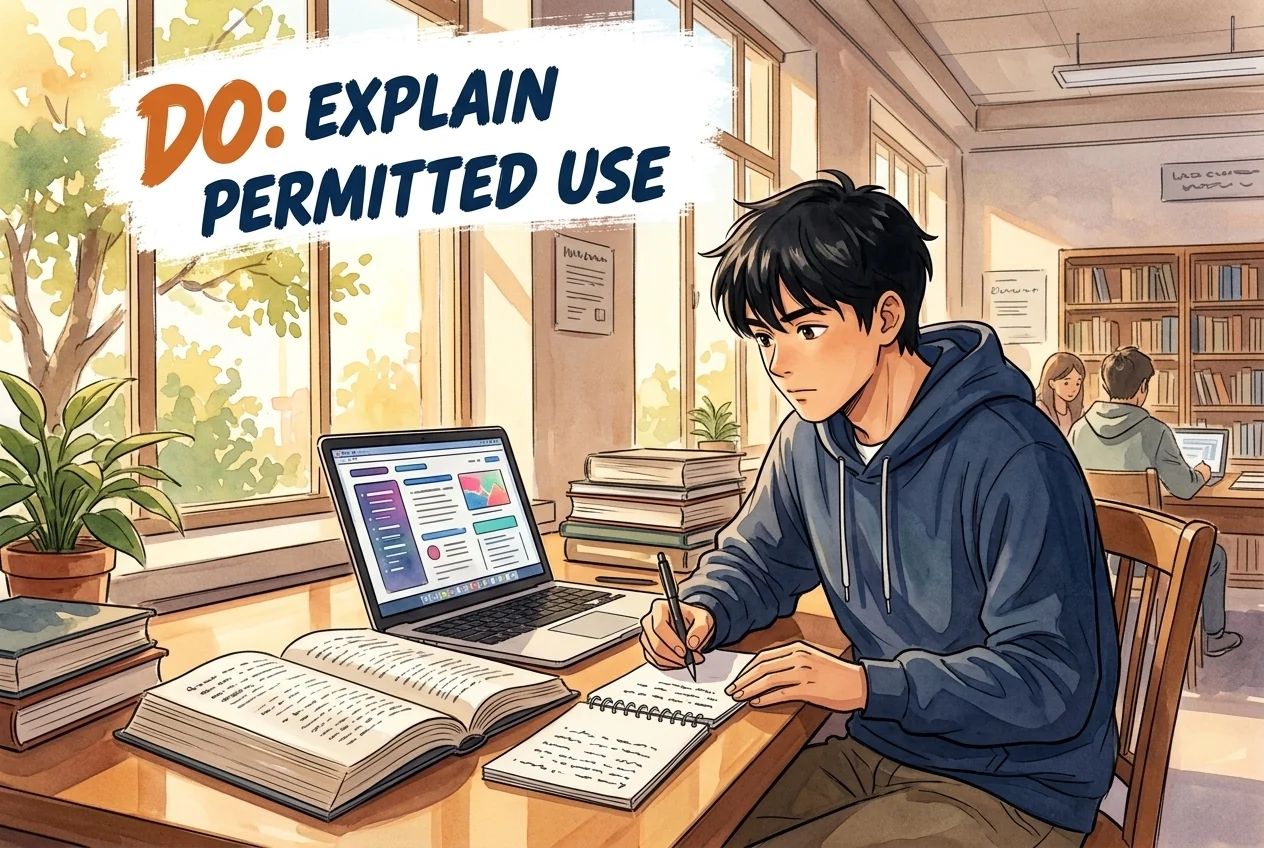
- Declare and explain permitted AI assistance.
- Use reliable sources to verify the final product.
Miami, United States
Student guide · Task scope and procedure
The Library reproduces PETAL principles with instructor-specific overrides; the original PETAL page returned 404. Web Copilot’s FAQ limits inputs to Public data despite protection assurances. The Honor Council process is undergraduate-only; its three-day appeal clock starts on receipt of the hearing summary and does not define the day type.
La guía siguiente está en inglés; las pruebas oficiales conservan su idioma original.
Aún no hay un resumen completo de las normas para estudiantes; consulta las afirmaciones y fuentes recopiladas.
The Library reproduces PETAL principles with instructor-specific overrides; the original PETAL page returned 404. Web Copilot’s FAQ limits inputs to Public data despite protection assurances. The Honor Council process is undergraduate-only; its three-day appeal clock starts on receipt of the hearing summary and does not define the day type.
Complemento recopilado: 2026-10-08 · Aplicabilidad actual no confirmada de forma independiente
Resumen disponible actualmente en inglés
Interpretación del sitio
UM Libraries reproduces PETAL principles: AI should support rather than replace thinking, use must be declared/explained, outputs verified and personal/confidential inputs avoided. These apply unless an instructor provides specific assignment/exam guidance; rules vary by class and discipline. Undeclared use may be plagiarism, not an automatic finding in every case.
Ámbito: students governed by the cited source and stage · PETAL principles reproduced by official Library; original PETAL URL returned 404 in this bounded capture.
Pruebas de detección · Apoyo y ajustes
Ámbito: students governed by the cited source and stage · university
Principles from UM PETAL Regarding AI
AI should help you think, not think for you. AI tools may be used to help generate ideas, frame problems, and perform research. It can be a starting point for your own thought process, analysis, and discovery. Do not use them to do your work for you, e.g., do not enter an assignment question into ChatGPT and copy and paste the response as your answer.
The use of AI must be open and documented. The use of any AI in the creation of your work must be declared in your submission and explained. Your faculty can provide guidance as to the format and contents of the disclosure. The undeclared use of any AI (including text, images, program code, musical notation, etc) in any work may be considered as plagiarism.
Engage with AI Responsibly and Ethically. Engage with AI technologies responsibly, critically evaluating AI-generated outputs and considering potential biases, limitations, and ethical implications in your analysis and discussions. Ensure that the data used for AI applications are obtained and shared responsibly. Never pass off as your own work generated by AI.
You are 100% responsible for your final product. You are the user; if the AI tool makes a mistake, and you use it, then it’s your mistake. If you don’t know whether a statement about any item in the output is true, then it is your responsibility to research it. If you cannot verify it as factual, you should delete it. You hold full responsibility for AI-generated content. Ideas must be attributed, and sources must be verified.
These principles are in effect unless the instructor gives you specific guidelines for an assignment or exam. It is your responsibility to ensure you are following the correct guidelines. Not following them will result in a breach of the Academic Integrity Policy.
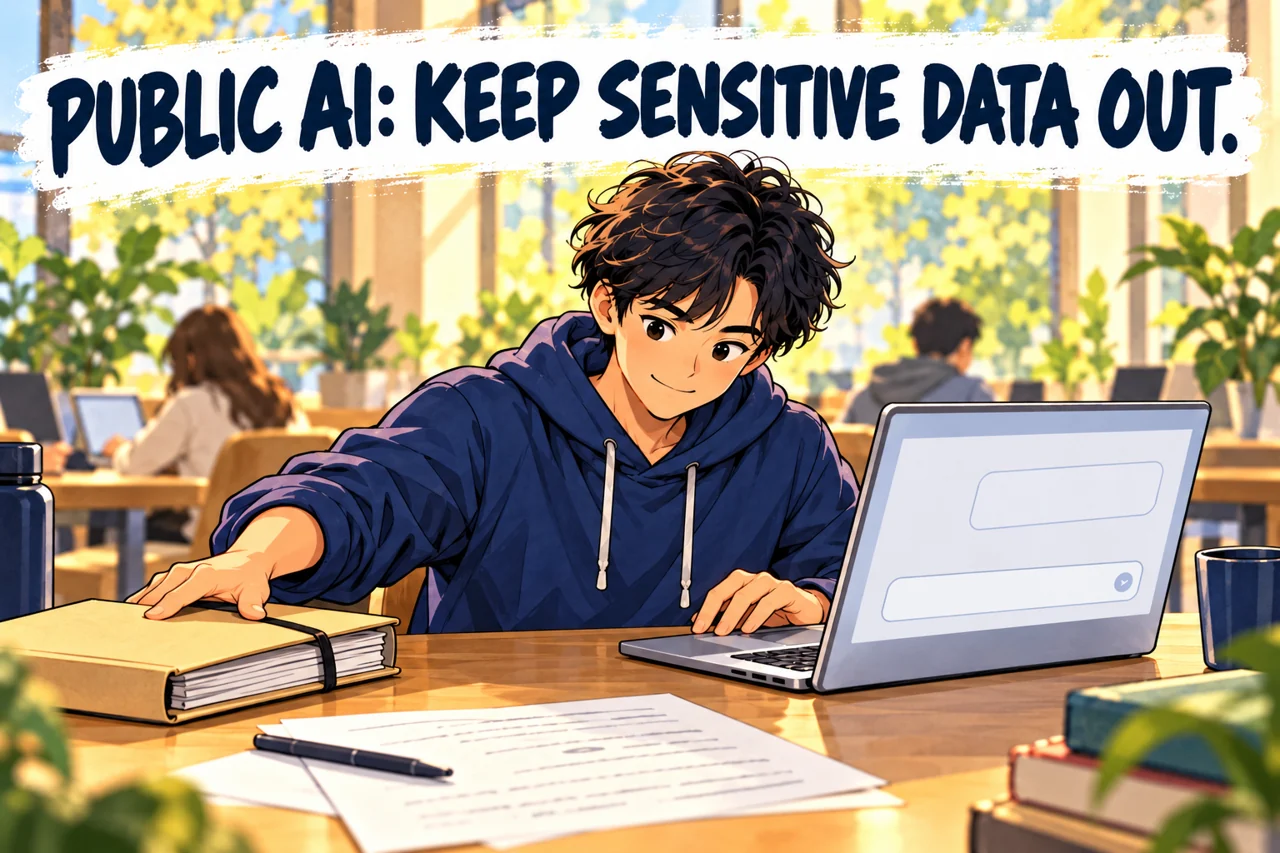
Data that are confidential or personal should not be entered into generative AI tools. Putting confidential or personal data into these tools exposes you and others to the loss of important information. Therefore, do not do so. See point 3 above.
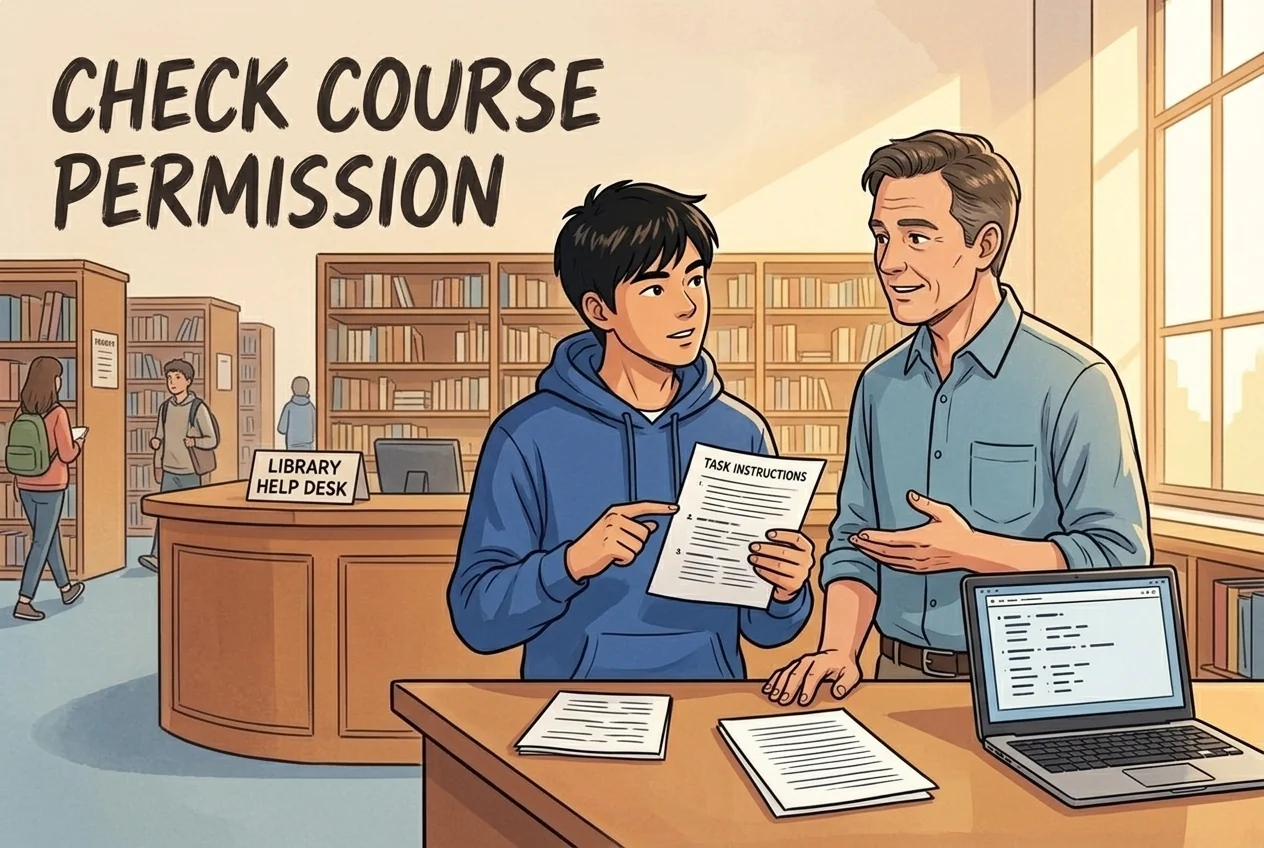
The rules and practices on the use of AI may vary from class to class, discipline to discipline. Do not assume that what is acceptable in a Computer Science class will be acceptable in a Philosophy class. It is the student’s responsibility to stay informed as to the instructor’s expectations. When in doubt, ask.Ver fuente oficial ↗Recopilado: 2026-10-08 · 478–485
SHA-256: 7b2bd619923811e8174d0859c59c777c8fe6dd6e94c704525b8919f513806dce
Interpretación del sitio
The Undergraduate Honor Code covers undergraduate academic work and general cheating/plagiarism/collusion/falsification. Its jurisdiction excludes students who have graduated or severed all relations; where it conflicts with the Academic Integrity Policy, the latter controls. It is not a universal graduate or professional-school process.
Ámbito: undergraduates under the Honor Code · Limited to the captured official source, stated conditions and relevant course/programme/stage. Retrieval does not certify exhaustive legal currency.
Pruebas de detección · Apoyo y ajustes
Ámbito: undergraduates under the Honor Code · university
Honor Code
The Honor Code, initiated at the request of the Undergraduate Student Body Government, ratified by student referendum, approved by the Faculty Senate, by the President of the University, and administered by students, protects the academic integrity of the University of Miami by encouraging consistent ethical behavior among its undergraduate students. The Code provides standards that prohibit all forms of scholastic dishonesty, including cheating, plagiarism, collusion, and falsification or misrepresentation of experimental data. The Code covers all written and oral examinations, term papers, creative works, assigned computer related work, and any other academic work done at the University by an undergraduate student.
All undergraduate students are responsible for reading, understanding, and upholding the Honor Code. Signed pledges are required for written work submitted for evaluation, but the absence of a signed pledge does not free a student from the ethical standards required by the Code. Procedures for dealing with infractions of the Code, including provisions for appeals, are printed in the text of the Honor Code. Copies may be obtained from the Office of the Dean of Students or from the office of the Undergraduate Student Body Government, or online.
In keeping with the traditional prerogatives of university faculties, nothing in the Code infringes on the faculty’s assignment of grades undertaken in a class. Instructors are informed when students have been found guilty of infractions involving their classes. Courses in which students have been failed for academic dishonesty may neither be dropped nor repeated under the terms of the Undergraduate Repeat Rule.
Academic Integrity Policy
TITLE I. General Provisions
A. Purpose
The University of Miami community recognizes integrity as a core institutional value. The Undergraduate Honor Code is based upon the Academic Integrity Policy which was approved by the Faculty Senate, the President of the University, and the UM Board of Trustees in 2019.
A full copy of the Academic Integrity Policy may be accessed through the link Academic Integrity Policy. The Honor Code is designed to ensure academic integrity at the University of Miami; encourage consistent ethical behavior among undergraduate students; and foster a climate of fair competition. While a student's commitment to honesty and personal integrity is assumed and expected, the Honor Code is intended to provide an added measure of assurance that, in fulfilling the University's requirements, a student's work will never involve falsification, plagiarism, or other deception regarding the true nature of the materials presented. Each student is responsible for completing the academic requirements of each course in the manner indicated by the faculty.
B. The Honor Creed
As a student of the University of Miami, I commit myself to upholding the Honor Code and promoting the values of Honesty, Responsibility, and Integrity.
C. Responsibility of the University Community
All undergraduate students are responsible for reading, understanding, and upholding the Academic Integrity Policy (AIP) and the Honor Code which derives from it. Students are expected to warn fellow students who do not appear to be observing proper ethical standards and to report violations of the policy. The absence of a signed pledge does not free a student from the ethical standards set by the Honor Code. To fulfill the responsibilities of membership in the University Community, violations of academic integrity should be reported by faculty and by all other members of the Community.
D. Jurisdiction
All undergraduate students, full and part-time, attending the University of Miami shall be subject to the Academic Integrity Policy and the Honor Code which derives from this policy. No action under the Academic Integrity Policy or the Honor Code shall be brought against any student who has graduated from, or officially severed all relations with, the University. To the extent of a conflict between the Academic Integrity Policy and the Honor Code, the terms of the Academic Integrity Policy shall control.Ver fuente oficial ↗Recopilado: 2026-10-08 · 258–272
SHA-256: e6629664b80a411f333f1172837bfd7fc37e6f7cc094fb076c6ac9a0c22aa6a1
Interpretación del sitio
Honor Code sanctions depend on severity and include warnings/probation, suspension/expulsion, service and grade consequences. Clearly stated syllabus grade sanctions supersede grade recommendations, but not other disciplinary sanctions. These are conditional general-code outcomes rather than automatic AI penalties.
Ámbito: undergraduates governed by the Honor Code · Limited to the captured official source, stated conditions and relevant course/programme/stage. Retrieval does not certify exhaustive legal currency.
Ámbito: undergraduates governed by the Honor Code · university
15. Sanctions
Penalties shall be based on the severity of the violation and shall consist of one or more of the following:
a. Disciplinary Warning
b. Strict Disciplinary Probation
c. Final Disciplinary Probation
d. Suspension from the University
e. Expulsion from the University
f. University service
g. Minimum “F” on the assignment (grade penalties may only be ‘suggested’ to the instructor of record. Students who wish to appeal grades assigned by the instructor may do so by appealing to the Faculty Senate Student Affairs Committee)
h. Maximum “XF” in the Class
i. Other appropriate action as approved by the Academic Integrity Committee or the Honor Council
Failure to comply with any of the above penalties may result in additional sanctions.
The Panel may consider prior discipline in assessing sanctions.
When instructors have clearly outlined expectations and grade sanctions in their syllabus, such grade sanctions will supersede the grade sanctions recommended by the AIC, Honor Council, and/or Appeals Board but they will not impact any other disciplinary sanctions imposed by these adjudicatory bodies.Ver fuente oficial ↗Recopilado: 2026-10-08 · 485–498
SHA-256: e6629664b80a411f333f1172837bfd7fc37e6f7cc094fb076c6ac9a0c22aa6a1
Interpretación del sitio
For the Honor Council stage, the accused may choose a UM undergraduate, faculty or staff advisor who cannot speak for them; they may question witnesses, present evidence and remain silent. Appeal to the Appeals Board is written within three days of receipt of the hearing summary, on procedural error or disproportionate sanction grounds. The cited sentence does not define those days as business days.
Estudiante · Obligatorio en este procedimiento
Dentro del plazo indicado. Compruebe el inicio, el ámbito y las excepciones en el resumen y el original.
Ámbito: undergraduates at the Honor Council stage · Bulletin 2026–2027 reproduces Honor Code effective Fall 2021 and says contact Dean of Students for changes.
Ámbito: undergraduates at the Honor Council stage · university
14. Affirmative Rights of the Accused
The accused has the right to challenge the hearing date, time or location. The objection must be submitted in writing to the Secretary of the Honor Council within one (1) day of the receipt of the charge. The objection must fully explain the reasons for the request.
The accused has the right to choose a University of Miami undergraduate student, faculty, or staff member to attend the hearing and assist them. Such an advisor cannot speak on the accused’s behalf.
The accused has the right to question the complainant and witnesses and submit statements or evidence to prove not responsible, if they deny the charge(s).
The accused has the right to remain silent and no inference may be drawn from this silence.
The accused has the right to call witnesses and present evidence in their defense. A student may offer a written request to the Panel that the Panel call specific witnesses for him/her if those witnesses have previously refused to appear and are shown in the request to be material to the accused student's defense. The Panel shall determine a witnesses' materiality based on the statement presented by the accused.
The accused has the right to present evidence of mitigating circumstances before the Panel retires to deliberate on a sanction, if the accused enters a plea of responsible, or is found responsible.
The accused, if found responsible, has the right to review a written summary upon which the finding of responsibility and sanction were based.
Parties will have the right to appeal to the Appeals Board after the Honor Council’s decision is rendered. Appeals must be in writing, addressed to the Appeals Board and, be submitted within three (3) days of receipt of the hearing summary. The only grounds for an appeal, however, are: (i) the failure to follow the procedures established for adjudication of an academic integrity violation constituted an error; or (ii) the sanction(s) imposed was (were) not commensurate with the offense[A3] .Ver fuente oficial ↗Recopilado: 2026-10-08 · 476–484
SHA-256: e6629664b80a411f333f1172837bfd7fc37e6f7cc094fb076c6ac9a0c22aa6a1
B. EFFECTIVE DATE
This version of the University of Miami Undergraduate Honor Code is effective as of the beginning of the Fall 2021 semester.
C. AMENDMENT OF THIS CODE
1. The Honor Code, itself, may be amended solely by formal action of the President of the University following consultation with the students and approval of the Faculty Senate.
2. The provisions of this Honor Code document as written are subject to change. Please contact the Dean of Students for information regarding any changes.Ver fuente oficial ↗Recopilado: 2026-10-08 · 506–510
SHA-256: e6629664b80a411f333f1172837bfd7fc37e6f7cc094fb076c6ac9a0c22aa6a1
Interpretación del sitio
The official Library guide quotes PETAL as not recommending AI-text detectors and warning that sending student coursework to them may constitute a FERPA violation. The IT known-tools directory separately lists detector products; neither listing nor this warning establishes actual course settings or a score-based proof standard.
Ámbito: students governed by the cited source and stage · Limited to the captured official source, stated conditions and relevant course/programme/stage. Retrieval does not certify exhaustive legal currency.
Ámbito: students governed by the cited source and stage · university
AI Detectors
"The use of systems that claim to detect AI-generated text (e.g. GPTZero, Copyleaks) are not recommended. Submitting students’ coursework to these systems may constitute a FERPA violation since students’ work is considered an educational record." -PETALVer fuente oficial ↗Recopilado: 2026-10-08 · 518–519
SHA-256: 7b2bd619923811e8174d0859c59c777c8fe6dd6e94c704525b8919f513806dce
AI Detection Software
Note: AI detection is error-prone, and accuracy is unknown.Ver fuente oficial ↗Recopilado: 2026-10-08 · 146–147
SHA-256: c44dea32d404e04a6ecda0367c1177d3fe9441ae33710d2ce26e9a2cace8be86
AI Art Detector
The intended scope of this tool is artistic images; that is to say, it is not a deepfake photo detector, and general computer imagery (webcams, screenshots, etc.) may throw it off.
AI Content Detector
AI Content Detector highlights the AI-generated content in different colors to make it easier to identify. Additionally, the tool provides detailed reports that include the percentage of AI-generated content in each sentence and a summary of the text's overall AI-generated content.
AI Detector Pro
AI Detector Pro's neural network is designed to detect patterns used by GPT based AI text generation models (which make up nearly all of the current online AI content writing or rewriting tools).Ver fuente oficial ↗Recopilado: 2026-10-08 · 159–164
SHA-256: c44dea32d404e04a6ecda0367c1177d3fe9441ae33710d2ce26e9a2cace8be86
Interpretación del sitio
Miami’s Copilot web page describes UM-account access for students/faculty/staff and states an age-18-or-over condition for students’ commercial data protection. The protected sign-in environment matters. This is a service description, not an account test or academic-use authorization.
Ámbito: students governed by the cited source and stage · Limited to the captured official source, stated conditions and relevant course/programme/stage. Retrieval does not certify exhaustive legal currency.
Ámbito: students governed by the cited source and stage · university
IMPORTANT: Copilot on the Web includes data protection when you are signed in with your University of Miami account. You can confirm this by checking for the green Protected shield in the top-right corner. If the shield is not visible, click Sign in and complete the Microsoft login process with your UM credentials. When the green shield appears, Copilot searches are de-identified and your data is protected!
Did you know? Claude (Sonnet), developed by Anthropic, is now available within the standard Copilot Chat experience. Available to all University users, this update marks another step forward in our goal to provide access to best-in-class AI capabilities through a single, trusted experience.
Learn More About Using Claude in Copilot
Accordion Group
Open All Tabs
Access Information
Accessing Copilot (previously Bing Chat Enterprise):
Visual Guide Documentation
University of Miami students, faculty, and staff can access Copilot by visiting m365.cloud.microsoft and/or via the Microsoft Edge* sidebar.
*Note: To access Copilot, the preferred Internet browser is Microsoft Edge. While Copilot may function on other browsers, use of Microsoft Edge enables a full range of Microsoft's AI-related features.
The new DALL-E advanced image generation integration empowers users to create custom visuals on-the-fly, streamlining content creation for academic and administrative purposes.
Learn How to Create AI Images with DALL-E
Faculty – We invite you to learn more about how to effectively integrate Copilot in the classroom:
Teaching with Copilot
Students – As per Microsoft's higher education use agreement, only students ages 18 and above can access Copilot with commercial data protection.Ver fuente oficial ↗Recopilado: 2026-10-08 · 134–148
SHA-256: b5bca0958d8c595f4d73f2af545515b4403873e68ff31bddfd5ec5ba00c307be
Interpretación del sitio
Despite its data-protection assurances, Miami’s web Copilot FAQ limits use to Public data; Confidential (Restricted), Private or Sensitive data and personal information must not be entered. Copilot for Microsoft 365 is a distinct phased service. Stale technical descriptions elsewhere in the page are not adopted as present model facts.
Ámbito: students governed by the cited source and stage · Limited to the captured official source, stated conditions and relevant course/programme/stage. Retrieval does not certify exhaustive legal currency.
Ámbito: students governed by the cited source and stage · university
How does Copilot protect my data?
IMPORTANT: Copilot on the Web includes data protection when you are signed in with your University of Miami account. You can confirm this by checking for the green Protected shield in the top-right corner. If the shield is not visible, click Sign in and complete the Microsoft login process with your University of Miami credentials. When the green shield appears, Copilot searches are de-identified and your data is protected!
Copilot uses Microsoft Entra ID (currently known as Azure Active Directory) for authentication and authorization, and it only allows users to access it with their University of Miami account. Individual and business data in Copilot is protected and will not leak outside the organization. Chat data is not saved, and Microsoft has no eyes-on access to it. What goes in—and comes out—remains protected. Chat data is also not used to train Microsoft's underlying models. Copilot complies with the standard Microsoft Privacy Policy and Terms of Use agreements.
Copilot unlocks generative AI for capabilities around asking questions and generating responses from the web. It does, however, have some limitations, such as working with documents and/or conducting custom searches within University of Miami firewalls. If you need any assistance around similar examples, or other potential use cases surrounding generative AI, please reach out to ai@miami.edu.
When using Copilot with Data Protection, exercise care when entering information into the prompt. Copilot with Data Protection is being offered for use with Public data only, as defined in our Data Classification Policy. Confidential (Restricted), Private, or Sensitive data may not be entered into Copilot with Data Protection. As with other services, do not include personal information about yourself or others in prompts. Similarly, when using the service, you must ensure adherence to copyright and intellectual property protections. Additional information on protecting privacy is available via our Information Security Policy and Acceptable Use of University Computing Facilities Policy.
How does Microsoft approach responsible AI?
Microsoft's official statement –
"Microsoft believes that when you create technologies that can change the world, you must also ensure that the technology is used responsibly. We are committed to creating responsible AI by design. Our work is guided by a core set of principles: fairness, reliability and safety, privacy and security, inclusiveness, transparency, and accountability. We are putting those principles into practice across the company to develop and deploy AI that will have a positive impact on society. We take a cross-company approach through cutting-edge research, best-of-breed engineering systems, and excellence in policy and governance."
Who can access Copilot?
As per Microsoft's higher education use agreement, only faculty, staff, and students ages 18 and above can access Copilot on the web* with commercial data protection.
*Note: To access Copilot, the preferred Internet browser is Microsoft Edge. While Copilot may function on other browsers, use of Microsoft Edge enables a full range of Microsoft's AI-related features.
Technical Support
For support, please contact the IT Service Desk.
Cards
Note:
Copilot for Microsoft 365 applications is distinct from Copilot on the Web. While all University of Miami users currently have access to Copilot on the Web, access to Copilot for Microsoft 365 is being implemented in a phased approach targeting specific communities within the University.Ver fuente oficial ↗Recopilado: 2026-10-08 · 193–208
SHA-256: b5bca0958d8c595f4d73f2af545515b4403873e68ff31bddfd5ec5ba00c307be
Complementos publicados basados en fuentes. Los resúmenes en inglés y las citas originales se separan del registro revisado. Los procesos y resultados posibles no son sanciones automáticas por usar IA. La aplicabilidad actual no se ha confirmado de forma independiente; compruebe el ámbito y la versión de la fuente.
Comparado con el original guardado; traducción no oficial
Los hashes permiten comparar textos guardados; no certifican vigencia ni inmutabilidad. Los temas no forman una secuencia obligatoria.
El acceso no autoriza su uso en una evaluación. Comprueba las reglas de la tarea, los usuarios elegibles y las restricciones de datos.
Registro archivado; consulta la fuente oficial para el acceso actual. Los detalles de acceso y las citas conservan su idioma original.
Cita original
University of Miami AI at The U guidance encourages using University enterprise AI tools such as Copilot and Gemini as alternatives to public tools because they include some data protection.Cita original
The University provides access to leading AI tools—such as Copilot and Gemini—which include some data protection.Cita original
University of Miami AI at The U guidance encourages using University enterprise AI tools such as Copilot and Gemini as alternatives to public tools because they include some data protection.Cita original
The University provides access to leading AI tools—such as Copilot and Gemini—which include some data protection.Reviewed record
Afirmaciones revisadas: 4
Academic Integrity
Valor normalizado: miami_petal_per_course_ai_rules
Evidencia original
Evidencia 1The rules and practices on the use of AI may vary from class to class, discipline to discipline. Do not assume that what is acceptable in a Computer Science class will be acceptable in a Philosophy class. It is the student's responsibility to stay informed as to the instructor's expectations. When in doubt, ask.
Enseñanza
Valor normalizado: writing_center_ai_support_follows_instructor_expectations
Evidencia original
Evidencia 1Our primary approach to AI is to ensure that our support aligns with the guidelines and expectations set by each professor for that class and the individual assignment.
Privacidad
Valor normalizado: no_confidential_or_regulated_data_in_public_ai_tools
Evidencia original
Evidencia 1The University of Miami does not permit the use of any patient, student, regulated, internal, and/or confidential data in any public AI tool. Entering data into these platforms could lead to public disclosure and loss of our ability to protect University information, including intellectual property.
Ai Tool Treatment
Valor normalizado: enterprise_ai_tools_encouraged_as_public_tool_alternatives
Evidencia original
Evidencia 1The University provides access to leading AI tools—such as Copilot and Gemini—which include some data protection. We encourage you to use the University's enterprise AI tools as alternatives to public tools.
Source record
Fuentes: 4
guides.library.miami.edu
ai.it.miami.edu
writingstudies.as.miami.edu
petal.miami.edu
Citation: University AI Policy Tracker. "University of Miami AI Policy Tracker record." Last checked July 27, 2026. https://eduaipolicy.org/universities/university-of-miami
Original university source language remains canonical. This tracker is not an official university statement.
Abrir registro de cambiosSaved from University AI Policy Tracker. This record summarizes the cited sources; it is not an official university statement or assessment permission. Source and review dates are listed above. Hashes identify retained content, not authorization.