Qué hacer
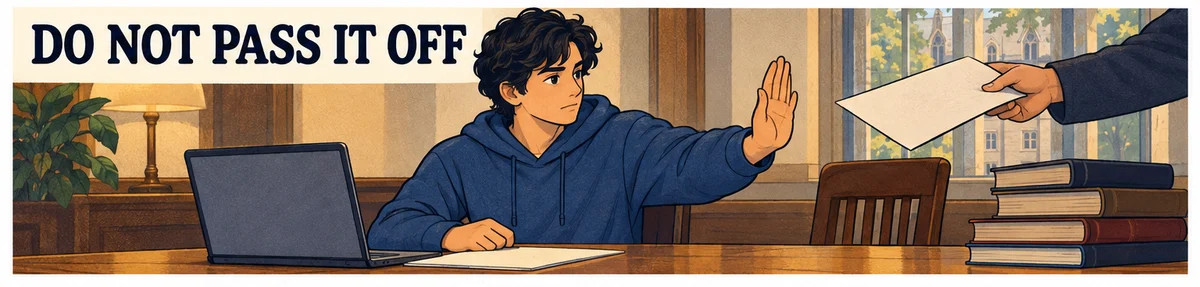
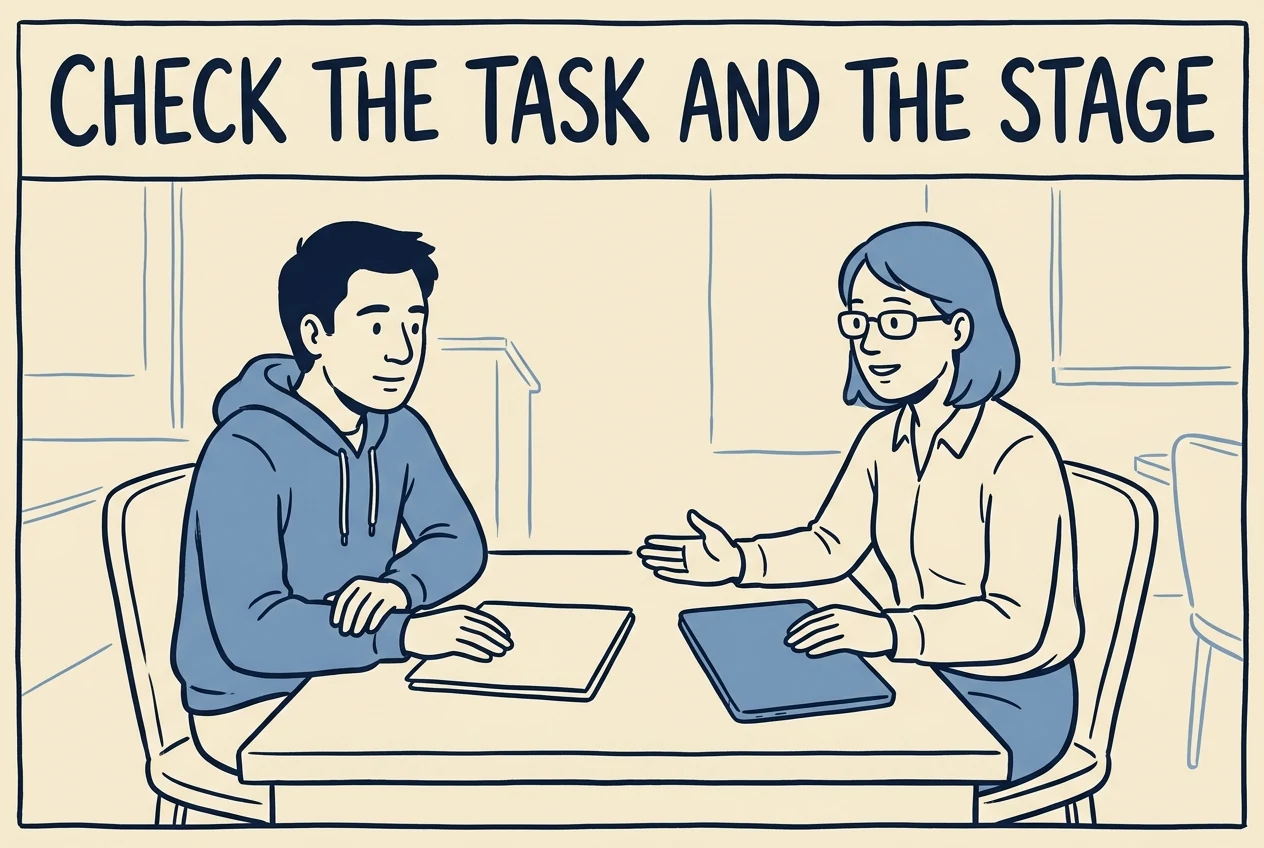
- Read the assessment instructions before using AI.
- Keep the required acknowledgement and process records.
- Match the review to its decision notice.

Melbourne, Australia
Student guide · Task scope and procedure
Assessment authorization, disclosure and permitted tools remain task-specific. Misconduct response and review routes keep their own decision notices, grounds and periods; an educational response is not an automatic promise.
La guía siguiente está en inglés; las pruebas oficiales conservan su idioma original.
Aún no hay un resumen completo de las normas para estudiantes; consulta las afirmaciones y fuentes recopiladas.
Assessment authorization, disclosure and permitted tools remain task-specific. Misconduct response and review routes keep their own decision notices, grounds and periods; an educational response is not an automatic promise.
Complemento recopilado: 2026-10-08 · Aplicabilidad actual no confirmada de forma independiente
Resumen disponible actualmente en inglés
Interpretación del sitio
RMIT tells students to check assessment brief, Canvas and course guide, ask the coordinator before using AI if unclear, and use AI only to support their own understanding. Its integrity page expressly bars completing/contributing to a task without specific permission, unreferenced AI ideas passed off as one’s own and outputs one cannot explain. The availability of Val or other institutional tools does not permit a restricted task.
Ámbito: Students following their course/task-specific rules · Only the captured source, version, audience and conditions; no exhaustive currency certification.
Ámbito: Students following their course/task-specific rules · university
Being able to evaluate what is being asked and respond with an idea or argument developed using your knowledge is a critical skill. Before reaching for generative AI, unpack the assignment instructions and consider what your unique approach could look like.
Quick guide: AI in assessments
Before using AI in an assessment:
Check the rules in your assessment brief, Canvas and course guide (AI rules vary by course and task)
If it’s not clear, ask your course or program coordinator for advice before using
Use AI as support only, not a substitute: you must submit work that reflects your own understanding
Verify everything: AI can be inaccurate, outdated or make up references. Keep note of what you used (tool, date, purpose) so you can disclose, reference and appropriately consider how it performed for your particular use.
You are responsible for the final submission, including accuracy, originality and compliance with academic integrity requirements.
Expand all sectionsVer fuente oficial ↗Recopilado: 2026-10-08 · 237–245
SHA-256: f87083bc715c1f97b96408d507c73d00b5cfa20cf5e4bffabb4dc3e89127817b
You cannot use AI to:
Complete or contribute to an assessment task when it has not been specifically allowed. Check your course guide or ask your educator if you’re not sure
Produce ideas that you don't reference and try to pass off as your own
Produce content that you are unable to understand or explain in your own words.
Using AI in these ways is a breach of Academic Integrity Policy and may have serious consequences.
Want to know more about how to use generative AI tools in your learning? Complete the Generative AI for students at RMIT module.Ver fuente oficial ↗Recopilado: 2026-10-08 · 299–304
SHA-256: 0923a98c332b0b109989f605207a9b6949e5c7947c19b99c8398c078eca258c9
Interpretación del sitio
Any AI use related to an RMIT assessment requires acknowledgement even when generated content is absent from the final submission. Follow course instructions and keep prompt/output/use records. The statement should give how the tool was used, tool/creator and generation year; version numbers/access dates are not required unless the coordinator instructs otherwise. Direct, quoted or paraphrased generated outputs also require an in-text citation and reference entry in the course style. The more detailed Val example does not replace this course-dependent rule.
Ámbito: Students acknowledging and referencing assessment-related AI use · Only the captured source, version, audience and conditions; no exhaustive currency certification.
Ámbito: Students acknowledging and referencing assessment-related AI use · university
Version numbers or access dates only if course coordinator instructs otherwise.
If you use AI tools in your assessment, you must acknowledge them, and if you paraphrase or quote AI‑generated content, you must provide a proper reference. View the Artificial intelligence (AI): acknowledgement and referencing guidelines.
Expand all sections
Acknowledging AI use
Important: asking about AI use is not an admission of guilt
Clarifying expectations surrounding AI use is encouraged and part of the learning process.
What does 'acknowledge' mean?
In some assessment tasks you may use AI to assist in the creation of your work, but don't directly include AI‑generated content in your final submission. Any use of AI in relation to an assessment requires acknowledgment . You may be asked to include any AI Generated content, iterations or critiques you used to develop your work in your final submission.
Brainstorming: using AI to discuss and develop ideas
Clarifying understanding: using it to explain your interpretation of a reading or concept
Generating content: creating tables, figures, imagery, or code for an assessment.
Proofreading and editing: receiving feedback on your writing and advising the grammar, formatting, structure, or flow of your writing.
For details on the expectations of acknowledging the use of AI within your assessment, consult your Course Guide or Course Coordinator.
How to acknowledge AI
Quick guide: acknowledging AI
Check your assessment task instructions for specific advice
Keep a record of what/how AI has been used in the creation of your work, including:
the prompt used
the outputs generated
how the generated content was used in your work.
What to include
Your acknowledgement should state:
How you used the AI tool
The name of the tool and its creator
The year the AI content was generated.
There is no requirement to include version numbers or access dates unless your course coordinator instructs otherwise.Ver fuente oficial ↗Recopilado: 2026-10-08 · 283–307
SHA-256: f87083bc715c1f97b96408d507c73d00b5cfa20cf5e4bffabb4dc3e89127817b
If you use any AI-generated outputs directly in your work (e.g. an AI-generated image, or AI-generated text you have paraphrased or quoted in your work), you need to include an in-text citation and a reference list entry for these outputs. Examples of use include:
AI‑generated text is quoted or paraphrased
AI‑generated images, diagrams, or tables are inserted
AI‑generated code is used or adapted
AI‑generated data or analysis is included
Quick guide: referencing AI
Check your assessment instructions for specific requirements
Follow the referencing style mandated by your course
Keep a record of all prompts and outputs used in your work
Save copies of AI‑generated content, as your educator may request them
Ensure you reference each AI tool used to generate an output that appears in your work.Ver fuente oficial ↗Recopilado: 2026-10-08 · 324–334
SHA-256: f87083bc715c1f97b96408d507c73d00b5cfa20cf5e4bffabb4dc3e89127817b
Interpretación del sitio
RMIT lists Val and student Adobe Express Premium/Firefly access; Miro AI is listed separately with RMIT-email/password launch. The integrity page calls Val secure and free to use, but this is not a tested account or premium entitlement. Val’s page still forbids personal, sensitive and health prompts despite the tools list calling it the best choice for sensitive/confidential information. Val interactions are collected and de-identified, histories retained unless deleted, stored in Azure Australia East and treated confidentially; privacy is not no collection or unrestricted upload. Miro separately must not store private/sensitive information.
Ámbito: Students within RMIT-listed tools access and Val/Miro conditions · Only the captured source, version, audience and conditions; no exhaustive currency certification.
Ámbito: Students within RMIT-listed tools access and Val/Miro conditions · university
Val personal/sensitive/health prompt prohibition remains explicit.
Miro must not store private or sensitive information.
Assessment rules still apply.
AI tools can be an effective study partner when used responsibly, safely and appropriately.
AI tools can be used to help you brainstorm ideas, learn about complex topics, review your writing, test your understanding or create study plans to help you succeed in your courses.
However, these tools should be used to support your learning and not replace it. Treat AI outputs as a starting point: question them, adapt them to your discipline and refine them further to produce your best original work.
You should always review and factcheck AI outputs and acknowledge the tool just as you would any content, ideas or media that you use in your assessments.
Tool
Description
Example appropriate uses
Prompt examples
Access
Val
RMIT’s custom-built, private and secure AI tool that can be used to generate text and images.
Val is your best choice when using sensitive or confidential information.
Data collected in Val is anonymous and not used for training AI models.
Explain complex concepts and theories in simple words
Generate quizzes and flashcards to test your knowledge
Create a study plan.
Help review your writing and check for grammar, spelling or clarity
Brainstorm ideas for responding to an assessment.
“Explain the concept of opportunity cost using a real-world example.”
“Create five practice quiz questions about renewable energy.”
“Generate a study guide summarising key points from the topic of photosynthesis.”
Launch Val
Learn more about Val and its many features
Adobe Express (Premium) and Adobe Firefly
As an Adobe Creative Campus, RMIT students can access Adobe Express (Premium) and Adobe Firefly for working with images and generating images.
Adobe Firefly can be used for copyright-safe image creation as it is trained on licensed content.
Designing an infographic for a class presentation
Creating a background image for a poster
Creating marketing mock-ups for a business project
Generating an image background for a presentation slide.
N/A
Access Adobe Express (Premium)
Access Adobe Firefly
More information and Adobe workshops
Miro
Miro is an online collaborative whiteboard where you can work with others to brainstorm, plan and create visual projects.
Miro AI is a built-in tool that helps you work smarter on your Miro board. It can turn your ideas into diagrams, tidy up your notes, give feedback and even help you plan projects. You don’t need to switch apps, everything happens right on the board, making group work and study tasks easier and faster.
Please note that it's important not to store private or sensitive information, like personal details or confidential data, on Miro. Such information won't be retained in line with RMIT's Retention Policy and may be removed during regular audits.Ver fuente oficial ↗Recopilado: 2026-10-08 · 174–211
SHA-256: a56389f10e0b83a9f19d7a704ec5971f161d9639bdde2cc59b5c293e60bced5b
Miro
Miro is an online collaborative whiteboard where you can work with others to brainstorm, plan and create visual projects.
Miro AI is a built-in tool that helps you work smarter on your Miro board. It can turn your ideas into diagrams, tidy up your notes, give feedback and even help you plan projects. You don’t need to switch apps, everything happens right on the board, making group work and study tasks easier and faster.
Please note that it's important not to store private or sensitive information, like personal details or confidential data, on Miro. Such information won't be retained in line with RMIT's Retention Policy and may be removed during regular audits.
Generate product briefs, diagrams, or prototypes from text prompts or board content
Refine sticky notes into structured formats like tables or slides
Summarise comment threads or sticky note clusters to surface key insights
Use AI Sidekicks for expert feedback and contextual advice (e.g., Agile coach)
Translate, rewrite, or adjust the tone of written content for clarity and professionalism.
“Create a product roadmap based on these sticky notes.”
“Summarise this brainstorming session into key themes and next steps.”
“Generate a flowchart for the user onboarding process.”
“Organise these ideas into categories for a group presentation.”
“Suggest improvements to this group project plan.”
Launch Miro – Use your RMIT email address and passwordVer fuente oficial ↗Recopilado: 2026-10-08 · 208–222
SHA-256: a56389f10e0b83a9f19d7a704ec5971f161d9639bdde2cc59b5c293e60bced5b
Information that should not be put into Val
Do not enter prompts that contain:
Information that you would not usually share with other people
Personal, sensitive and health information about yourself or anyone else. This includes details such as names, student and staff ID numbers, email addresses, phone numbers, dates of birth and photos.
Collecting, protecting and using data entered in Val
RMIT collects data from interactions with Val, including user inputs (“prompts”) and Val’s responses. This data is used to:
Understand how Val is used by students and staff
Ensure Val operates correctly and responds appropriately
Inform the development of new features and improvements to meet user needs
All recorded information is de-identified and does not include student or staff IDs.
Prompt histories are stored securely in Val on your behalf, unless you choose to delete them. All information is stored within Australia, specifically in the Azure Australia East region.
Any information shared with Val is not visible to other users and is treated as confidential.
Usage data and any data exported from Val never includes personal identifiers, in accordance with the Val Terms of Use (PDF) and the RMIT Privacy Statement.
If you have any questions or concerns about how Val collects or handles information, please contact: aiquestions@rmit.edu.au.
Governance - using AI responsibly, ethically, and effectively
RMIT’s AI Governance Framework, supported by mandatory training and key university policies, ensures staff and students use AI responsibly, ethically, and effectively.
RMIT AI Governance Framework
The RMIT AI Governance Framework sets out how Artificial Intelligence (AI) should be used responsibly and effectively across RMIT. It helps staff understand and manage the benefits and risks of AI.
Responsible AI Practices at RMIT module
This self-paced module explores safe, responsible and ethical use of AI at RMIT and the role of staff using AI in their work or research.
Key RMIT policies that govern the use of Val
Use of Val must comply with the Val –Terms of Use (PDF 250 KB) and Acceptable Use Standard – Information Technology.
Any personal information collected by the service will be handled in accordance with RMIT’s Privacy Statement.Ver fuente oficial ↗Recopilado: 2026-10-08 · 219–241
SHA-256: 0571af88a5c1260f34fb04af67d300218748be4a90f6f13bc8c107c85f0fd0be
Val is an RMIT supported, secure and free-to-use generative artificial intelligence tool that functions just like ChatGPT. Learn how to responsibly use Val to help with your study and learning.
Access Val
What happens if I breach academic integrity?Ver fuente oficial ↗Recopilado: 2026-10-08 · 306–308
SHA-256: 0923a98c332b0b109989f605207a9b6949e5c7947c19b99c8398c078eca258c9
Interpretación del sitio
RMIT graduate researchers must keep thesis work their own and consult supervisors because disciplines differ. GenAI use should be declared/explained; researchers remain accountable, make key decisions independently and verify outputs. Writing assistance is supplementary planning or minor editing. Drafting full sentences/sections, literature summaries or arguments with GenAI is listed as poor practice breaching thesis independence, not a blanket permission because a general student task permits AI. The HDR declaration also requires appropriate declaration, attribution and acknowledgement.
Ámbito: Graduate research/HDR thesis preparation and examination · Only the captured source, version, audience and conditions; no exhaustive currency certification.
Ámbito: Graduate researchers and supervisors · university
If you are using these tools in your research and thesis preparation, it is important to do so critically and ethically and in accordance with RMIT's established principles for the responsible conduct of research and Australia’s AI Ethics Principles.
As a graduate researcher, there are additional matters that are also important to consider:
Degree requirements: does your use of these tools meet degree requirements, for example, that the work submitted for examination is your own?
Your development as a researcher: does your use of Gen AI facilitate and enhance rather than limit or circumvent the development of necessary researcher capabilities, as set out in the Australian Qualifications Framework degree criteria? For example:
Ability to engage in critical reflection, synthesis and evaluation
High-level communication skills
Scholarly independence.
If you are using Gen AI in your research and thesis preparation, it is important to ensure good practice and compliance with RMIT’s research integrity and HDR Policy requirements (see Table 3).
Note, when considering appropriate use of AI tools, please consult your supervisory team as disciplinary differences may apply.
Principles
Your thesis must be your own work. Any use of Gen AI tools should be declared and explained to adhere to research integrity requirements and the HDR Submission and Examination Procedure.
Maintaining researcher responsibility
When using Gen AI to perform research tasks, such as software coding or data analysis, you should always be in charge and remain fully accountable for all outputs. You must:
Make key decisions independently
Apply critical judgement to all results
Verify accuracy and validity before use
Using Gen AI to support your writing
When incorporating Gen AI into writing, such as in theses or publications, prioritise developing your own voice and demonstrating independent thinking. Any Gen AI assistance should be supplementary only, such as:
Planning and brainstorming assistance
Minor editorial work, such as light editing of spelling, grammar and sentence flow
Assistance with coherence and clarity, such as, refining paragraph structure.
Risks
Table 1: Gen AI risk examples
Activities that may risk researcher independence, breach the HDR Policy and undermine the development of core research capabilities.
Poor practice
Risks
Alternative practice
Further information
Using Gen AI to draft full sentences, sections and paragraphs, or generate written content, such as AI-assisted summaries of the literature, or arguments of key ideas and debates.
Breaches the requirement for your thesis to be your own work.
Undermines the development of writing skills.
May introduce errors and inaccuracies due to AI hallucinations.
May breach IP
Develop your own voice as a writer, using Gen AI tools to supplement your work, as per good practice guideline above. Writing is thinking, which means your ideas will develop through iteration.
HDR Policy stating that the thesis is defined as an independent written work.
HDR Submission and Examination ProcedureVer fuente oficial ↗Recopilado: 2026-10-08 · 208–243
SHA-256: 5c148fe9795d17e8ad96abd4f57b73bcb9af2cf1a0e225124ee013208ef3c74c
Policy summary
Table 3. HDR Policy Requirement summary
Relevant Policy
Quotation
HDR Policy
HDR Submission and Examination Procedure
‘Thesis: Independent written work submitted for examination.’
HDR Submission and Examination Procedure
Submission declaration:
‘I certify that except where due acknowledgement has been made, this research is that of the author alone; …any editorial work, paid or unpaid, carried out by a third party is acknowledged; and ethics procedures and guidelines have been followed.
Submission declaration
'Any use of Artificial Intelligence (AI) in your thesis, must be ethical, responsible and in keeping with principles of academic and research integrity including honesty, transparency, fairness and accountability. Candidates will appropriately declare, attribute and acknowledge use of AI, in keeping with research integrity principles, policy and procedures for responsible authorship and publication of research outputs.’Ver fuente oficial ↗Recopilado: 2026-10-08 · 289–300
SHA-256: 5c148fe9795d17e8ad96abd4f57b73bcb9af2cf1a0e225124ee013208ef3c74c
Interpretación del sitio
For an appeal hearing, notice and supporting documents normally precede the hearing by at least ten working days; gender-based-violence matters use five and the student may consent in writing to waive notice for rescheduling. A student choosing not to attend may submit in writing no later than two working days before the scheduled hearing, and attendance/support-person/advocate names must be confirmed at least two working days before it. The Secretary sends the decision/reasons within ten working days of the scheduled hearing or written-response deadline (five for gender-based violence), with external-review information. This outcome clock is not the initial twenty-day filing period.
Estudiante · Obligatorio en este procedimiento
A más tardar este número de días antes de la audiencia. Compruebe el inicio, el ámbito y las excepciones en el resumen y el original.
Estudiante · Obligatorio en este procedimiento
Al menos este número de días antes de la audiencia. Compruebe el inicio, el ámbito y las excepciones en el resumen y el original.
Institución · Obligatorio en este procedimiento
Dentro del plazo indicado. Compruebe el inicio, el ámbito y las excepciones en el resumen y el original.
Ámbito: Students proceeding to Student Conduct Appeals Committee hearing/written response · Only the captured source, version, audience and conditions; no exhaustive currency certification.
Ámbito: Students proceeding to Student Conduct Appeals Committee hearing/written response · university
Separate gender-based-violence timing.
Written consent may waive notice requirement in rescheduling.
(20) The Chair, Student Conduct Appeals Committee (Chair) may make determinations about all matters relating to the conduct of a hearing, including but not limited to: attendance, scheduling and re-scheduling, any pausing or adjournment of the hearing, any additional material or information required, and the provision of information about the process and the determination. All such determinations are subject to this procedure, the Student Conduct Policy, and the Student Conduct Regulations.
(21) An appellant student may respond to the documentation provided by the Senior Officer or Student Conduct Board (as appropriate) for consideration by the Student Conduct Appeals Committee by participating in a hearing in person (which may include by telephone or online video conference):
with date, time, and location details (and connection information where applicable) scheduled no earlier than 10 working days from the date of the written notification and provision of the reports and related documentation (or 5 working days for matters involving gender-based violence), or
if the appellant student does not wish to participate in the hearing, they may provide a written submission no later than two working days before the date of the scheduled hearing of the Student Conduct Appeals Committee.
(22) Where the appellant student makes a written submission to the Student Conduct Appeals Committee electing not to participate in a hearing, the Student Conduct Appeals Committee will consider the matter on the basis of the potential student misconduct report and the response provided by the student.
(23) The Secretary is responsible for managing the records of the Student Conduct Appeals Committee including outcomes. No party may make an audio or video recording of the proceedings, including if they are conducted electronically or via video link.Ver fuente oficial ↗Recopilado: 2026-10-08 · 113–118
SHA-256: 61042c2ba37cbac535c861e02e00e1bd2d65c1e3f34e1937f814d3985cfe6b09
details of student support services as outlined in the Student Conduct Procedure.
Reporting Party Notification
(30) Where an appeal regarding misconduct involves a report made by another person, that person will be informed by their preferred method of contact about when and where the appeal hearing is to take place. Where a matter involves gender-based violence, notification must be undertaken in accordance with the requirements of the Gender-Based Violence Procedure.
Representation and Support
(31) At the Student Conduct Appeals Committee hearing, where invited to participate in person, the student may be accompanied by a support person and/or advocate.
(32) An advocate, and not a support person, is permitted to make submissions on the appellant student’s behalf.
(33) Any person who is under the age of 18 must be accompanied to any meeting or hearing by a parent, guardian or caregiver who is responsible for their interaction with RMIT.
(34) A student must seek permission from the Chair if they want to be represented by a legal practitioner or to otherwise have a legal practitioner make submissions on their behalf.
(35) The Chair has discretion not to allow a student to be represented by a legal practitioner or to have a legal practitioner make submissions on their behalf.
(36) The Student Conduct Appeals Committee as constituted in a particular matter may be assisted by Counsel, being an external legal practitioner (Counsel Assisting). The role of the Counsel Assisting is to provide legal advice to the Student Conduct Appeals Committee on how to effectively discharge its obligations under, and comply with, the Student Conduct Regulations, Student Conduct Policy and this and other applicable procedures. Counsel Assisting will not:
undertake advocacy for the Student Conduct Appeals Committee
make written or verbal submissions to or for the Student Conduct Appeals Committee, or the appellant student, or
undertake examinations of any persons on behalf of the appellant student or the Student Conduct Appeals Committee.
Student Participation
(37) The appellant student must confirm their attendance and the name of their support person/s and any advocate at least two working days before the hearing.
(38) The Chair may reschedule a hearing where the appellant student:
provides reasonable evidence that they are unable to attend at the scheduled time, or
provides written consent to waive the requirement of 10 working days notice (or 5 working days for matters involving gender-based violence).Ver fuente oficial ↗Recopilado: 2026-10-08 · 138–155
SHA-256: 61042c2ba37cbac535c861e02e00e1bd2d65c1e3f34e1937f814d3985cfe6b09
Student Conduct Appeals Committee Outcome Notification
Notification to Appellant Student
(47) The Secretary must provide the appellant student written notification of the Student Conduct Appeals Committee determination within 10 working days (or 5 working days for matters involving gender-based violence) of the scheduled hearing or deadline for written response advising:
of the determination made and the reasons for the decision, and
of their right to seek external review of the Student Conduct Appeals Committee determination by the Victorian Ombudsman or National Student Ombudsman or other review agency as appropriate.Ver fuente oficial ↗Recopilado: 2026-10-08 · 180–184
SHA-256: 61042c2ba37cbac535c861e02e00e1bd2d65c1e3f34e1937f814d3985cfe6b09
Interpretación del sitio
RMIT says academic-integrity breaches, including accidental ones, can lead to loss of results, failure, suspension or programme expulsion. These are possible outcomes, not an automatic AI sanction tariff. RUSU offers free confidential support for charged students; the Conduct Secretariat provides confidential discussion and Vietnam has its own contact. The new-Australia-student integrity module is mandatory, while the other listed campuses may choose to enrol.
Ámbito: Students concerned about academic-integrity outcomes/support; module requirement only new RMIT Australia students · Only the captured source, version, audience and conditions; no exhaustive currency certification.
Ámbito: Students concerned about academic-integrity outcomes/support; module requirement only new RMIT Australia students · university
If you breach academic integrity (even if accidental), this means that you are breaching RMIT’s Academic Integrity policy. This can lead to serious consequences, including:
the forfeiture (loss) of results
failure
suspension
expulsion from your program
The consequences for breaching academic integrity requirements are serious, but, if you’re not sure or need help, there are lots of resources and support services to help you.
Real stories of plagiarism, collusion and contract cheatingVer fuente oficial ↗Recopilado: 2026-10-08 · 309–315
SHA-256: 0923a98c332b0b109989f605207a9b6949e5c7947c19b99c8398c078eca258c9
Complete the Academic Integrity Awareness module
The Academic Integrity Awareness module will help you understand what academic integrity is, how to maintain it, your responsibilities as a student, and how to protect yourself from accidental breaches.
This module is mandatory for all new RMIT Australia students. To complete the mandatory module, you can access it from your Canvas dashboard (login required).
If you are a student at RMIT UP, RMIT Vietnam or studying at an RMIT partner institute outside Australia, you can choose to enrol via the Academic Integrity Awareness page.
Complete the mandatory module in Canvas
Complete the optional moduleVer fuente oficial ↗Recopilado: 2026-10-08 · 384–389
SHA-256: 0923a98c332b0b109989f605207a9b6949e5c7947c19b99c8398c078eca258c9
Contacts
Support services
Our support services are here to help you achieve your study and personal goals. If you're feeling stressed about study, we can help.
See our support services
In Vietnam? Go here for support.
RMIT Student Union (RUSU)
RUSU offers free and confidential support for students who have been charged with academic misconduct.
Contact RUSU
Student conduct
If you'd like to talk to someone about academic integrity or misconduct, contact the Student Conduct Secretariat for a confidential discussion.
Email: student.conduct@rmit.edu.au
Phone: +61 3 9925 8965
If you're an RMIT Vietnam student, contact: studentconduct@rmit.edu.vnVer fuente oficial ↗Recopilado: 2026-10-08 · 417–429
SHA-256: 0923a98c332b0b109989f605207a9b6949e5c7947c19b99c8398c078eca258c9
Interpretación del sitio
Under the Student Conduct Appeals Procedure, a student challenging a Senior Officer/Board finding or penalty must submit the prescribed written/evidenced appeal within twenty working days from the date of formal outcome notification. Grounds are limited and a hearing is not automatic. Assessment of a complete submission must commence within ten working days of lodgment; an admitted appeal hearing is to occur within thirty working days of receipt of a complete submission. These are filing, eligibility assessment and hearing stages, not one clock. Gender-based-violence cases have separate five-/twenty-day rules; external requirements and specified circumstances can affect hearing timing.
Estudiante · Obligatorio en este procedimiento
Dentro del plazo indicado. Compruebe el inicio, el ámbito y las excepciones en el resumen y el original.
Institución · Obligatorio en este procedimiento
Dentro del plazo indicado. Compruebe el inicio, el ámbito y las excepciones en el resumen y el original.
Institución · Obligatorio en este procedimiento
Dentro del plazo indicado. Compruebe el inicio, el ámbito y las excepciones en el resumen y el original.
Ámbito: Students appealing Senior Officer or Student Conduct Board misconduct outcomes · Only the captured source, version, audience and conditions; no exhaustive currency certification.
Ámbito: Students appealing Senior Officer or Student Conduct Board misconduct outcomes · university
(6) Subject to satisfying the eligibility criteria described in this procedure, a student may apply to the University Secretary and Academic Registrar (or delegate) to request a hearing of the Student Conduct Appeals Committee to consider an appeal against a misconduct decision made by:
a Senior Officer, or
the Student Conduct Board.
(7) The appeal may relate to one or both of the following:
the misconduct decision (findings of fact), or
the consequences or penalty applied.
Grounds of Appeal
(8) The grounds on which a student may seek to appeal are limited to one or more of the following:
that the determination was made based on personal bias
that there has been a breach of RMIT legislation, regulation, policy or procedure in the course of the determination, which has substantially affected or been determinative of the outcome of the matter, or the penalty or consequence applied
that the consequences or penalties applied are unreasonable, excessive, or inappropriate
that there is new supporting material or evidence of a substantial nature that:
could not reasonably have been provided at the time of the original hearing or there was no reasonable opportunity to make a written submission (as appropriate), and
this material or evidence would likely have substantially affected or been determinative of the outcome of the matter, or the penalty or consequences applied.
Eligibility Criteria
(9) The appeal application must meet the following eligibility criteria:
applications must be in the form prescribed by the University Secretary and Academic Registrar (or delegate)
applications must be in writing and sufficiently address the selected ground/s of the appeal
applications must include the evidence on which the student relies to support the ground/s of appeal
applications must have sufficient merit or substance to warrant review or hearing under this procedure, and
applications must be lodged within 20 working days from the date of the Student Conduct Board or Senior Officer’s formal outcome notification.
(10) The University Secretary and Academic Registrar (or delegate) will assess whether an application has sufficient merit or substance to warrant review or hearing under this procedure under clause (9) d, having regard to the application as a whole, including but not limited to whether it:
includes submissions or new evidence or material of a substantial nature which support the grounds of appeal
vexatious, unreasonable, untenable, frivolous, misconceived, or is made with a lack of good faith
seeks outcomes or processes which are not within the powers or functions of the Student Conduct Appeals Committee
relates to a decision which is not within the scope of review of the Student Conduct Appeals Committee,
does not disclose a reasonable basis for the University Secretary and Academic Registrar (or delegate) to consider it could possibly succeed on appeal.
(11) The University Secretary and Academic Registrar (or delegate) will commence assessment of complete application submissions within 10 working days of lodgment (except where submissions relate to gender-based violence, in which case they must commence within 5 working days of lodgment). For the avoidance of doubt, a complete submission comprises the documentation referenced at clause 9, sub-clauses (a) to (c).
(12) An appeal application made in accordance with clause (8) b may be referred to the original determining Senior Officer or another Senior Officer to reconsider, if in the opinion and with the approval of the University Secretary and Academic Registrar (or delegate) referral is the most appropriate course having regard to the nature and circumstances of the application.
(13) Where it is determined by the University Secretary and Academic Registrar (or delegate) that an application has not satisfied the eligibility criteria in clause (9), the application will not proceed to a hearing.
(14) Where it is determined by the University Secretary and Academic Registrar (or delegate) that an application has satisfied the eligibility criteria in clause (9), the application will proceed to a hearing.
(15) Where an application proceeds to a hearing, the Senior Officer or the Student Conduct Board Secretary (as appropriate) will provide the University Secretary and Academic Registrar (or delegate) with all documentation relevant to the original determination to enable distribution to the appellant student and Student Conduct Appeals Committee members when the hearing is scheduled.
(16) The determination of the University Secretary and Academic Registrar (or delegate) that an application will proceed to a hearing:
does not mean that an appeal, when heard, will be successful, and
does not affect or determine the substantive outcome of the appeal.
(17) Where the University Secretary and Academic Registrar (or delegate) has determined that an application has not satisfied the eligibility criteria in clause (9), the applicant student will be provided with reasons for the determination and advised of their right to seek external review of the University Secretary and Academic Registrar's (or delegate’s) assessment by:
the Victorian Ombudsman, for vocational education students, or
the National Student Ombudsman for higher education students, or
another external review agency as appropriate.
General
(18) Where an appeal application proceeds to a Student Conduct Appeals Committee hearing, the matter will be heard within:
30 working days of receiving a complete appeal submission, or
20 working days where the matter relates to gender-based violence
except where there are relevant circumstances which impact these timeframes, such as where the matter has been paused or suspended because of external requirements, or in the case of gender-based violence, the circumstances relate to formal reporting of a disclosure.
For the purposes of clause 18(b) the hearing will be heard, and written notification of the Student Conduct Appeals Committee determination will be issued, within 20 working days of the appeal submission date.Ver fuente oficial ↗Recopilado: 2026-10-08 · 60–104
SHA-256: 61042c2ba37cbac535c861e02e00e1bd2d65c1e3f34e1937f814d3985cfe6b09
working day
Means days on which the University conducts its business. Working days do not include Saturdays, Sundays and the days set out in clauses (22) and (23) of the RMIT University Enterprise Agreement 2018.Ver fuente oficial ↗Recopilado: 2026-10-08 · 202–203
SHA-256: 61042c2ba37cbac535c861e02e00e1bd2d65c1e3f34e1937f814d3985cfe6b09
Complementos publicados basados en fuentes. Los resúmenes en inglés y las citas originales se separan del registro revisado. Los procesos y resultados posibles no son sanciones automáticas por usar IA. La aplicabilidad actual no se ha confirmado de forma independiente; compruebe el ámbito y la versión de la fuente.
Comparado con el original guardado; traducción no oficial
Los hashes permiten comparar textos guardados; no certifican vigencia ni inmutabilidad. Los temas no forman una secuencia obligatoria.
El acceso no autoriza su uso en una evaluación. Comprueba las reglas de la tarea, los usuarios elegibles y las restricciones de datos.
Registro archivado; consulta la fuente oficial para el acceso actual. Los detalles de acceso y las citas conservan su idioma original.
Cita original
Val GenAI Chatbot is listed for RMIT University in an official university AI tools source.Cita original
RMIT calls Val its generative AI tool, private, secure and free for RMIT students.Cita original
RMIT describes Val as its generative AI tool for eligible students, powered by OpenAI models, and says course guides determine whether Val or other AI tools are appropriate for learning and assessment.Cita original
Your course guides will provide guidance on how you can use Val or other AI tools in your learning, including whether or not it's appropriate to use AI tools in your assessments.Cita original
RMIT student AI learning guidance says RMIT has approved tools with AI capability and that students should be cautious when using public AI tools outside that approved set.Free-to-use institutional service. Despite tools-list sensitive/confidential wording, Val instructions forbid personal,sensitive,health prompts; interaction collection/deidentification and history storage remain. Secure is not no collection or unrestricted upload.
Use the Launch Val link in RMIT student guidance; actual account/campus eligibility not tested. Follow Val terms and task permission.
Free to use per captured academic-integrity page.
Fecha de revisión del complemento:
Cita original
AI tools can be an effective study partner when used responsibly, safely and appropriately.
AI tools can be used to help you brainstorm ideas, learn about complex topics, review your writing, test your understanding or create study plans to help you succeed in your courses.
However, these tools should be used to support your learning and not replace it. Treat AI outputs as a starting point: question them, adapt them to your discipline and refine them further to produce your best original work.
You should always review and factcheck AI outputs and acknowledge the tool just as you would any content, ideas or media that you use in your assessments.
Tool
Description
Example appropriate uses
Cita original
Prompt examples
Access
Val
RMIT’s custom-built, private and secure AI tool that can be used to generate text and images.
Val is your best choice when using sensitive or confidential information.
Data collected in Val is anonymous and not used for training AI models.
Explain complex concepts and theories in simple words
Generate quizzes and flashcards to test your knowledge
Create a study plan.
Help review your writing and check for grammar, spelling or clarity
Brainstorm ideas for responding to an assessment.
“Explain the concept of opportunity cost using a real-world example.”
“Create five practice quiz questions about renewable energy.”
“Generate a study guide summarising key points from Cita original
the topic of photosynthesis.”
Launch Val
Learn more about Val and its many features
Adobe Express (Premium) and Adobe Firefly
As an Adobe Creative Campus, RMIT students can access Adobe Express (Premium) and Adobe Firefly for working with images and generating images.
Adobe Firefly can be used for copyright-safe image creation as it is trained on licensed content.
Designing an infographic for a class presentation
Creating a background image for a poster
Creating marketing mock-ups for a business project
Generating an image background for a presentation slide.
N/A
Access Adobe Express (Premium)
Access Adobe Firefly
More information and Adobe workshops
Miro
Miro is an online collaborative Cita original
whiteboard where you can work with others to brainstorm, plan and create visual projects.
Miro AI is a built-in tool that helps you work smarter on your Miro board. It can turn your ideas into diagrams, tidy up your notes, give feedback and even help you plan projects. You don’t need to switch apps, everything happens right on the board, making group work and study tasks easier and faster.
Please note that it's important not to store private or sensitive information, like personal details or confidential data, on Miro. Such information won't be retained in line with RMIT's Retention Policy and may be removed during regular audits.Cita original
Miro
Miro is an online collaborative whiteboard where you can work with others to brainstorm, plan and create visual projects.
Miro AI is a built-in tool that helps you work smarter on your Miro board. It can turn your ideas into diagrams, tidy up your notes, give feedback and even help you plan projects. You don’t need to switch apps, everything happens right on the board, making group work and study tasks easier and faster.
Please note that it's important not to store private or sensitive information, like personal details or confidential data, on Miro. Such information won't be retained in line with RMIT's Retention Policy and may be removed during regular audits.
Generate product Cita original
briefs, diagrams, or prototypes from text prompts or board content
Refine sticky notes into structured formats like tables or slides
Summarise comment threads or sticky note clusters to surface key insights
Use AI Sidekicks for expert feedback and contextual advice (e.g., Agile coach)
Translate, rewrite, or adjust the tone of written content for clarity and professionalism.
“Create a product roadmap based on these sticky notes.”
“Summarise this brainstorming session into key themes and next steps.”
“Generate a flowchart for the user onboarding process.”
“Organise these ideas into categories for a group presentation.”
“Suggest improvements to this group project plan.”
Launch Miro – Use your Cita original
Information that should not be put into Val
Do not enter prompts that contain:
Information that you would not usually share with other people
Personal, sensitive and health information about yourself or anyone else. This includes details such as names, student and staff ID numbers, email addresses, phone numbers, dates of birth and photos.
Collecting, protecting and using data entered in Val
RMIT collects data from interactions with Val, including user inputs (“prompts”) and Val’s responses. This data is used to:
Understand how Val is used by students and staff
Ensure Val operates correctly and responds appropriately
Inform the development of new features and improvements to meet user needs
Cita original
All recorded information is de-identified and does not include student or staff IDs.
Prompt histories are stored securely in Val on your behalf, unless you choose to delete them. All information is stored within Australia, specifically in the Azure Australia East region.
Any information shared with Val is not visible to other users and is treated as confidential.
Usage data and any data exported from Val never includes personal identifiers, in accordance with the Val Terms of Use (PDF) and the RMIT Privacy Statement.
If you have any questions or concerns about how Val collects or handles information, please contact: aiquestions@rmit.edu.au.
Governance - using AI responsibly, ethically, and Cita original
effectively
RMIT’s AI Governance Framework, supported by mandatory training and key university policies, ensures staff and students use AI responsibly, ethically, and effectively.
RMIT AI Governance Framework
The RMIT AI Governance Framework sets out how Artificial Intelligence (AI) should be used responsibly and effectively across RMIT. It helps staff understand and manage the benefits and risks of AI.
Responsible AI Practices at RMIT module
This self-paced module explores safe, responsible and ethical use of AI at RMIT and the role of staff using AI in their work or research.
Key RMIT policies that govern the use of Val
Use of Val must comply with the Val –Terms of Use (PDF 250 KB) and Cita original
Acceptable Use Standard – Information Technology.
Any personal information collected by the service will be handled in accordance with RMIT’s Privacy Statement.Cita original
Val is an RMIT supported, secure and free-to-use generative artificial intelligence tool that functions just like ChatGPT. Learn how to responsibly use Val to help with your study and learning.
Access Val
What happens if I breach academic integrity?Creative Campus listing grants student access for image work; task instructions still apply. Vendor copyright-safe wording is attributed to the source, not an independent rights warranty.
Use the institutional Adobe Express Premium access link.
No individual price stated in captured passage.
Fecha de revisión del complemento:
Cita original
Adobe Express (Premium) and Adobe Firefly
As an Adobe Creative Campus, RMIT students can access Adobe Express (Premium) and Adobe Firefly for working with images and generating images.
Adobe Firefly can be used for copyright-safe image creation as it is trained on licensed content.
Designing an infographic for a class presentation
Creating a background image for a poster
Creating marketing mock-ups for a business project
Generating an image background for a presentation slide.
N/A
Access Adobe Express (Premium)
Access Adobe Firefly
More information and Adobe workshopsStudent Creative Campus listing for image generation; any assessed use still needs course permission. Source copyright-safe claim is not an independent copyright determination.
Use the institutional Firefly access link.
No individual price stated in captured passage.
Fecha de revisión del complemento:
Cita original
Adobe Express (Premium) and Adobe Firefly
As an Adobe Creative Campus, RMIT students can access Adobe Express (Premium) and Adobe Firefly for working with images and generating images.
Adobe Firefly can be used for copyright-safe image creation as it is trained on licensed content.
Designing an infographic for a class presentation
Creating a background image for a poster
Creating marketing mock-ups for a business project
Generating an image background for a presentation slide.
N/A
Access Adobe Express (Premium)
Access Adobe Firefly
More information and Adobe workshopsStudent tool listing includes MiroAI and expressly says not to store private/sensitive information. Access does not approve all assessment uses.
Launch Miro with RMIT email address and password.
No individual fee established in captured passage.
Fecha de revisión del complemento:
Cita original
Miro
Miro is an online collaborative whiteboard where you can work with others to brainstorm, plan and create visual projects.
Miro AI is a built-in tool that helps you work smarter on your Miro board. It can turn your ideas into diagrams, tidy up your notes, give feedback and even help you plan projects. You don’t need to switch apps, everything happens right on the board, making group work and study tasks easier and faster.
Please note that it's important not to store private or sensitive information, like personal details or confidential data, on Miro. Such information won't be retained in line with RMIT's Retention Policy and may be removed during regular audits.
Generate product Cita original
briefs, diagrams, or prototypes from text prompts or board content
Refine sticky notes into structured formats like tables or slides
Summarise comment threads or sticky note clusters to surface key insights
Use AI Sidekicks for expert feedback and contextual advice (e.g., Agile coach)
Translate, rewrite, or adjust the tone of written content for clarity and professionalism.
“Create a product roadmap based on these sticky notes.”
“Summarise this brainstorming session into key themes and next steps.”
“Generate a flowchart for the user onboarding process.”
“Organise these ideas into categories for a group presentation.”
“Suggest improvements to this group project plan.”
Launch Miro – Use your Estos resúmenes del sitio se basan en material oficial conservado. Su aplicabilidad actual no se ha confirmado de forma independiente. Se mantienen los resúmenes en inglés y las citas originales, salvo los resúmenes chinos revisados.
Disposición explícita sobre IA
Resumen del sitio · original abajo
Any AI use related to an assessment requires acknowledgement even if no generated material is included in the submission. Paraphrased/quoted/directlyused AIoutputs also need an in-text citation and reference entry. Students should follow course-specific instructions and retain prompt/output/use records.
Acknowledging and referencing AI use
If you use AI tools in your assessment, you must acknowledge them, and if you paraphrase or quote AI‑generated content, you must provide a proper reference. View the Artificial intelligence (AI): acknowledgement and referencing guidelines.
Expand all sections
Acknowledging AI use
Important: asking about AI use is not an admission of guilt
Clarifying expectations surrounding AI use is encouraged and part of the learning process.
What does 'acknowledge' mean?
In some assessment tasks you may use AI to assist in the creation of your work, but don't directly include AI‑generated content in your final submission. Any use of AI in relation to an assessment requires acknowledgment . You may be asked to include any AI Generated content, iterations or critiques you used to develop your work in your final submission.
Brainstorming: using AI to discuss and develop ideas
Clarifying understanding: using it to explain your interpretation of a reading or concept
Generating content: creating tables, figures, imagery, or code for an assessment.
Proofreading and editing: receiving feedback on your writing and advising the grammar, formatting, structure, or flow of your writing.
For details on the expectations of acknowledging the use of AI within your assessment, consult your Course Guide or Course Coordinator.
How to acknowledge AI
Quick guide: acknowledging AI
Check your assessment task instructions for specific advice
Keep a record of what/how AI has been used in the creation of your work, including:
the prompt used
the outputs generated
how the generated content was used in your work.
What to include
Your acknowledgement should state:
How you used the AI tool
The name of the tool and its creator
The year the AI content was generated.Recopilado: · Líneas: 239–263
Hash del archivo: bb0a7bd0191ced3a5dc9f5746e928f78e0e4d0c8aad8740f1543fc1074e8788d
There is no requirement to include version numbers or access dates unless your course coordinator instructs otherwise.Recopilado: · Líneas: 264–264
Hash del archivo: bb0a7bd0191ced3a5dc9f5746e928f78e0e4d0c8aad8740f1543fc1074e8788d
Marco general de infracciones; no son consecuencias automáticas de la IA
Resumen del sitio · original abajo
The Secretary must send written appeal-outcome reasons within ten working days of the scheduled hearing or written-response deadline; gender-based-violence matters instead use five working days. This is outcome notification, not the filingdeadline.
Student Conduct Appeals Committee Outcome Notification
Notification to Appellant Student
(47) The Secretary must provide the appellant student written notification of the Student Conduct Appeals Committee determination within 10 working days (or 5 working days for matters involving gender-based violence) of the scheduled hearing or deadline for written response advising:
of the determination made and the reasons for the decision, and
of their right to seek external review of the Student Conduct Appeals Committee determination by the Victorian Ombudsman or National Student Ombudsman or other review agency as appropriate.Recopilado: · Líneas: 180–184
Hash del archivo: 6857c911e546654e7a0ef0da9e5d88a2fc7bea9b57baed7350c25ae87437f411
Marco general de infracciones; no son consecuencias automáticas de la IA
Resumen del sitio · original abajo
Misconduct finding or consequence may be appealed in the prescribed written/evidenced form to the UniversitySecretaryandAcademicRegistrar for a StudentConductAppealsCommittee hearing. It must be lodged within twenty working days from the formal outcome-notification date and satisfy merit/eligibility requirements.
Submission and Eligibility Requirements
(5) All appeals concerning student misconduct decisions must be submitted in accordance with the Student Conduct Regulations, Student Conduct Policy and corresponding procedures. Students who have been the subject of a finding of misconduct may apply to appeal a determination.
(6) Subject to satisfying the eligibility criteria described in this procedure, a student may apply to the University Secretary and Academic Registrar (or delegate) to request a hearing of the Student Conduct Appeals Committee to consider an appeal against a misconduct decision made by:
a Senior Officer, or
the Student Conduct Board.
(7) The appeal may relate to one or both of the following:
the misconduct decision (findings of fact), or
the consequences or penalty applied.
Grounds of Appeal
(8) The grounds on which a student may seek to appeal are limited to one or more of the following:
that the determination was made based on personal bias
that there has been a breach of RMIT legislation, regulation, policy or procedure in the course of the determination, which has substantially affected or been determinative of the outcome of the matter, or the penalty or consequence applied
that the consequences or penalties applied are unreasonable, excessive, or inappropriate
that there is new supporting material or evidence of a substantial nature that:
could not reasonably have been provided at the time of the original hearing or there was no reasonable opportunity to make a written submission (as appropriate), and
this material or evidence would likely have substantially affected or been determinative of the outcome of the matter, or the penalty or consequences applied.
Eligibility Criteria
(9) The appeal application must meet the following eligibility criteria:Recopilado: · Líneas: 58–75
Hash del archivo: 6857c911e546654e7a0ef0da9e5d88a2fc7bea9b57baed7350c25ae87437f411
applications must be in the form prescribed by the University Secretary and Academic Registrar (or delegate)
applications must be in writing and sufficiently address the selected ground/s of the appeal
applications must include the evidence on which the student relies to support the ground/s of appeal
applications must have sufficient merit or substance to warrant review or hearing under this procedure, and
applications must be lodged within 20 working days from the date of the Student Conduct Board or Senior Officer’s formal outcome notification.Recopilado: · Líneas: 76–80
Hash del archivo: 6857c911e546654e7a0ef0da9e5d88a2fc7bea9b57baed7350c25ae87437f411
Marco general de infracciones; no son consecuencias automáticas de la IA
Resumen del sitio · original abajo
Grounds are personal bias, a consequential regulatory/procedural breach, unreasonable/excessive/inappropriate consequences, or substantial new evidence that could not reasonably be supplied and likely would affect outcome. Hearing approval does not imply appeal success.
Grounds of Appeal
(8) The grounds on which a student may seek to appeal are limited to one or more of the following:
that the determination was made based on personal bias
that there has been a breach of RMIT legislation, regulation, policy or procedure in the course of the determination, which has substantially affected or been determinative of the outcome of the matter, or the penalty or consequence applied
that the consequences or penalties applied are unreasonable, excessive, or inappropriate
that there is new supporting material or evidence of a substantial nature that:
could not reasonably have been provided at the time of the original hearing or there was no reasonable opportunity to make a written submission (as appropriate), and
this material or evidence would likely have substantially affected or been determinative of the outcome of the matter, or the penalty or consequences applied.Recopilado: · Líneas: 66–73
Hash del archivo: 6857c911e546654e7a0ef0da9e5d88a2fc7bea9b57baed7350c25ae87437f411
Marco general de infracciones; no son consecuencias automáticas de la IA
Resumen del sitio · original abajo
If eligibility is refused, reasons and external-review information must be provided: VictorianOmbudsman for vocational students, NationalStudentOmbudsman for highereducation, or another appropriate agency. Committee determinations are final internally unless remitted, while externalreview remains available.
(17) Where the University Secretary and Academic Registrar (or delegate) has determined that an application has not satisfied the eligibility criteria in clause (9), the applicant student will be provided with reasons for the determination and advised of their right to seek external review of the University Secretary and Academic Registrar's (or delegate’s) assessment by:
the Victorian Ombudsman, for vocational education students, or
the National Student Ombudsman for higher education students, or
another external review agency as appropriate.Recopilado: · Líneas: 95–98
Hash del archivo: 6857c911e546654e7a0ef0da9e5d88a2fc7bea9b57baed7350c25ae87437f411
Reviewed record
Afirmaciones revisadas: 10
Academic Integrity
Valor normalizado: ai_use_not_allowed_without_permission_reference_understand_explain
Evidencia original
Evidencia 1You cannot use AI to: Complete or contribute to an assessment task when it has not been specifically allowed. Check your course guide or ask your educator if you're not sure; Produce ideas that you don't reference and try to pass off as your own; Produce content that you are unable to understand or explain in your own words.
Academic Integrity
Valor normalizado: fact_check_and_acknowledge_ai_assessment_contributions
Evidencia original
Evidencia 1You should always review and fact check AI outputs and acknowledge the tool just as you would any content, ideas or media that you use in your assessments. Just like when we reference books, articles or websites in our assessments, if an AI tool has contributed ideas, text, images or other content to your work, you need to acknowledge it.
Academic Integrity
Valor normalizado: assessment_ai_use_depends_course_course_coordinator
Evidencia original
Evidencia 1Can I use AI for my assessments? This depends on your course and instructions from your Course Coordinator. If you're unsure, always check with your Course Coordinator.
Privacidad
Valor normalizado: val_data_private_not_shared_external_no_sensitive_prompts
Evidencia original
Evidencia 1Any data you share with Val is also kept private, secure and confidential - it's not shared with OpenAI, or any other external organisations outside RMIT. Do not enter prompts that contain: Information that you would not usually share with other people; Personal, sensitive and health information about yourself or anyone else.
Privacidad
Valor normalizado: verify_ai_outputs_public_ai_privacy_security_risk
Evidencia original
Evidencia 1Always verify the information you receive from AI and make sure you can understand it and explain it in your own words. Treat public AI tools like a megaphone - anything you input could be shared and be a risk to your privacy, security and reputation.
Security Review
Valor normalizado: pia_sra_tpra_before_ai_governance_framework
Evidencia original
Evidencia 1Existing risks assessments, indicated below, must be completed before the AI Governance Framework is initiated. These assessments will also determine if the initiative is introducing an AI component(s): Privacy Impact Assessment(PIA); Security Risk Assessment (SRA); Third-Party Risk Assessment (TPRA).
Ai Tool Treatment
Valor normalizado: {"tool":"val","rawToolName":"Val GenAI Chatbot","description":"RMIT private and secure student generative-AI chatbot.","howToObtain":"Launch Val and sign in with an RMIT email address and password.","costToUser":"Free for eligible RMIT students.","availability":"conditionally_allowed","endorsementType":"not_specified"}
Evidencia original
Evidencia 1RMIT calls Val its generative AI tool, private, secure and free for RMIT students. It is accessed with RMIT email and password and is currently available to Australian-campus RMIT students, RMIT Vietnam students and RMIT UP students.
Vista localizada only
RMIT calls Val its generative AI tool, private, secure and free for RMIT students. It is accessed with RMIT email and password and is currently available to Australian-campus RMIT students, RMIT Vietnam students and RMIT UP students.
Ai Tool Treatment
Valor normalizado: val_supported_genai_tool_course_guides_assessment_use
Evidencia original
Evidencia 1Val is RMIT's generative artificial intelligence tool - powered by OpenAI's GPT-4.1, GPT-4o and o3-mini models. Val is private, secure and free for RMIT students to use. Your course guides will provide guidance on how you can use Val or other AI tools in your learning, including whether or not it's appropriate to use AI tools in your assessments.
Ai Tool Treatment
Valor normalizado: approved_ai_tools_public_tools_caution
Evidencia original
Evidencia 1RMIT has a list of approved tools with AI capability and students should be cautious with using any public tools outside of that.
Source Status
Valor normalizado: responsible_ai_procedure_risk_based_framework
Evidencia original
Evidencia 1This procedure establishes the ethical principles and risk-based framework which underpin the safe and responsible adoption of AI to support the functions and activities of the RMIT Group.
Source record
Fuentes: 6
rmit.edu.au
rmit.edu.au
policies.rmit.edu.au
rmit.edu.au
rmit.edu.au
rmit.edu.au
Citation: University AI Policy Tracker. "RMIT University AI Policy Tracker record." Last checked July 19, 2026. https://eduaipolicy.org/universities/rmit-university
Original university source language remains canonical. This tracker is not an official university statement.
Abrir registro de cambiosSaved from University AI Policy Tracker. This record summarizes the cited sources; it is not an official university statement or assessment permission. Source and review dates are listed above. Hashes identify retained content, not authorization.