Co robić
- Ask the instructor before uncertain GenAI use.
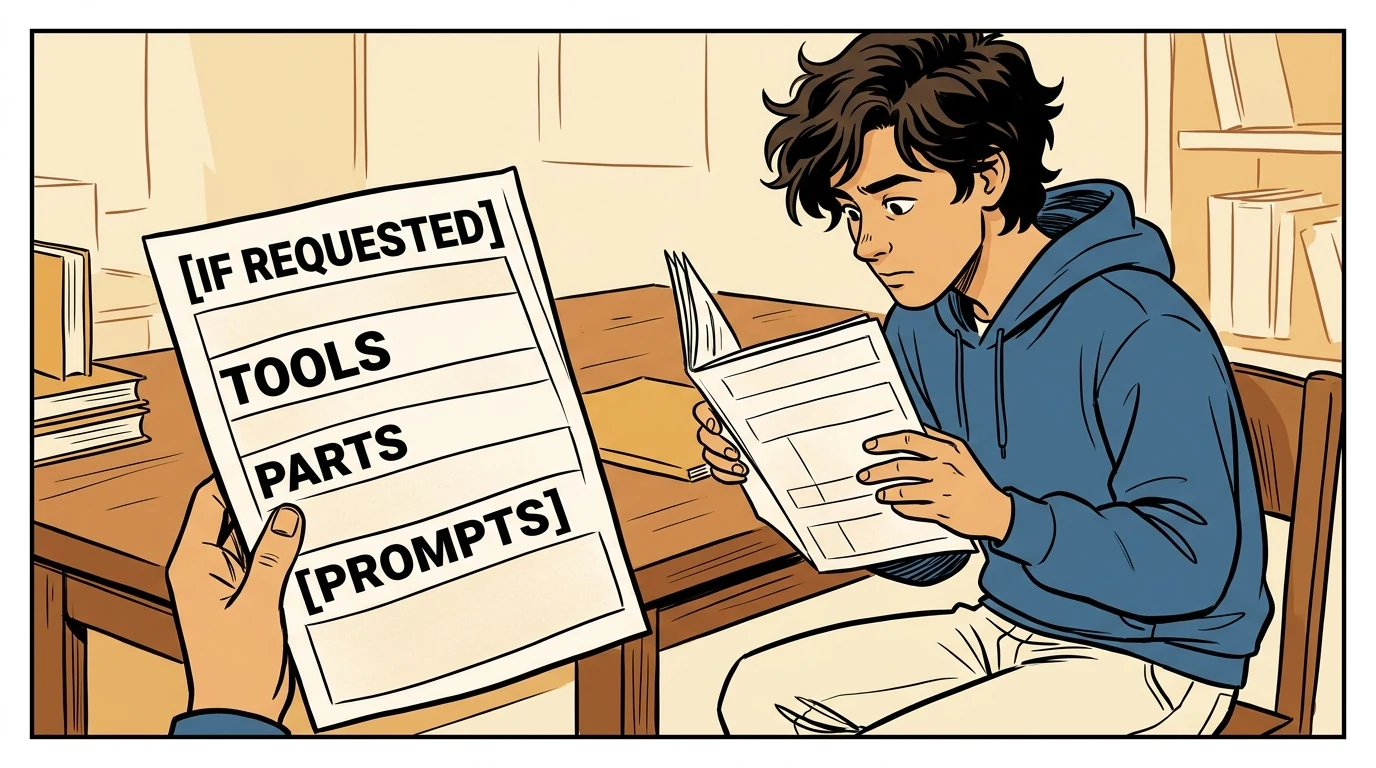
- If requested, record tools, assisted parts and prompts.
- Review and confirm AI outputs and safeguards.
Kuwait City, Kuwait
Student guide · Task scope and procedure
Student GenAI use needs explicit faculty permission. The use list is a conditional sample; faculty may request tools, assisted parts and prompts. Named models are examples, not institutional licences. Verify outputs and privacy safeguards. Detection deployment, a complete disciplinary procedure and numerical sanctions were not acquired.
Poniższe wskazówki są po angielsku; oficjalne dowody zachowano w języku oryginału.
Pełne podsumowanie zasad dla studentów nie jest jeszcze dostępne; sprawdź zebrane stwierdzenia i źródła.
Student GenAI use needs explicit faculty permission. The use list is a conditional sample; faculty may request tools, assisted parts and prompts. Named models are examples, not institutional licences. Verify outputs and privacy safeguards. Detection deployment, a complete disciplinary procedure and numerical sanctions were not acquired.


Zebrano uzupełnienie: 2026-10-08 · Aktualne zastosowanie niepotwierdzone niezależnie
Podsumowanie jest obecnie dostępne po angielsku
Interpretacja serwisu
Kuwait’s linked GenAI policy says student use needs explicit faculty permission; otherwise it is cheating/plagiarism. When permitted, faculty MAY request tool names, assisted parts and prompts. The acceptable/unacceptable list is a SAMPLE conditioned on instructor permission, and excludes copying AI text as one’s own even if paraphrased and AI solutions for programming assignments/exams/projects. It is not a universal allowance list.
Zakres: Students in the cited programme/course/stage only · Only the captured source, version, audience and conditions; no exhaustive currency certification.
Dowody wykrywania · Wsparcie i dostosowania
Zakres: Students in the cited programme/course/stage only · university
Instructor permission; sample use list; disclosure details when requested.
3. Use of GenAI by Students
Students should adhere to instructions from faculty about GenAI.
If students use GenAI without the explicit permission of faculty, it will be
considered the same as getting assistance from someone else, and thus, is
considered cheating/plagiarism
Please contact your instructor if you are unsure before using GenAI. Keep in mind,
there are tools that help detect whether an assignment was done using GenAI
When there is permission from faculty to use GenAI, faculty may require students to
provide the following information:
- GenAI tools used (for example: ChatGPT, Gemini, Copilot, ... etc.)
- Part of the assignment that was generated/assisted by GenAI
- Prompt used for each part
If your instructor allows you to use GenAI, here is a sample list of acceptable and
unacceptable uses:
Acceptable Use:
o Use GenAI for researching information
o Use GenAI for help with grammar/spelling/clarity/readability
o Summarizing information
o Getting ideas for research projects and to brainstorm
o Creating images related to your assignments
o Use GenAI to help you understand concepts
o Use of GenAI to help tweak/strengthen your ideas
Unacceptable Use:
o Copying GenAI text and using it as your own work (even if paraphrased)
o Solving problems/questions using GenAI
o Using GenAI to generate solutions for programming assignments, exams,
or projectsZobacz oficjalne źródło ↗Zebrano: 2026-10-08 · 70–98
SHA-256: e45244665bc8fdda43931dd48451d300e1c73555d5176d4b02b51e876fdbed67
Interpretacja serwisu
The policy requires critical review/confirmation of AI outputs and identifies copyright and privacy risks. Users should read the system’s privacy policy and ensure appropriate safeguards before interacting. This risk guidance does not establish an institutionally protected account or confidential-data permission.
Zakres: Students in the cited programme/course/stage only · Only the captured source, version, audience and conditions; no exhaustive currency certification.
Dowody wykrywania · Wsparcie i dostosowania
Zakres: Students in the cited programme/course/stage only · university
2. General Concerns About GenAI
Potential for Errors (AI Hallucinations): One major concern with AI is its dependence
on data. Just like any student learning from flawed notes, AI trained on
inaccurate/biased/insufficient data can produce erroneous results. Therefore, it is
essential to critically evaluate GenAI results, all AI outputs should be reviewed and
confirmed.
Copyright Infringement: Another potential problem lies in AI's content creation
capabilities. GenAI can generate text, music, and even art based on the data it has
been trained on. While this opens exciting possibilities, it also raises concerns about
copyright and intellectual property. If GenAI outputs contain elements or styles copied
directly from existing works, it could infringe on the rights of the original creators. To
avoid legal pitfalls, it's essential to use AI tools responsibly and be mindful of the source
material they utilize.
Privacy Risks: GenAI does introduce a concern of privacy in the digital age. Many
GenAI systems, especially those offering personalized services, require access to vast
amounts of user data. This raises the risk of sensitive information being exposed if not
adequately protected. Therefore, it is crucial to read the privacy policies of any GenAI
system before interacting with it and ensure appropriate safeguards are in place to
protect your data.Zobacz oficjalne źródło ↗Zebrano: 2026-10-08 · 40–58
SHA-256: e45244665bc8fdda43931dd48451d300e1c73555d5176d4b02b51e876fdbed67
Interpretacja serwisu
Faculty set classroom AI policies and should include syllabus guidance. Research AI is assistive, cannot replace human intellectual effort, needs disclosure and checked references; faculty AI grading must be verified for accuracy/fairness. These faculty/research provisions are not a student licence or a complete academic-discipline code.
Zakres: Faculty and researchers under the cited GenAI policy · Only the captured source, version, audience and conditions; no exhaustive currency certification.
Dowody wykrywania · Wsparcie i dostosowania
Zakres: Faculty and researchers under the cited GenAI policy · university
4. Use of GenAI by Faculty
Teaching
Faculty are free to set their own policies regarding GenAI in the classroom. Faculty
should include a section in their syllabus that is concerned with the use of AI. When
allowing students to use GenAI, a faculty may ask for the following information:
- AI tools used (for example: ChatGPT, Bard, Copilot, ... etc.)
- Part of the assignment that was generated by AI
- Prompt used for each part
Faculty are free to use GenAI in their classes. Also, faculty can use GenAI to create
homework/ideas/teaching concepts/examples/exams. When it comes to grading
project/homework/exams, faculty should always verify the results, since GenAI
might not be accurate or fair.
For Research
Faculty have the right to use GenAI to support their research. There are many AI
tools available for research, and faculty may use these tools to support their
research. Faculty should be careful in how to use GenAI in research, as they should
keep in mind that many journals have AI detection features, which might invalidate
their research efforts.
Here is a list of guidelines related to using GenAI in research:
GenAI tools can be used to assist in research. But they are assistive tools and do
not replace human intellectual and mental effort
It is important not to over-rely on the information provided by GenAI tools
without reviewing it
It is important to indicate the use of GenAI tools when used in research
GenAI tools cannot be relied on as a source or reference
GenAI tools cannot be relied on when it comes to providing references or sources
without verification
Researchers should not directly copy from GenAI, but it is possible to benefit from
the idea and develop it
It is necessary to encourage the use of GenAI tools in a manner that respects
ethical rules and scientific honestyZobacz oficjalne źródło ↗Zebrano: 2026-10-08 · 110–143
SHA-256: e45244665bc8fdda43931dd48451d300e1c73555d5176d4b02b51e876fdbed67
Interpretacja serwisu
ChatGPT, Gemini and Copilot are examples in a potential faculty disclosure request, not proof of Kuwait licences, fees or endorsement. The student section warns that detection tools exist, but names no deployed detector, threshold, adjudicative standard or disciplinary route. Those remain unestablished.
Zakres: Students in the cited programme/course/stage only · Only the captured source, version, audience and conditions; no exhaustive currency certification.
Zakres: Students in the cited programme/course/stage only · university
Students should adhere to instructions from faculty about GenAI.
If students use GenAI without the explicit permission of faculty, it will be
considered the same as getting assistance from someone else, and thus, is
considered cheating/plagiarism
Please contact your instructor if you are unsure before using GenAI. Keep in mind,
there are tools that help detect whether an assignment was done using GenAI
When there is permission from faculty to use GenAI, faculty may require students to
provide the following information:
- GenAI tools used (for example: ChatGPT, Gemini, Copilot, ... etc.)
- Part of the assignment that was generated/assisted by GenAI
- Prompt used for each partZobacz oficjalne źródło ↗Zebrano: 2026-10-08 · 71–82
SHA-256: e45244665bc8fdda43931dd48451d300e1c73555d5176d4b02b51e876fdbed67
Opublikowane uzupełnienia oparte na źródłach. Podsumowania angielskie i oryginalne cytaty są oddzielone od sprawdzonego rejestru. Możliwe procedury i wyniki nie oznaczają automatycznych kar za AI. Aktualne zastosowanie nie zostało niezależnie potwierdzone; sprawdź zakres i wersję źródła.
Porównano z zapisanym tekstem; tłumaczenie nieoficjalne
Skróty pozwalają porównać zapisane teksty; nie potwierdzają ich aktualności ani niezmienności. Tematy nie tworzą obowiązkowej sekwencji.
Dostęp do narzędzia nie oznacza zgody na użycie go w ocenianej pracy. Sprawdź zasady zadania, uprawnionych użytkowników i ograniczenia danych.
Nie ustalono jeszcze wiarygodnego rekordu narzędzi dla tej uczelni. Nie oznacza to niedostępności ani zakazu AI.
Reviewed record
Zweryfikowane stwierdzenia: 7
Academic Integrity
Wartość znormalizowana: student_genai_use_requires_faculty_permission
Oryginalny dowód
Dowód 1Students should adhere to instructions from faculty about GenAI. If students use GenAI without the explicit permission of faculty, it will be considered the same as getting assistance from someone else, and thus, is considered cheating/plagiarism.
Academic Integrity
Wartość znormalizowana: student_genai_disclosure_when_allowed
Oryginalny dowód
Dowód 1When there is permission from faculty to use GenAI, faculty may require students to provide the following information: GenAI tools used (for example: ChatGPT, Gemini, Copilot, ... etc.) -Part of the assignment that was generated/assisted by GenAI -Prompt used for each part.
Nauczanie
Wartość znormalizowana: faculty_set_classroom_ai_policy_and_syllabus_section
Oryginalny dowód
Dowód 1Faculty are free to set their own policies regarding GenAI in the classroom. Faculty should include a section in their syllabus that is concerned with the use of AI.
Nauczanie
Wartość znormalizowana: faculty_grading_ai_output_verify_results
Oryginalny dowód
Dowód 1Faculty are free to use GenAI in their classes. Also, faculty can use GenAI to create homework/ideas/teaching concepts/examples/exams. When it comes to grading project/homework/exams, faculty should always verify the results, since GenAI might not be accurate or fair.
Prywatność
Wartość znormalizowana: employees_no_sensitive_data_upload_to_genai
Oryginalny dowód
Dowód 1Employees have the right to use GenAI to support their work. However, employees should consider the following: GenAI tools can be biased. Employees should not upload sensitive data to the GenAI tool, as it might be published for others.
Badania
Wartość znormalizowana: research_genai_assistive_disclose_not_reference
Oryginalny dowód
Dowód 1GenAI tools can be used to assist in research. But they are assistive tools and do not replace human intellectual and mental effort. It is important to indicate the use of GenAI tools when used in research. GenAI tools cannot be relied on as a source or reference.
Ai Tool Treatment
Wartość znormalizowana: institutional_genai_policy_scope
Oryginalny dowód
Dowód 1Kuwait University, recognizing the importance of using the latest technology in teaching and scientific research, encourages the optimal use of Generative Artificial Intelligence (GenAI). To prevent any misuse of these tools, this policy aims to regulate the use of artificial intelligence. This policy covers key areas: General GenAI concerns, use of GenAI by students, use of GenAI by faculty, and use of GenAI by employees.
Source record
Źródła: 2
ku.edu.kw
ku.edu.kw
Citation: University AI Policy Tracker. "Kuwait University AI Policy Tracker record." Last checked May 20, 2026. https://eduaipolicy.org/universities/kuwait-university
Original university source language remains canonical. This tracker is not an official university statement.
Otwórz dziennik zmianSaved from University AI Policy Tracker. This record summarizes the cited sources; it is not an official university statement or assessment permission. Source and review dates are listed above. Hashes identify retained content, not authorization.