Student guide · Course examiner rules and thesis ethics
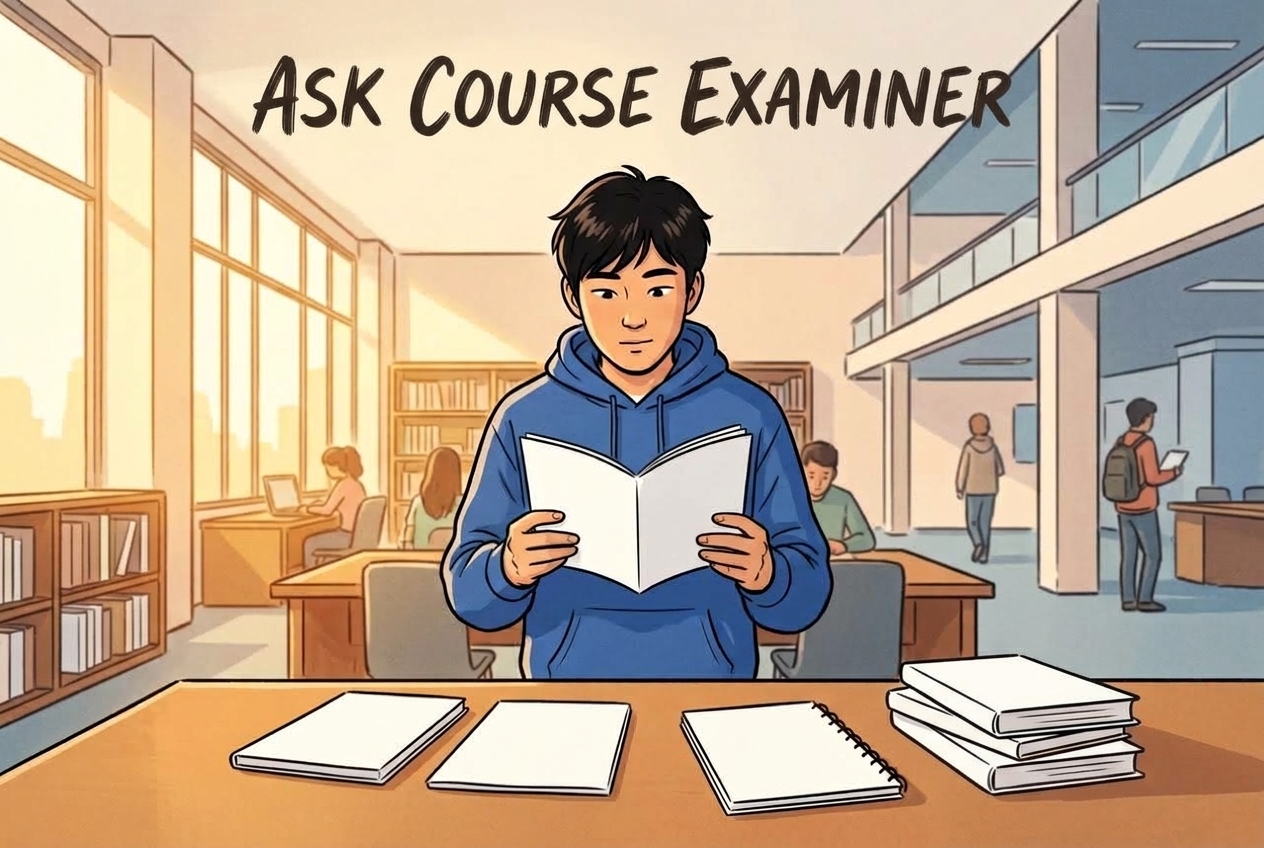
Ask your examiner and protect thesis materials.
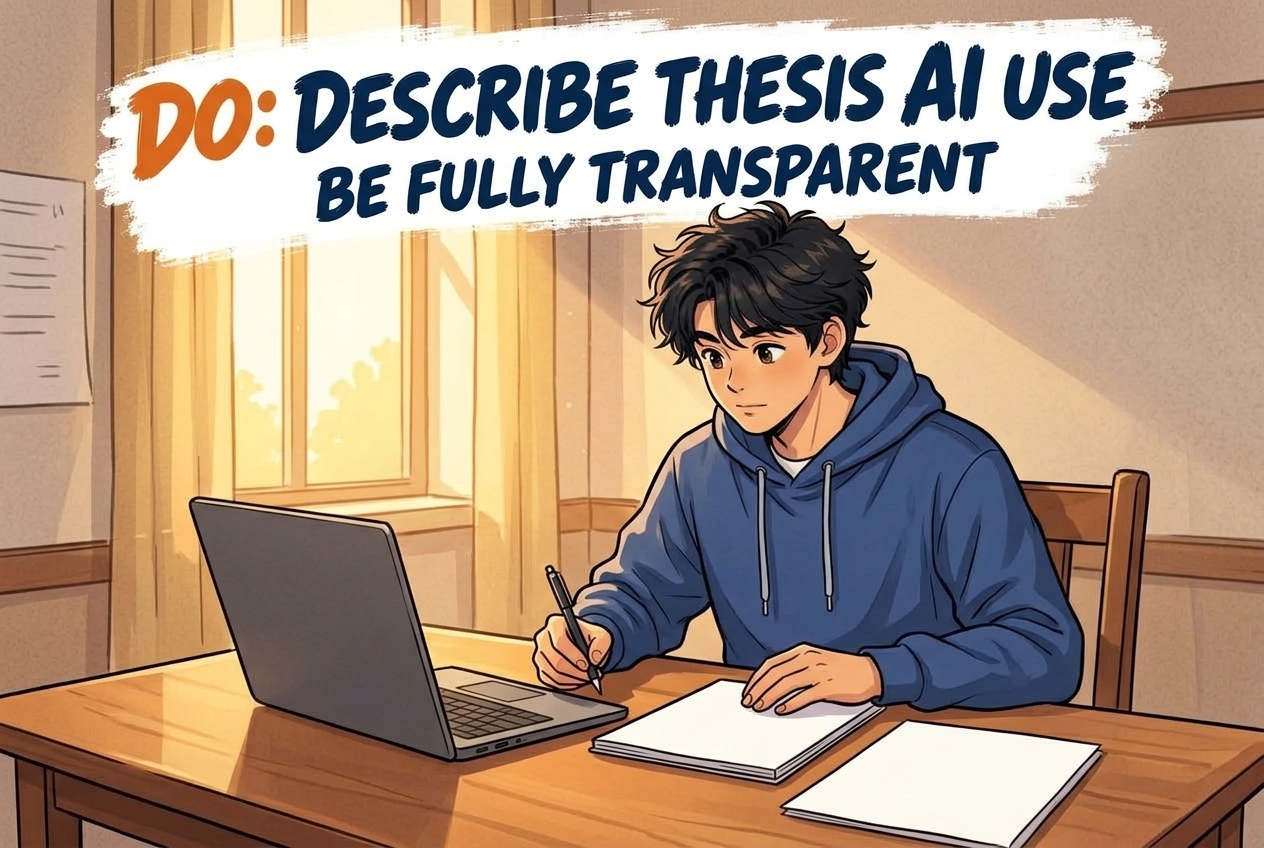
Course coordinators and examiners decide examination AI rules for each course at Chalmers. For thesis work, students must be transparent and consult supervisors on ethical uncertainties; never upload unpublished thesis text or sensitive data to chatbots.
A complete student policy summary is not available yet; see the collected claims and sources.
Scope and transition details
Chalmers Library guidance highlights that course examiners set rules for individual courses. Presenting AI text without citation is treated as plagiarism or ghostwriting. Uploading text intended for a thesis, dissertation, or publication to a chatbot risks copyright loss and data compromise.
You are required to assume full responsibility for your work and must be capable of justifying the choices you've made regarding its content. This includes engaging in discussions about and defending the role AI played in shaping your thesis, demonstrating a clear understanding of how it contributed.
For thesis work, Chalmers says AI tools may be permitted, but students are required to take full responsibility and make AI-tool use clear and transparent, including how and to what extent the tools were used.
Claiming that what someone else has written is your own text without referencing to it correctly is considered as plagiarism. In relation to AI, this can be interpreted as either plagiarism or ghostwriting, so you need to be fully transparent in your use of AI. Describe what you have done and cite correctly, including which AI tool you have used.
Chalmers Library's student guidance connects AI use to plagiarism or ghostwriting risk and says students need to be fully transparent, describe what they did, and cite the AI tool used.
All students and employees at Chalmers have access to the chatbot Microsoft Copilot. In addition, Chalmers offers Microsoft Copilot Pro licenses to employees who are interested, please contact your immediate manager. Chalmers does not currently have a license for ChatGPT.
Chalmers Library's teacher guidance says all Chalmers students and employees have access to Microsoft Copilot, while Chalmers does not currently have a license for ChatGPT.
You are required to assume full responsibility for your work and must be capable of justifying the choices you've made regarding its content. This includes engaging in discussions about and defending the role AI played in shaping your thesis, demonstrating a clear understanding of how it contributed.
For thesis work, Chalmers says AI tools may be permitted, but students are required to take full responsibility and make AI-tool use clear and transparent, including how and to what extent the tools were used.
Claiming that what someone else has written is your own text without referencing to it correctly is considered as plagiarism. In relation to AI, this can be interpreted as either plagiarism or ghostwriting, so you need to be fully transparent in your use of AI. Describe what you have done and cite correctly, including which AI tool you have used.
Chalmers Library's student guidance connects AI use to plagiarism or ghostwriting risk and says students need to be fully transparent, describe what they did, and cite the AI tool used.
It is up to the coordinator and examiner for each individual course to decide whether and how AI tools are allowed to be used within the framework of the various examinations. Remember to ask at the beginning of each course!
Chalmers Library's student guidance says whether and how AI tools may be used in examinations is decided for each course by the coordinator and examiner, so students should ask at the beginning of each course.
cl-chalmers-course-ai-varies
The use of genAI can change depending on the course in question
All students and employees at Chalmers have access to the chatbot Microsoft Copilot. In addition, Chalmers offers Microsoft Copilot Pro licenses to employees who are interested, please contact your immediate manager. Chalmers does not currently have a license for ChatGPT.
Chalmers Library's teacher guidance says all Chalmers students and employees have access to Microsoft Copilot, while Chalmers does not currently have a license for ChatGPT.
You are required to assume full responsibility for your work and must be capable of justifying the choices you've made regarding its content. This includes engaging in discussions about and defending the role AI played in shaping your thesis, demonstrating a clear understanding of how it contributed.
For thesis work, Chalmers says AI tools may be permitted, but students are required to take full responsibility and make AI-tool use clear and transparent, including how and to what extent the tools were used.
Claiming that what someone else has written is your own text without referencing to it correctly is considered as plagiarism. In relation to AI, this can be interpreted as either plagiarism or ghostwriting, so you need to be fully transparent in your use of AI. Describe what you have done and cite correctly, including which AI tool you have used.
Chalmers Library's student guidance connects AI use to plagiarism or ghostwriting risk and says students need to be fully transparent, describe what they did, and cite the AI tool used.
Always consult with your Chalmers’ supervisor or relevant industry/public sector collaborators before using AI tools if you have any uncertainties, particularly concerning data privacy and ethical issues.
For thesis work, Chalmers tells students to consult a Chalmers supervisor or relevant collaborator before using AI tools when there are uncertainties, particularly around data privacy and ethical issues.
Because of this, you should not upload material that contains sensitive or private information, or any material protected by copyright law, for example PDFs of scientific articles that you’ve downloaded from library databases. If you have text intended for a thesis, dissertation, or scientific publication, you should not submit it to a chatbot, as doing so may mean relinquishing your copyright to that material.
Chalmers Library's ethical-use guidance says users should not upload sensitive or private information, copyright-protected material, or text intended for a thesis, dissertation, or scientific publication to chatbots.
You are required to assume full responsibility for your work and must be capable of justifying the choices you've made regarding its content. This includes engaging in discussions about and defending the role AI played in shaping your thesis, demonstrating a clear understanding of how it contributed.
For thesis work, Chalmers says AI tools may be permitted, but students are required to take full responsibility and make AI-tool use clear and transparent, including how and to what extent the tools were used.
It is up to the coordinator and examiner for each individual course to decide whether and how AI tools are allowed to be used within the framework of the various examinations. Remember to ask at the beginning of each course!
Chalmers Library's student guidance says whether and how AI tools may be used in examinations is decided for each course by the coordinator and examiner, so students should ask at the beginning of each course.
cl-chalmers-course-ai-varies
The use of genAI can change depending on the course in question
All students and employees at Chalmers have access to the chatbot Microsoft Copilot. In addition, Chalmers offers Microsoft Copilot Pro licenses to employees who are interested, please contact your immediate manager. Chalmers does not currently have a license for ChatGPT.
Chalmers Library's teacher guidance says all Chalmers students and employees have access to Microsoft Copilot, while Chalmers does not currently have a license for ChatGPT.
Because of this, you should not upload material that contains sensitive or private information, or any material protected by copyright law, for example PDFs of scientific articles that you’ve downloaded from library databases. If you have text intended for a thesis, dissertation, or scientific publication, you should not submit it to a chatbot, as doing so may mean relinquishing your copyright to that material.
Chalmers Library's ethical-use guidance says users should not upload sensitive or private information, copyright-protected material, or text intended for a thesis, dissertation, or scientific publication to chatbots.
Claiming that what someone else has written is your own text without referencing to it correctly is considered as plagiarism. In relation to AI, this can be interpreted as either plagiarism or ghostwriting, so you need to be fully transparent in your use of AI. Describe what you have done and cite correctly, including which AI tool you have used.
Chalmers Library's student guidance connects AI use to plagiarism or ghostwriting risk and says students need to be fully transparent, describe what they did, and cite the AI tool used.
Chalmers Library's teacher guidance says all Chalmers students and employees have access to Microsoft Copilot, while Chalmers does not currently have a license for ChatGPT.
Chalmers Library's teacher guidance says all Chalmers students and employees have access to Microsoft Copilot, while Chalmers does not currently have a license for ChatGPT.
Chalmers Library says students and employees have Microsoft Copilot access and that Chalmers does not currently license ChatGPT.
Record updatesLast 90 days
Updates to this site's reviewed record, not confirmation that the university changed its policy.
Update records are not available for this page yet.
Reviewed record
Reviewed claims
6 reviewed claims
Academic Integrity 1 reviewed claim
Academic Integrity
Chalmers Library's student guidance connects AI use to plagiarism or ghostwriting risk and says students need to be fully transparent, describe what they did, and cite the AI tool used.
Review: Agent reviewedConfidence93%
Normalized value: student AI use requires transparency and citation in academic-integrity context
Last checked
May 15, 2026
Last changed
May 15, 2026
Original evidence
Evidence 1
Claiming that what someone else has written is your own text without referencing to it correctly is considered as plagiarism. In relation to AI, this can be interpreted as either plagiarism or ghostwriting, so you need to be fully transparent in your use of AI. Describe what you have done and cite correctly, including which AI tool you have used.
Localized display only
Chalmers Library links AI use to plagiarism or ghostwriting risk and tells students to be transparent and cite the AI tool used.
Source language
English (en)
Snapshot hash
55616ff3…
Retrieved
May 15, 2026
Evidence locator
Academic integrity
Privacy 2 reviewed claims
Privacy
For thesis work, Chalmers tells students to consult a Chalmers supervisor or relevant collaborator before using AI tools when there are uncertainties, particularly around data privacy and ethical issues.
Review: Agent reviewedConfidence94%
Normalized value: thesis AI-tool uncertainty around data privacy calls for supervisor or collaborator consultation
Last checked
May 15, 2026
Last changed
May 15, 2026
Original evidence
Evidence 1
Always consult with your Chalmers’ supervisor or relevant industry/public sector collaborators before using AI tools if you have any uncertainties, particularly concerning data privacy and ethical issues.
Localized display only
Chalmers says thesis students should consult a supervisor or collaborator before AI use when data privacy or ethical issues are uncertain.
Source language
English (en)
Snapshot hash
c434a0c2…
Retrieved
May 15, 2026
Evidence locator
Always consult with your supervisor
Privacy
Chalmers Library's ethical-use guidance says users should not upload sensitive or private information, copyright-protected material, or text intended for a thesis, dissertation, or scientific publication to chatbots.
Review: Agent reviewedConfidence92%
Normalized value: avoid uploading sensitive private copyrighted or unpublished scholarly material to chatbots
Last checked
May 15, 2026
Last changed
May 15, 2026
Original evidence
Evidence 1
Because of this, you should not upload material that contains sensitive or private information, or any material protected by copyright law, for example PDFs of scientific articles that you’ve downloaded from library databases. If you have text intended for a thesis, dissertation, or scientific publication, you should not submit it to a chatbot, as doing so may mean relinquishing your copyright to that material.
Localized display only
Chalmers Library cautions against uploading sensitive, private, copyrighted, or unpublished scholarly material to chatbots.
Source language
English (en)
Snapshot hash
2457d2eb…
Retrieved
May 15, 2026
Evidence locator
Copyright and information safety
AI tool use 3 reviewed claims
Ai Tool Treatment
For thesis work, Chalmers says AI tools may be permitted, but students are required to take full responsibility and make AI-tool use clear and transparent, including how and to what extent the tools were used.
Review: Agent reviewedConfidence95%
Normalized value: thesis AI-tool use may be permitted with responsibility and transparent disclosure
Last checked
May 15, 2026
Last changed
May 15, 2026
Original evidence
Evidence 1
You are required to assume full responsibility for your work and must be capable of justifying the choices you've made regarding its content. This includes engaging in discussions about and defending the role AI played in shaping your thesis, demonstrating a clear understanding of how it contributed.
Localized display only
Chalmers requires thesis authors to take full responsibility for their work and be able to justify the role AI played.
Source language
English (en)
Snapshot hash
c434a0c2…
Retrieved
May 15, 2026
Evidence locator
You are required to assume full responsibility
Ai Tool Treatment
Chalmers Library's student guidance says whether and how AI tools may be used in examinations is decided for each course by the coordinator and examiner, so students should ask at the beginning of each course.
Review: Agent reviewedConfidence92%
Normalized value: course-level coordinator and examiner decide examination AI-tool use
Last checked
May 15, 2026
Last changed
May 15, 2026
Original evidence
Evidence 1
It is up to the coordinator and examiner for each individual course to decide whether and how AI tools are allowed to be used within the framework of the various examinations. Remember to ask at the beginning of each course!
Localized display only
Chalmers Library says course coordinators and examiners decide whether and how AI tools are allowed in each course's examinations.
Source language
English (en)
Snapshot hash
55616ff3…
Retrieved
May 15, 2026
Evidence locator
The use of genAI can change depending on the course in question
Ai Tool Treatment
Chalmers Library's teacher guidance says all Chalmers students and employees have access to Microsoft Copilot, while Chalmers does not currently have a license for ChatGPT.
Review: Agent reviewedConfidence90%
Normalized value: students and employees have Microsoft Copilot access; no current Chalmers ChatGPT license
Last checked
May 15, 2026
Last changed
May 15, 2026
Original evidence
Evidence 1
All students and employees at Chalmers have access to the chatbot Microsoft Copilot. In addition, Chalmers offers Microsoft Copilot Pro licenses to employees who are interested, please contact your immediate manager. Chalmers does not currently have a license for ChatGPT.
Localized display only
Chalmers Library says students and employees have Microsoft Copilot access and that Chalmers does not currently license ChatGPT.
Source language
English (en)
Snapshot hash
74b4f321…
Retrieved
May 15, 2026
Evidence locator
Chalmers guidelines and resources
Source record
Official sources
4 sources
4 official URLs; 4 source attributions and their captured versions retained.
Ethical Use of AI
guides.lib.chalmers.se
University official source
guides.lib.chalmers.se
Hash and captured version
Ethical Use of AI · 2026-05-15T03:18:30.000Z
Representation unspecified in this historical record; do not assume an original-file hash.
Citation: University AI Policy Tracker. "Chalmers University of Technology AI Policy Tracker record." Last checked May 15, 2026. https://eduaipolicy.org/universities/chalmers-university-of-technology
Original university source language remains canonical. This tracker is not an official university statement.
Saved from University AI Policy Tracker. This record summarizes the cited sources; it is not an official university statement or assessment permission. Source and review dates are listed above. Hashes identify retained content, not authorization.
Questions students ask
Questions students ask
Can I use AI for my coursework?
Chalmers University of Technology has 3 source-backed public claims for coursework; deterministic analysis status: required.